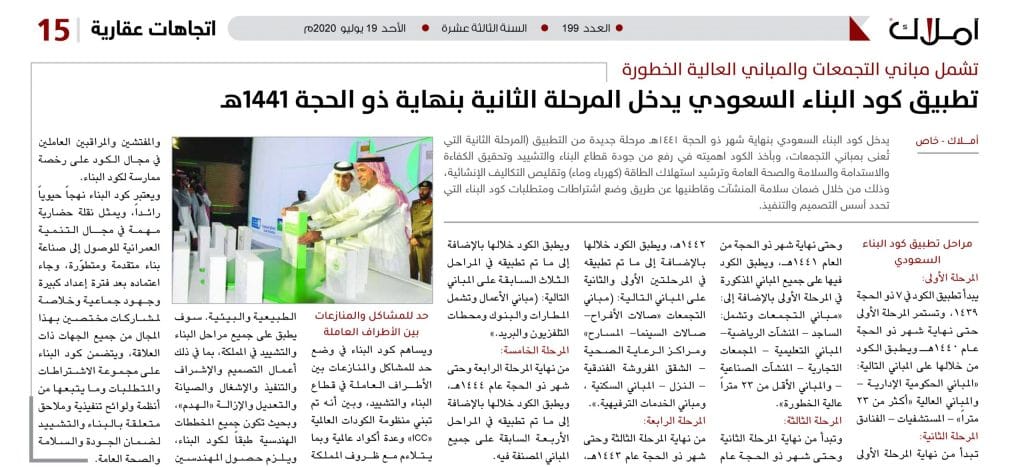

The Saudi Building Code will enter a new phase of implementation by the end of Dhul Hijjah 1441 AH (the second phase, which deals with community buildings). The code is important in raising the quality of the building and construction sector, achieving efficiency, sustainability, safety, public health, rationalizing energy consumption (electricity and water), and reducing construction costs, by ensuring the safety of facilities and their occupants through setting the requirements and conditions of the building code that define the foundations of design and implementation.
Stages of implementing the Saudi Building Code
First stage:
The code will be implemented starting on 7 Dhu al-Hijjah 1439, and the first phase will continue until the end of Dhu al-Hijjah 1440 AH. During this phase, the code will be applied to the following buildings: government administrative buildings, high-rise buildings (more than 23 meters), hospitals, and hotels.
Phase Two:
It begins from the end of the first phase until the end of Dhul-Hijjah of the year 1441 AH, and the code applies to all the buildings mentioned in the first phase in addition to: "Gathering buildings, including: mosques, sports facilities, educational buildings, commercial complexes, industrial facilities, and buildings less than 23 meters high risk."
Third stage:
It begins from the end of the second phase until the month of Dhul-Hijjah 1442 AH, and the code will be applied during this period in addition to what was applied in the first and second phases to the following buildings: (gathering buildings "wedding halls - cinemas - theaters" and health care centers - furnished hotel apartments - lodges - residential buildings, and recreational service buildings.).
Fourth stage:
From the end of the third phase until the month of Dhul-Hijjah 1443 AH, the code will be applied during this period in addition to what was applied in the previous three phases to the following buildings: (Business buildings, including airports, banks, television stations and post offices).
Fifth stage:
From the end of the fourth phase until the month of Dhul-Hijjah 1444 AH, the code will be applied during this period in addition to what was applied in the previous four phases to all buildings classified in it.
Resolving problems and disputes between working parties
The building code helps resolve problems and disputes among parties working in the construction sector. It incorporates the International Construction Code (ICC) and several other international codes, adapted to the Kingdom's natural and environmental conditions. The code will apply to all phases of construction in the Kingdom, including design, supervision, execution, occupancy, maintenance, modification, and demolition. All engineering plans must comply with the building code, and engineers, inspectors, and supervisors working within the code's framework will be required to obtain a building code practice license.
The building code is considered a vital and pioneering approach, and represents an important civilizational shift in the field of urban development to reach an advanced and developed building industry. Its adoption came after a long period of preparation, collective efforts, and the culmination of the participation of specialists in this field from all relevant parties. The building code includes a set of requirements and conditions, and the systems, executive regulations, and appendices related to building and construction to ensure quality, safety, and public health.