
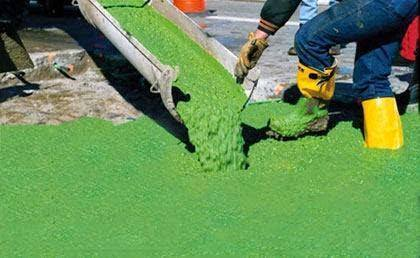

In concrete plants around the world, mixing trucks receive a contaminated mix of sand, gravel, water, and cement, but a facility outside Washington, D.C., is adding a new element to clean up the process: carbon dioxide.
This hybrid mix – known as “green” concrete – reduces the carbon footprint of one of the world’s most polluting industrial sectors and is emerging as an alternative to carbon storage options, such as underground wells and pipelines, which require regulatory approval and local support.
Green concrete cannot capture the billions of tons of carbon needed to meet global climate goals, but it offers an immediate and partial solution to the concrete emissions problem until other options emerge, and thanks to government incentives and investments by companies like Amazon and Microsoft, it appears to be working.
The Inflation Reduction Act of 2022 provided billions of dollars in tax breaks to companies that capture carbon, either in factories or from the atmosphere, and then sequester it underground or in products such as concrete.
Uses of green concrete
Amazon used green concrete for its Arlington headquarters and invested directly in Carbon Cure Technologies, a startup that manages the injection of captured carbon into concrete during manufacturing.
Microsoft has also invested in Carbon Cure, one of several companies and academic researchers experimenting with new ways to produce this concrete.
Scott Schell, architect and industry director at Climate Works, an environmental charity, said: “It looks like we are on the cusp of a second industrial revolution.”
Concrete manufacturers produce approximately 30 billion tons annually for the construction of buildings, roads, and bridges worldwide. This process generates several billion tons of carbon dioxide emissions, or roughly 71 TP3T of the global total. Most of these emissions come from heating limestone and clay to temperatures as high as 2,700 degrees Fahrenheit to create cement, the binding agent that holds the other components together.
green concrete industry
To create green concrete, liquid carbon dioxide is sprayed into the mixing drums of concrete trucks. There, it reacts with calcium ions in the cement to form solid calcium carbonate, the building material. This rock-like calcium carbonate reduces the amount of cement required, decreasing concrete emissions by approximately 51 TP3T and preventing carbon that would otherwise be released into the atmosphere.
“Anytime we can reduce the amount of cement, we can reduce the amount of carbon dioxide,” says Tick Chua, technical services manager for Vulcan Materials, the building materials company that operates the 83-year-old Arlington plant for the production of green concrete.
In addition, Vulcan uses carbon injection in more than 20 of its 140 concrete plants in the United States and produced more than one million cubic yards of green concrete last year, or nearly 101 TP3T of its total concrete shipments. The company also owns several hundred plants that produce crushed stone, sand, and gravel, and generated total sales exceeding $7 billion last year.
The carbon dioxide used in Vulcan concrete is purchased from an ammonia plant about two hours away.
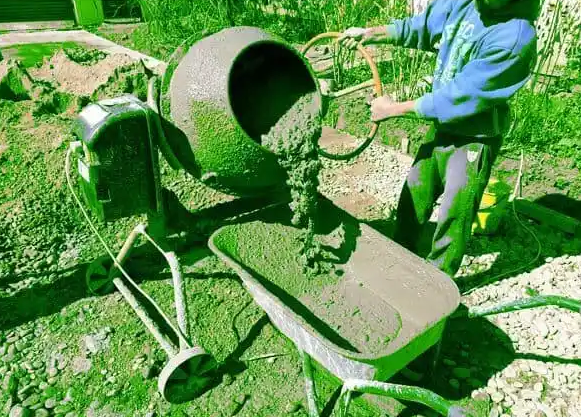
In the concrete plant, liquid carbon dioxide flows through a hose up a 50-foot tower, where the concrete materials are unloaded into mixing trucks. When the carbon dioxide is introduced into the mix, it is similar to the mist that comes from dry snow.
Twenty trucks take turns driving through the factory and then to nearby construction sites, a symphony of brisk movement that begins with components sourced from all over the Mid-Atlantic region.
Pouring concrete typically takes no more than 90 minutes from mixing until it sets properly, and its plants are spread all over the world, thus providing a network that can alleviate carbon storage bottlenecks, without the need for pipelines.
Rob Niven, CEO of Carbon Cure, the Amazon and Microsoft-backed startup that manages Vulcan's carbon injections, said: "The beautiful thing about concrete is that there are producers everywhere."
The modest injection of carbon is just the beginning of a long process to reduce the environmental impact of concrete.
Carbon Cure offers other solutions, in addition to carbon dioxide at other points in the production process, to further reduce emissions.
Microsoft is testing concrete made from limestone derived from microalgae at one of its data centers in Quincy, Washington.
New concrete mixes
Other companies are working on new concrete mixes using everything from fly ash from coal-fired power plants to slag from steel mills to further reduce cement and its emissions, while a research team at MIT found that the carbon footprint of concrete could be reduced by 15% by 2020, “We just have to add baking soda to the cement before mixing it,” as they put it.
Shell of Climate Works said: “There is a lot we can do to change this recipe.”
But the biggest reductions will come when cement plants switch to renewable energy, while capturing and storing industrial carbon emissions before they leak into the atmosphere.
In April, cement company Heidelberg Materials signed an agreement with the Canadian government to build a $1 billion unit to capture 1 million metric tons of carbon annually at the German company’s plant in Edmonton.
This is too much carbon to be easily stored in concrete, and the proposed Canadian plant will store its emissions underground. A separate facility under construction in Norway will transport 400,000 metric tons of carbon dioxide annually—about half of the facility’s annual emissions—to a permanent underground storage site under the North Sea.
Such large-scale solutions are needed to significantly reduce the industry's footprint.
“I think it’s great,” said Steven J. Davis, a professor of earth sciences at the University of California, Irvine, regarding injecting small amounts of carbon into concrete. “But it’s not going to completely solve all those emissions right now.”


