

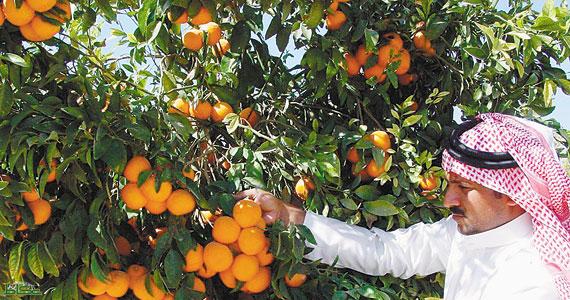
Amlak Reports – Muhammad Al-Maki
The Saudi Agricultural Exhibition, which concluded last Wednesday, demonstrated significant interest from both the public and private sectors in the agricultural sector in the Kingdom of Saudi Arabia in terms of production and technology, which have improved significantly over the past decades. Although deserts make up a large portion of Saudi Arabia’s land area, there are many regions with a climate and soil suitable for agriculture. The government has contributed to this process by transforming vast areas of the desert into agricultural fields through the implementation of major irrigation projects and the widespread adoption of this approach, thereby developing agriculture in Saudi Arabia, thereby adding previously arid areas to the stock of arable land.
Self-Sufficiency and Exports
Currently, the focus of agriculture in Saudi Arabia is not on self-sufficiency but rather on exporting certain agricultural products abroad, including dates, dairy products, eggs, fish, poultry, fruits, vegetables, and flowers to markets around the world. The country is also heavily involved in industry, the petroleum sector, and the petrochemical industry, and it actively encourages agriculture. The Ministry of Agriculture is primarily responsible for the country’s agricultural policies, The private sector also plays an important role in domestic production and boosting exports. The government provides long-term, interest-free loans.
Many agricultural organizations have emphasized that the Kingdom’s experience in the agricultural sector is unique; it has pursued this field with great ambition, achieving success that exceeded its original goals and led to the export of numerous crops and agricultural and livestock products.
Solid Economic Indicators
Economic indicators have confirmed the strength of this sector and its leading role as a key contributor to the national economy, one of the most important sources of national income diversification, and a pillar of food security for citizens and residents of the Kingdom, as evidenced by the sector’s steady year-over-year growth, which has brought the agricultural GDP to 42.2 billion riyals in recent years.
Reports and statistics issued by the Ministry of Agriculture attributed the Kingdom’s progress in the field of agriculture to the wise policy adopted and continued by the state under the leadership of the Custodian of the Two Holy Mosques, which has been based primarily on encouraging and supporting farmers and providing them with incentives in the form of interest-free soft loans, free agricultural land, and the purchase of certain crops from them at preferential prices.
Among the aspects of this government support is the increase in subsidies for various water-conserving irrigation systems from 25% to 70%, increasing the purchase price of dates from farmers from 3 riyals per kilogram to 5 riyals for those using modern irrigation methods, and increasing the volume of dates purchased from farmers from 21,000 metric tons to 25,000 metric tons, and supporting the establishment of agricultural cooperatives, the most recent of which was the Saudi Organic Agriculture Association, which received 18 million riyals in support from the government.
Agricultural Development Fund
Another form of support was the enactment of the Agricultural Development Fund Law, with a capital of 20 billion riyals, to support agricultural development in the Kingdom while ensuring water conservation and rational use to protect the environment. In light of the global food shortage crisis facing the world, the Council of Ministers directed the establishment of an agricultural company focused on foreign investment with the aim of securing the Kingdom’s needs for certain agricultural commodities that consume large amounts of water, such as (wheat and rice), and to serve as a support and complement to the Kingdom’s agricultural sector. Despite the Kingdom’s water scarcity and its vast deserts—which some experts have deemed unsuitable for agriculture—the Kingdom’s determination to embark on a unique agricultural development initiative has led it to its current state of significant agricultural renaissance.
Agricultural Plan through 2030
The Ministry of Agriculture is preparing a strategic plan for sustainable development through 2030, with the aim of completing the modernization of the agricultural sector to make it more advanced, diversified, and vibrant, while increasing the efficient use of natural resources—especially water resources—based on the comparative advantages of different regions, to contribute to achieving sustainable food security in its comprehensive sense and sustainable rural development to achieve social stability.
Reports and statistics have highlighted numerous agricultural crops in which the Kingdom has achieved outstanding results, in light of the current and future directions of the agricultural development strategy aimed at achieving a balance between water security and food security, thereby ensuring sustainable agriculture and diversification of the production base.
Numerous achievements
The agricultural sector in Saudi Arabia has achieved significant accomplishments and has become one of the most important economic sectors in the Kingdom, contributing 2 percent to the Kingdom’s GDP, and the agricultural sector’s GDP rose from 6.3 billion riyals in 1981 to approximately 53.7 billion riyals last year, in 2014.
The agricultural sector has received significant support from the government over the past decades, continuing through the reign of the Custodian of the Two Holy Mosques, King Salman bin Abdulaziz Al Saud, and this support took many forms, some direct and others indirect. The government created a favorable environment for agricultural investment by enacting regulations and legislation, and has provided support in all its forms, as well as incentives and programs to encourage agricultural investment, which has had a significant impact on the agricultural renaissance the Kingdom is witnessing today.
The Kingdom has also achieved positive growth rates in the agricultural sector, which has come to occupy a prominent position among the sectors of the national economy, It has also come to provide the bulk of the food needs of the Kingdom’s population and has achieved high levels of self-sufficiency in certain crops, thereby contributing to raising the standard of living for its people.
Furthermore, the Ministry of Agriculture’s focus on the agricultural sector has become more sophisticated and diversified through improving the efficiency of natural resource use, particularly water resources, by leveraging the comparative advantages of different regions to contribute to achieving sustainable food security in its comprehensive sense and sustainable rural development to foster social stability, and the transformation of the agricultural sector agricultural sector into a technology-driven sector managed using the latest technical methods, which contribute to increasing production efficiency and reducing the consumption of natural resources, foremost among them water.
Foreign agricultural investment
The state is committed to overseas agricultural investment as one of the main sources for achieving food security in the Kingdom. To this end, the King Abdullah Initiative—may God have mercy on him —for agricultural investment abroad, which aims to contribute to achieving food security, provide the necessary facilities and financing for Saudi agricultural investments abroad, work to establish a strategic stockpile of basic foodstuffs in the Kingdom, and strengthen overall food security, in addition to incorporating humanitarian aspects that underscore the Kingdom’s global role in helping to address the food crisis and alleviate the suffering of communities from hunger and malnutrition.
Among the forms of support provided by the Custodian of the Two Holy Mosques, King Salman bin Abdulaziz, to the agricultural sector is the approval of a program to prevent and combat the red palm weevil, with a budget of more than 1.7 billion riyals, which aims to preserve the Kingdom’s national palm tree resources and mitigate the economic risks resulting from the spread of this dangerous pest.
He has also approved a program to develop the Kingdom’s fisheries sector, which aims to advance this sector as a key pillar for ensuring the Kingdom’s food security, with a focus on supporting the aquaculture sector, particularly in floating marine cages off the Kingdom’s coast. It also aims to create new direct and indirect job opportunities for rural residents in the fisheries sector.
Restructuring the Crop Mix
Structural changes have occurred in the crop and food composition of the agricultural sector in recent years, as grain production declined from 4.86 million metric tons to approximately 1.5 million metric tons, while vegetable and fruit production increased, and the total cultivated area reached 328,725 hectares.
The Kingdom’s total fruit production over the past few years exceeded 1,550,000 metric tons across an area of approximately 227,000 hectares, while date production reached 992,000 metric tons across an estimated 155,000 hectares, with approximately 25 million productive date palms. The number of dams rose to 315, with a total storage capacity of approximately 1.64 billion cubic meters.
Livestock
As for the number of livestock in the Kingdom it reached to more than 13 million head, including more than 404,000 head of cattle, 8,740,000 head of sheep, 3,400,000 head of goats, and 810,000 camels.
Reports estimated the Kingdom’s milk production at more than 1.603 billion liters, while meat production reached 719,000 metric tons, including 127,000 metric tons of red meat, 447,000 metric tons of poultry, and more than 100,000 metric tons of fish and shrimp.
The number of people employed in the agricultural sector reached more than 511,000, while the number of people employed in the fishing industry rose to more than 28,000, and the number of fishing vessels reached approximately 12,000.


