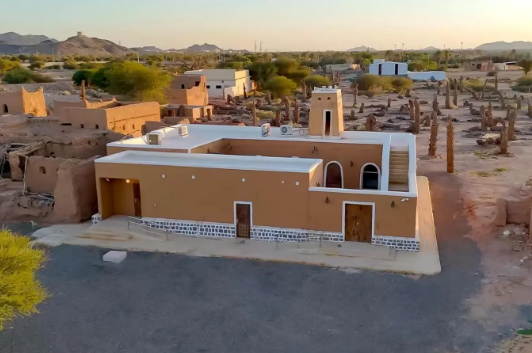

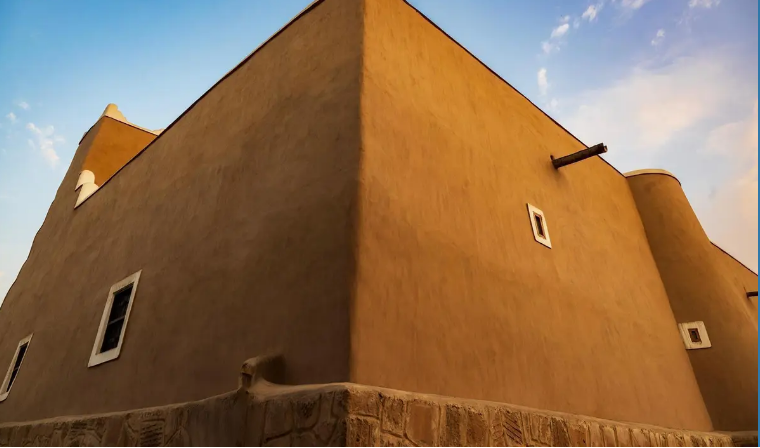
In the heart of Manfouha, one of Riyadh's oldest neighborhoods, stands the Al-Qibli Mosque, a testament to a rich history spanning over three centuries. Its walls tell a tale of authentic Najdi architecture and its intricate heritage details. Today, the mosque is part of Prince Mohammed bin Salman's project to develop historical mosques , continuing its spiritual and architectural mission after being restored according to the highest standards that preserve its identity while meeting the demands of the modern era.
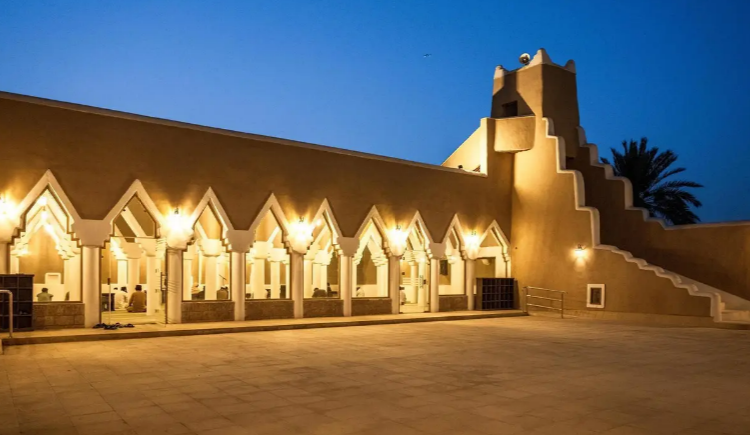
The Al-Qibli Mosque is located in the heart of the historic Manfouha district, one of the oldest neighborhoods in the Saudi capital, Riyadh. Its construction dates back to 1100 AH (1780 CE), embodying an architectural and spiritual heritage spanning over 300 years. In 1364 AH (1945 CE), the founder of the Kingdom, King Abdulaziz bin Abdulrahman Al Saud (may God have mercy on him), ordered the mosque's reconstruction, ensuring it would stand as a testament to the development and rich history of Riyadh. The mosque is distinguished by its strategic location, being the closest to the Emirate Palace at that time.
The mosque's architectural style reflects the essence of authentic Najdi architecture, which is based on building with mud and utilizing natural materials available in the local environment. This unique architectural style demonstrates the ability of Najdi architecture to adapt to the desert climate, while highlighting aspects of local culture through its architectural and decorative details.
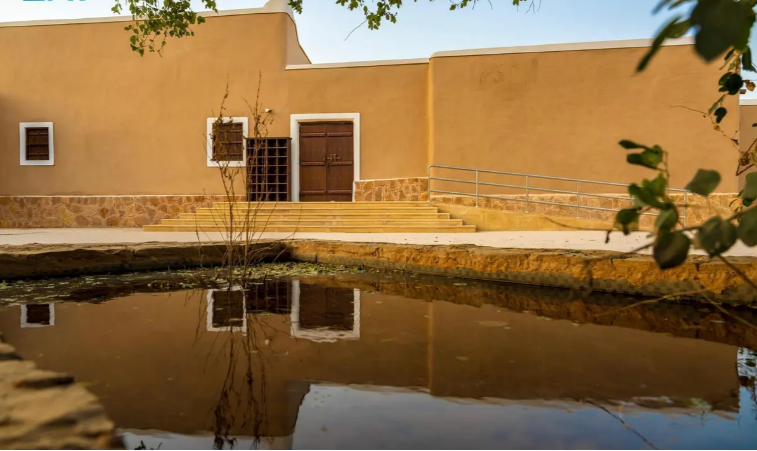
Before the restoration work began, the area of the mosque was approximately 642.85 square meters, and it is planned that after its development it will reach 804.32 square meters, to accommodate 440 worshippers, within the framework of preserving the historical identity while enhancing the functional aspect to serve the worshippers.
One of the biggest challenges facing the mosque's renovation project was the scarcity of suitable wood in the surrounding area. However, those in charge of the project ensured the availability of the required types of wood, implementing meticulous treatment processes to guarantee their long-term quality and durability. These processes include "straightening and tempering," essential steps to remove the wood's sap before use, as well as treating it with materials that protect it from damage and insects.
The project employs authentic traditional methods of wood decoration, using sharp tools to carve heritage motifs and patterns, with the aim of reviving architectural heritage and preserving the visual identity of historic mosques. The project also seeks to raise community awareness of the importance of caring for historic mosques, recognizing them as an integral part of the Kingdom's identity and cultural heritage.
Al-Qibli Mosque is one of 30 historical mosques included in the second phase of Prince Mohammed bin Salman's project to develop historical mosques, which covers 13 regions across the Kingdom. The mosques are distributed as follows: 6 mosques in the Riyadh region, 5 mosques in the Makkah region, 4 mosques in the Madinah region, 3 mosques in the Asir region, 2 mosques each in the Eastern Province, Al-Jawf, and Jazan, and one mosque each in the Northern Borders, Tabuk, Al-Baha, Najran, Hail, and Al-Qassim regions.
The project aims to strike a balance between preserving authentic architectural identity and implementing modern building standards, ensuring the sustainability of these mosques and their continued religious, social, and cultural role for decades to come. The project is being carried out by Saudi companies specializing in the restoration of heritage buildings, in collaboration with Saudi engineers, to guarantee adherence to the finest details of each mosque's architectural identity.
It is worth noting that the second phase of the project came as a continuation of the first phase, which was launched in 2018, and which included the rehabilitation and restoration of 30 historical mosques in 10 regions of the Kingdom, within the framework of a comprehensive vision to preserve historical mosques as part of the Kingdom’s identity.
The Prince Mohammed bin Salman Project for the Development of Historical Mosques is based on four main objectives: rehabilitating historical mosques to make them suitable for worship and prayer, restoring their architectural authenticity, highlighting the Kingdom's cultural heritage, and enhancing the religious and cultural significance of these mosques. The project also contributes to showcasing the Kingdom's cultural and civilizational depth, in line with the goals of Saudi Vision 2030, by preserving traditional architectural features and incorporating them into the design of modern mosques.