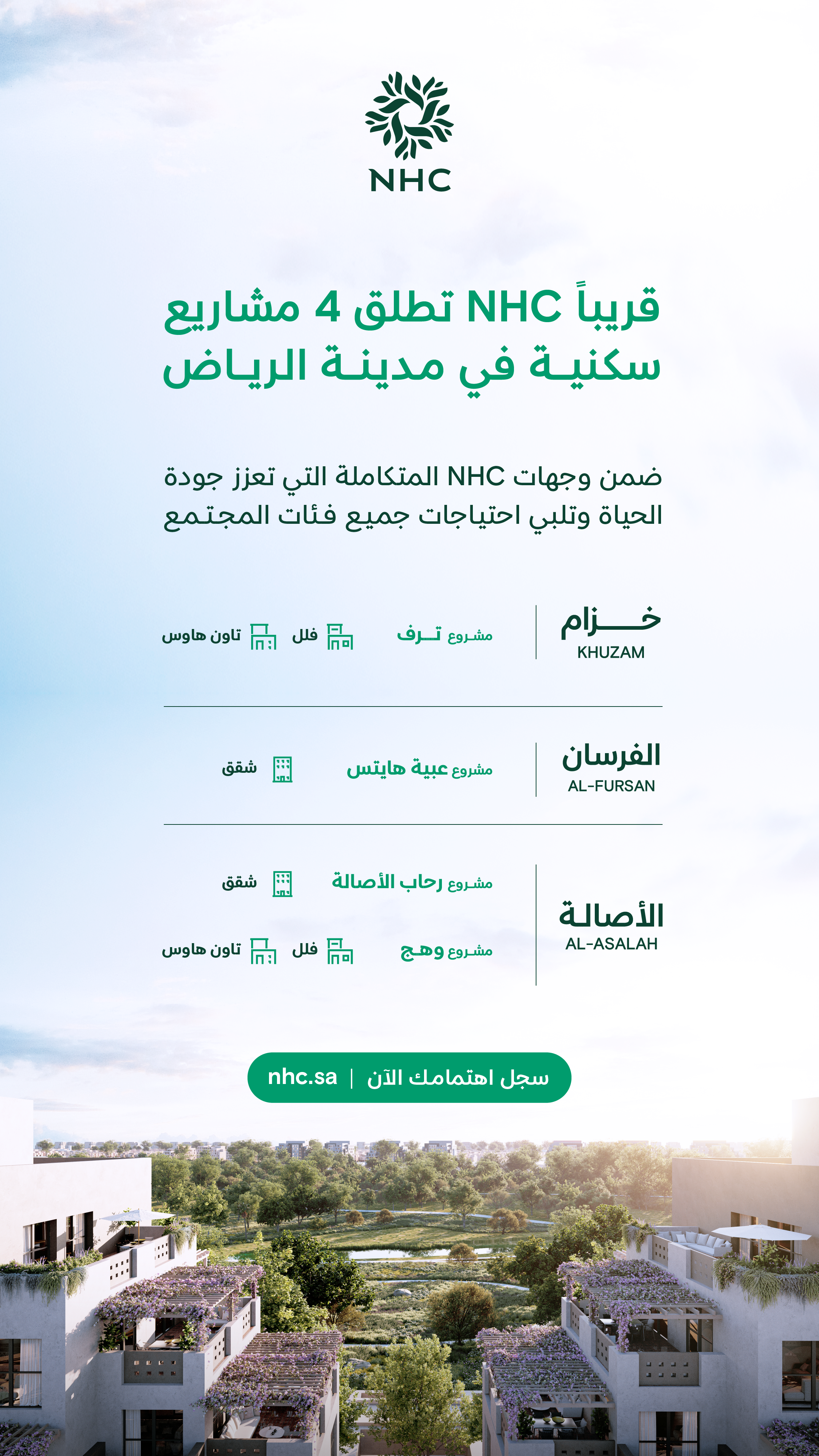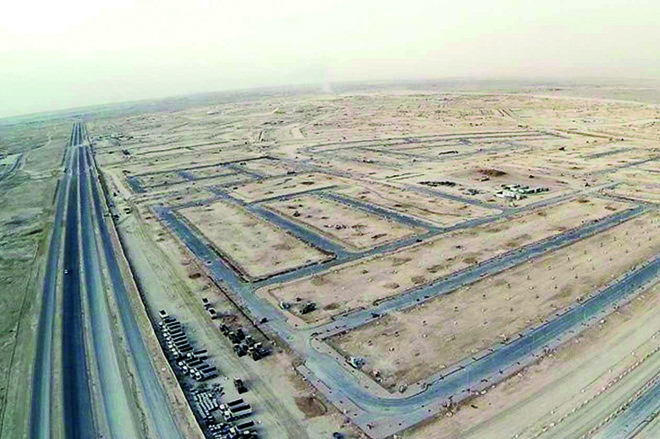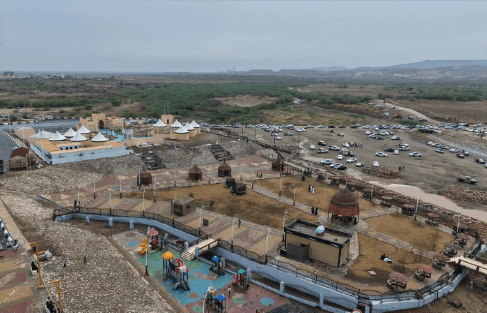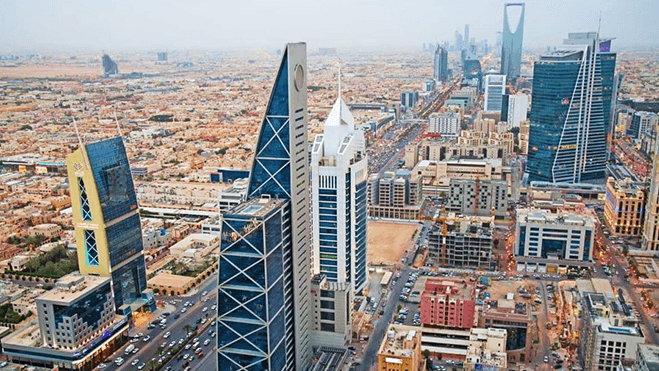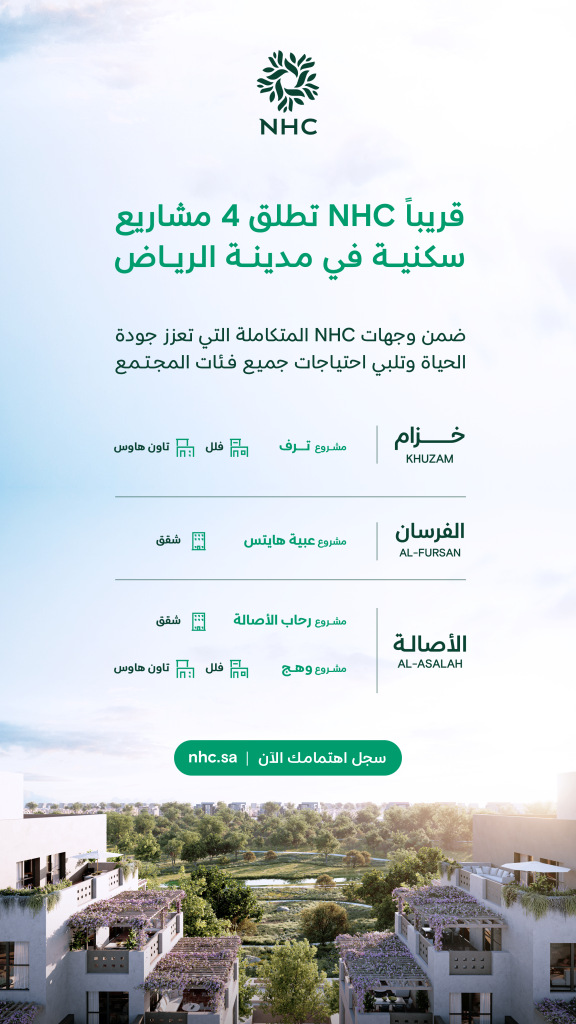

The National Housing Company (NHC) has announced its plans to launch four integrated residential projects within its modern urban developments in Riyadh, including: Tarf, Abia Heights, Wahaj, and Rehab Al-Asala.
This move is part of the company’s commitment to supporting urban expansion and providing diverse, modern housing options that contribute to enhancing the quality of life in the capital.
The Tarf project in the Khuzam district north of Riyadh is one of the most anticipated developments. It offers a range of villas and townhouses with modern designs and features comprehensive amenities, including green parks, a community center, a shopping center, a mosque, and schools, making it a comprehensive urban destination that meets the needs of families and keeps pace with modern urban development.
As for the Abia Heights project in Al-Fursan, it offers model apartments with essential amenities such as swimming pools, sports clubs, parks, and children’s play areas, creating an ideal environment for those seeking to settle in communities that combine comfort and luxury.
The announcement also includes the Wahaj and Rehab Al-Asala projects in the Al-Asala district, which reflect the company’s commitment to developing modern and diverse residential products—including villas, townhouses, and apartments—to meet the needs of various segments of society.
NHC invited those interested in these projects to register their interest via the company’s online platform at: (https://nhc.sa/form-reg/riyadh-projects/).
NHC is the largest developer of integrated urban destinations in the region, leading the real estate development process in the Kingdom in accordance with quality and sustainability standards, and aims to increase the homeownership rate among Saudi families to 70% by 2030, as part of the objectives of the Housing Program—one of the programs under Saudi Vision 2030. These projects are not merely residential units; they represent a national transformation toward vibrant urban communities that are ready for the demands of the future.