
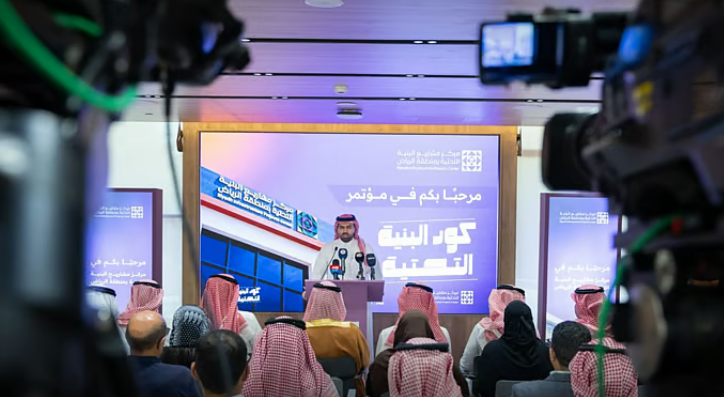

In an interview with Al-Ikhbariya TV, Al-Zuweid explained that the code is a regulatory document and is considered to be one of the most important documents in the field of infrastructure projects. During an intervention on Al-Ekhbariya channel and statements at the Code for Infrastructure Projects conference, Al-Zuweid explained that the code is a comprehensive regulatory and technical document that contains more than 90 standards and professional controls, including precise technical details related to safety, licenses, visual identity of work sites, excavation execution times, standardized specifications for signs, clothing and safety tools, stressing that the code will bring a qualitative shift in the management of infrastructure projects in the capital.
Infrastructure Projects Center spokesperson Saleh Al-Zuweid: Infrastructure code aims to organize works from planning to implementation and contributes to raising quality and improving the urban landscape in Riyadh 1TP5 | 1TP5 pic.twitter.com/h3Ayvh8i3o
pic.twitter.com/h3Ayvh8i3o
- Al-Ekhbariya Channel (@alekhbariyatv) August 6, 2025
Comprehensive regulation from planning to closing
The code covers the entire project lifecycle, from the planning stage, through obtaining permits, executing field work with clear safety procedures, developing traffic plans, and final site closure. Contractors are required to provide safe corridors, secure sites around the clock, install standardized identification signs, warning lighting, and clean the site on a daily basis.
The code also specifies the hours of operation for the project. The code also specifies field work hours from 7 a.m. to 6 p.m., ensuring residents" comfort and minimizing disturbance during nighttime hours, and prohibits contractors from carrying out work outside this time range.
The code also specifies field work hours from 7 a.m. to 6 p.m., ensuring residents" comfort and minimizing disturbance during nighttime hours.
Fines for violators up to 50,000 riyals
<On the control side, Al-Zuweid explained that the code includes financial penalties starting from 500 riyals up to 50,000 riyals, applied to violators of organizational and technical standards. However, he noted that there is an increasing commitment from contractors, given the benefits that compliance with the code brings in raising efficiency and improving project outputs.Zuweid said that the code includes financial penalties starting from 500 riyals up to 50,000 riyals.
Speaker of the Infrastructure Projects Center in Riyadh Saleh Al-Zuweid:
Financial fines of up to 50 thousand riyals for violators of “Infrastructure Projects Code” or licenses# Real Estate Exchange | # News pic.twitter.com/Qn2fxY0AT2
pic.twitter.com/Qn2fxY0AT2
Ekhbariya - Economy (@alekhbariyaECO) August 6, 2025
Broad partnership to ensure effective implementation
<The Infrastructure Code was developed over a period of more than 8 months, with the active participation of service agencies, contractors and consultants, with the aim of addressing field challenges and achieving the highest degree of coordination, especially in light of the issuance of more than 500 digging licenses every day in Riyadh. To ensure the effectiveness of the application, the Center has organized 25 workshops and introductory meetings since the launch of the code, during which the mechanisms of applying the code and the most prominent technical standards it includes were explained, in order to strengthen the partnership between government agencies and the private sector.Blockquote class="blockquote">
<The code is expected to make a significant difference in raising the quality of life in Riyadh, improving the field environment, minimizing negative impacts on pedestrians and residents, and ensuring that projects run smoothly without affecting daily life. The Infrastructure Projects Center emphasizes that this code is not only a regulatory guide, but a unified reference for the urban future of Riyadh, and a key tool in achieving the goals of Saudi Vision 2030 in improving infrastructure and increasing spending efficiency and implementation quality.During the Infrastructure Code Conference...
Speaker of the Infrastructure Projects Center in Riyadh Saleh Al-Zuweid: "Infrastructure Projects Code" was prepared during more than 8 months, with the aim of addressing field challenges and improving the urban landscape # Real Estate # News pic.twitter.com/5weV6getaF
Riyadh Infrastructure Projects Center Spokesperson Saleh Al-Zuwaid
Ekhbariya - Economy (@alekhbariyaECO) August 6, 2025


