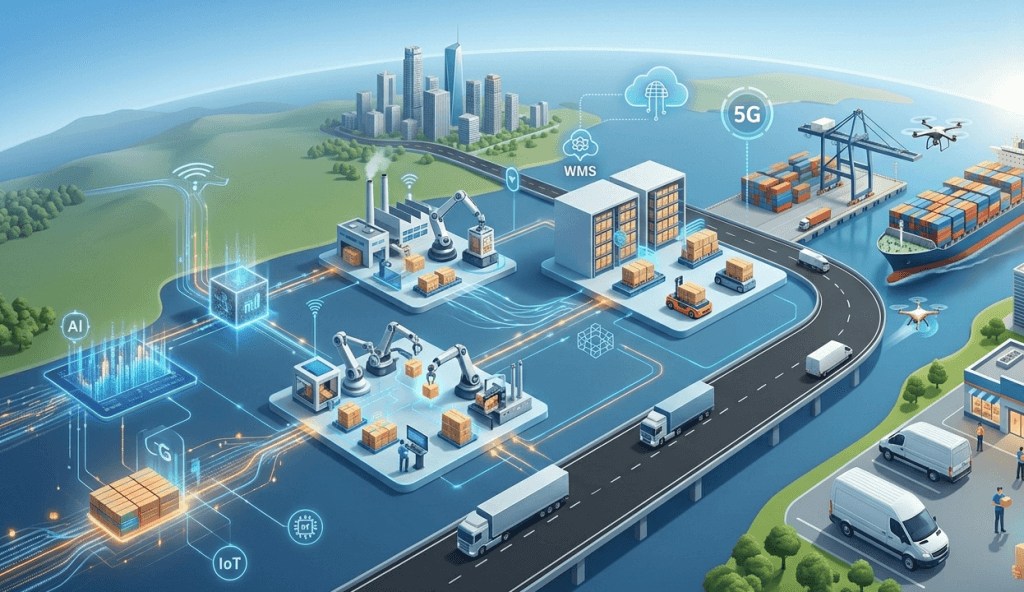

It's no longer just project managers at construction companies who track suppliers, manage invoices, and deal with supply crises. A new class of «digital managers» known as AI agents have emerged. These systems are not just technical assistants, but can now manage supply chains semi-autonomously, a shift that could reshape the construction industry globally.
It's not just the project managers at construction companies who are keeping track of suppliers, managing invoices, and dealing with supply crises.
Business Insider reports on the rise of a startup called Crane, which has developed a platform based on AI agents to manage supply chains in construction projects, especially complex projects like data centers.
The platform collects data from multiple sources, including project timelines, cost schedules, and supplier emails, to form an integrated system capable of analyzing information and making operational decisions in real time.
An AI agent-based platform for managing supply chains in construction projects, especially complex projects like data centers.
According to the report, agents take over tasks that used to require extensive human intervention, such as tracking purchase orders, communicating with suppliers, and reviewing and reconciling invoices, which minimizes human error and speeds up the pace of work within projects.
According to the report, agents take over tasks that used to require extensive human intervention, such as tracking purchase orders, communicating with suppliers, and reviewing and reconciling invoices.
From manual management to automation
The Business Insider report notes that supply chains in the construction industry have long relied on manual coordination, leading to frequent delays and cost inflation.
With the introduction of AI agents, this model has changed radically. Crain's platform distributes tasks among multiple specialized agents, each responsible for a specific part of the process, such as tracking deliveries or analyzing potential supply risks. This model has fundamentally changed.
Advanced Supplier Selection Analysis Algorithms are able to analyze a wide range of criteria, including delivery time, material quality, and compliance with technical specifications, enabling more accurate decisions to be made.
Reduce delays and control costs Reduce delays and control costs A breakthrough moment driven by artificial intelligence Business Insider's report argues that the development of modern AI models, especially big language models, was a key turning point that allowed these advanced systems to emerge.
Despite the growing reliance on AI, the report notes that these systems do not operate fully autonomously, relying instead on a "human-in-the-loop" model, where decisions made by algorithms are supervised. Despite the growing reliance on artificial intelligence, the report notes that these systems do not operate fully autonomously.
Integration with existing systems Integration is more realistic than full replacement.
Investments reflect confidence in the future The report notes that the company has secured $9 million in funding, reflecting the confidence of investors in the potential of this type of technology solution.
It is estimated that the market for AI in construction is experiencing strong growth, driven by the need to improve efficiency and reduce costs, especially in large-scale projects such as infrastructure and data centers. This growth reflects a strategic shift in the industry, where technology is no longer an add-on option, but a key element in achieving competitiveness.
In light of the Business Insider report, the construction industry appears to be entering a new phase where operations are managed not just by humans, but by intelligent systems capable of learning and decision-making. As AI agents develop, it may become the norm for supply chains to be almost entirely managed by these systems, opening the door for more efficient and less expensive projects.
This multi-agent model allows for simultaneous and accurate management of every detail of a project, which boosts operational efficiency and reduces the likelihood of disruption.
A key aspect highlighted in the Business Insider report is the ability of these systems to optimize the supplier selection process. Instead of relying solely on price, algorithms analyze a wide range of criteria, including delivery time, material quality, and adherence to technical specifications, enabling more accurate decisions to be made.
The system, according to the report, starts by identifying the project's material and equipment needs, then compares offers from suppliers and selects the most suitable ones based on a comprehensive analysis of the data, reflecting the shift from traditional to AI-powered decisions.
The report emphasizes that one of the main goals of this technology is to reduce delays, which is one of the main challenges facing the construction industry, especially in time-sensitive projects.
By automating procurement and supply processes, these systems reduce budget overruns and improve project predictability, giving companies a clear competitive advantage in a highly cost- and time-sensitive market.
The Business Insider report argues that the significant development of modern AI models, especially big language models, was a key turning point that allowed these advanced systems to emerge.
After years of relying on limited digital tools, it is now possible to develop systems that can intelligently understand and interact with complex data, opening the door for more sophisticated applications in the construction industry.
However, some agents, especially those that rely on voice technologies, enjoy greater autonomy, reflecting the trend toward giving AI an increasing role in managing daily operations.
A notable point from the Business Insider report is that Crane's platform does not seek to replace systems used in the construction industry, but to integrate with them, making it easier to adopt within companies.
This approach reflects an understanding of the nature of the industry, which relies on multiple overlapping systems, making integration more realistic than full replacement.
The report notes that the company has secured $9 million in funding, reflecting investor confidence in the potential of this type of technology solution.The funding has been directed towards developing the platform, expanding its use, and adding new tools aimed at improving supply chain management, especially for subcontractors.
While the Business Insider report focuses on Crane's experience, it reflects a broader trend in the global market, where AI in the construction industry is growing at an accelerated pace.
This growth reflects a strategic shift in the industry, where technology is no longer an add-on option, but a key element in achieving competitiveness.
As AI agents develop, it may become the norm for supply chains to be almost entirely managed by these systems, opening the door for more efficient and less expensive projects.