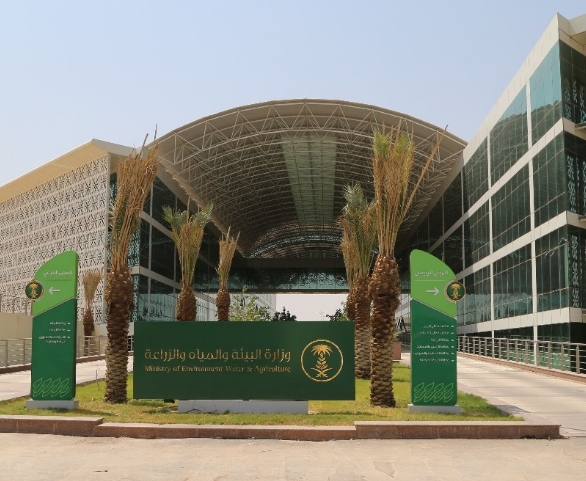

The Kingdom is moving to tighten oversight of the use of water and raise the level of compliance with efficiency and conservation standards, as the Executive Regulations for Monitoring and Compliance with Water Efficiency and Conservation Standards take effect on March 21, 2027, thereby establishing a clearer framework for violations and penalties applicable to non-compliant facilities and entities.
The Minister of Environment, Water, and Agriculture Abdulrahman bin Abdulmohsen Al-Fadli recently approved the executive regulations, which aim to promote water sustainability in the urban, agricultural, and industrial sectors, and to raise the level of compliance with water efficiency and conservation standards, in addition to addressing existing gaps in the monitoring and compliance system. The regulations classify violations as serious or non-serious, with varying fines that increase upon a second or third offense, depending on the nature of the violation and its impact on water consumption and efficiency.
200,000 riyals fine
One of the most serious violations in the urban sector is the use of drinking water for purposes other than those for which it is intended, when alternative water sources are available, such as treated wastewater, treated water networks, or licensed wells. The fine for this violation is 25,000 riyals for the first offense, increases to 200,000 riyals for the second offense, and remains at 200,000 riyals for the third offense, according to the schedule of violations and penalties.
Serious violations also include failure to operate a graywater treatment system in buildings and complexes where the installation of such systems is required; the fine for this is 50,000 riyals for the first offense, then 100,000 riyals for the second offense, and 100,000 riyals for the third offense.
Violations Related to Water Use and Fixtures
The regulations classify the use of plumbing fixtures that do not comply with the standards and regulations issued by the Saudi Standards, Metrology, and Quality Organization as a non-serious violation, with a fine of 1,000 riyals for the first offense, 2,000 riyals for the second, and up to 10,000 riyals for the third.
A fine is also imposed for tampering with or removing the flow-regulating component from flow-regulated plumbing fixtures; the penalty starts at 500 riyals for the first offense, rises to 1,000 riyals for the second offense, and then to 2,000 riyals for the third offense.
Minor violations also include the waste of drinking water from underground or elevated tanks due to cracks in the tank body or insulation, a malfunction, or the absence of a float valve in each tank, with a fine of 5,000 riyals for the first offense, 10,000 riyals for the second, and up to 50,000 riyals for the third.
Fines for Irrigation Systems and Leaks
The regulations include penalties for the use of an inefficient irrigation system, classified as a minor violation, with fines starting at 5,000 riyals for the first offense, increasing to 10,000 riyals for the second, and reaching 100,000 riyals for the third.
A fine is also imposed for leaks in the irrigation network or the internal water network, amounting to 2,000 riyals for the first offense, 4,000 riyals for the second offense, and up to 10,000 riyals for the third offense.
Violations also include the failure to display water conservation awareness materials in public facilities within buildings in a manner appropriate for users; the fine is 2,000 riyals for the first offense, 4,000 riyals for the second, and 10,000 riyals for the third.
When is a violation considered a repeat offense?
The regulations specify the criteria for determining repeat violations; a violation is not considered a repeat offense if a full year has passed since the last violation.
If the violation is repeated after the third time, the fine specified for the third offense is applied, in accordance with the approved classification for each violation.