Can a train station change the economy of an entire neighborhood?
The answer is not related to transportation alone, but to the movement, opportunities, and experiences that the station creates around it. The train does not just transport people between parts of the city; it also redistributes economic activity, connects residents to businesses and services, and gives some locations the opportunity to transform from transit points into vibrant destinations.
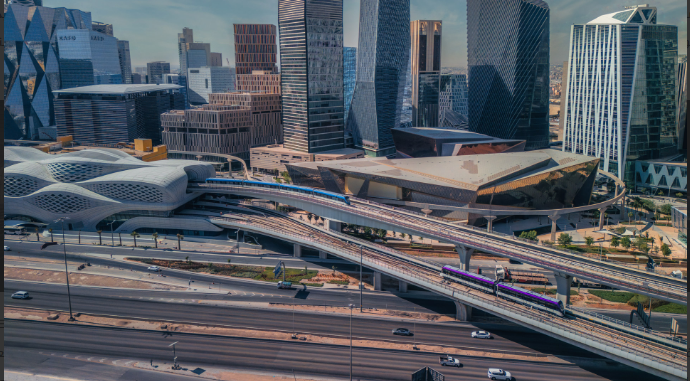
On November 27, 2024, the Custodian of the Two Holy Mosques, King Salman bin Abdulaziz, inaugurated the Riyadh Metro project, and it began receiving passengers on December 1. The network spans 176 kilometers across six lines and 85 stations, with a maximum capacity of 3.6 million passengers daily, making it one of the largest and most impactful urban transport projects for the future of the capital.
The indicators reveal the speed with which the project has been integrated into city life; the train received its 100 millionth passenger in less than nine months, and then reached 200 million passengers on March 14, 2026. It also entered the Guinness Book of Records on November 27, 2025 as the longest driverless train network in the world.
But the true value doesn't stop at these figures; each station represents a human gathering point capable of stimulating cafes, shops, hotels, offices, and services, enhancing the appeal of surrounding neighborhoods, encouraging real estate investment, and increasing visitor length of stay and spending. This is what is known globally as transport-led development, where mixed-use environments are built around stations, easily accessible on foot, and offering integrated opportunities for housing, work, shopping, and entertainment.
From a city marketing perspective, the station becomes a gateway to Riyadh and a microcosm of the city. Its design, the services it offers, and its connection to landmarks, events, and markets all contribute to creating an experience that influences the city's image among residents, visitors, and investors.
To measure the impact, indicators beyond the number of trips should be monitored, such as the growth of business records around stations, space occupancy rates, property values, pedestrian traffic, average visitor spending, number of events, and the extent to which residents are switching from private vehicles to public transport .
This exemplifies the statement of His Royal Highness Crown Prince Mohammed bin Salman: “True development begins in cities.” The Riyadh Metro reflects the objectives of Saudi Vision 2030 in building a “vibrant society” with a better quality of life, and a “thriving economy” supported by a more efficient, sustainable, and competitive urban infrastructure.
Therefore, the most important indicator in the future will not only be the number of passengers, but also the volume of business, jobs, investments, and experiences that arise around stations. So, are we planning stations to transport people, or to create destinations that generate a new economy?