
على متن 26 إقليماً تمتد سهول وجبال دولة سويسرا الساحرة التي تنزع الدهشة من قلوب السياح والمهاجرين بروعة مقوماتها السياحية التي سخرتها الحكومة لدعم الاقتصاد السويسري بتطوير خدماته ورعاية الآثار التاريخية لدولة سويسرا التي نشأت في الأول من أغسطس 1291أي قبل 726 عاماً.
تنتهج السياسة السويسرية موقف الحياد في النزاعات الدولية والعالمية حيث لم تنضم في الحربين العالميتين الأولى والثانية لأي حلف, وهي منذ ما يقارب مائة عام تحتوي تحتضن مقر الأمم المتحدة.
معلومات عامة
تقع سويسرا في جنوب أوروبا الوسطى تحدها ألمانيا من الشمال، فرنسا من الغرب، إيطاليا من الجنوب، النمسا وليختنشاين من الشرق، تمتد جبال الألب على مساحة كبيرة من أراضيها، ولموقعها وسط قارة أوروبا فهي تربط بين العديد من الدول الأوربية, وتمثل فيها الديانة المسيحية المعتقد لمعظم سكان سويسرا الأصليين (76%), وتوجد نسب مقدرة من المسلمين واليهود, أما اللغات التي يتعامل بها الشعب السويسري هي الألمانية والفرنسية والإيطالية, بينما يمثل الفرنك العملة الرئيسية للتعاملات اليومية, كما يمكن استعمال اليورو.
صناعة السياحة توظف 250 ألف سويسري
تلعب السياحة في سويسرا دوراً كبيراً في نمو الاقتصاد المحلي حيث يوظف قطاع السياحة أكثر من 250 ألف مواطن, وتتعدد القطاعات السياحية في جميع المدن الرئيسية حيث تمثل سياحة الأعمال والمؤتمرات والسياحة العلاجية والاستجمام والتنزه روافداً مهمة تجعل القطاع السياحي في المرتبة الثالثة من حيث الأهمية الاقتصادية, وذلك نسبة لمناظرها الطبيعية الرائعة وجبالها وبحيراتها، حيث تلعب الطوبورغرافيا فيها دورًا مركزيًا في بلورة اقتصادها وثقافتها وتقاليدها السياسية، إلى جانب موقعها السياحيّ الدوليّ الكبير.
تعتبر أنشطة التزلج على الجليد وتسلق الجبال من أهم مصادر الدخل التقليدية في سويسرا التي تتمتع بمناظر بانورامية رائعة لجبال الألب.
1500 بحيرة تنعش السياحة
تضم سويسرا في سهولها وبين أودية جبالها أكثر من 1500 بحيرة مختلفة الأحجام يقصدها السياح والمصطافون لتجعلها دولة سياحية من الطراز الأول، عناصر الجذب فيها قوية وجميلة.
التجارة البينية تنعش الاقتصاد
تمثل مدينة زيوريخ أهم المراكز الاقتصادية بسويسرا حيث تضم ما يقارب 150 ألف شركة, فيما يحتل قطاع التجارة الدولية موقعاً مرموقاً ورائداً حيث تعتمد الدولة على أرباحها الخارجية على 50% من عوائد القطاع من خلال تلك الاستثمارات القوية ليقترن ذلك بمعدلات ضريبية منخفضة كما هو متعارف عليه في العالم الغربي مما يعزز بلوغ تلك الصناعة الذروة.
والحركة التجارية النشطة في سويسرا تمنح نصف صادراتها للدول المجاورة لها بمنطقة اليورو؛ وهو ما يعني أن مصير الاقتصاد فيها منعقد بجيرانها الأوروبيين, لذا يعتبر الاتحاد الأوروبي شريكاً رئيسياً للدولة, هذا فضلاً عن والولايات المتحدة واليابان والصين فضلًا عن ودول المحيط الهادي.
أما الدخل السنوي للأسرة يبلغ 95 ألف فرنك أي ما يعادل (100 ألف دولار أمريكي في السنة). مع العلم أن سويسرا لديها واحدة من أكبر أرصدة الحسابات في العالم بل وتمثلها نسبة مئوية ضخمة من الناتج المحلي الإجمالي.
برن ملتقى القطارات الأوروبية
برن هي مدينة العاصمة الفدرالية (Bundesstadt) في سويسرا، وتقع في كانتون برن وترتفع برن عن البحر 542 مترًا وهي تمتد على ضفتي نهر آر (Aare) في السهول السويسرية (Mittelland), وعدد سكان المدينة قرابة 132000 نسمة، وهي المدينة الخامسة في سويسرا من ناحية عدد السكان.
تأسست برن عام 1191 واُعترف بها مملكة حرة في القرن الثالث عشر. في عام 1353 ضُمت إلى الكونفدرالية السويسرية القديمة وأصبحت من أقوى مدنها, وقد حُرقت برن بشكل تام تقريبًا عام 1405 ثم أعيد بناؤها وقتها على طراز النهضة, وقد أُعلن مركزها القديم عام 1983 على قائمة التراث العالمي التابعة لليونسكو، وتحولت إلى مركز الحكم الفدرالي السويسري عام 1848، كما تتخذ عدة مؤسسات دولية من برن مركزًا لها.
تتميز تضاريس برن بأنها تقع على تل عند ملتقى الطريق القادمة من جبال الألب إلى جبال جورا، وعند مفترق الطرق الممتدة على طول السهول السويسرية والتي تشكل شريانًا حياً ومهماً للمواصلات في الدولة, وتقع المدينة القديمة في برن عند التفاف حاد لنهر الآر الذي يحيطها من الجنوب والشرق والشمال, أما من الغرب فقد سُوّرت في الماضي بسور تقع على بعض أجزائه اليوم محطة القطار المركزية, ولم تنجح مدن كثيرة في الحفاظ على معالمها التاريخية تماماً كما نجحت مدينة برن, ثم تطورت المدينة العصرية من حول البلدة القديمة إلى جميع الاتجاهات، وبرن مقسمة اليوم إلى ستة أجزاء، تنقسم بدورها إلى 32 حيًا كبيرًا.
يقع مطار Flughafen Bern-Belp شرقي برن، وتعمل فيه عدة خطوط ثابتة مع مدن أوروبية ورحلات مستأجرة إلى مناطق استجمام في منطقة المتوسط أثناء الصيف, وتشكل برن مفترق طرق مهماً لحركة القطارات في سويسرا، حيث تمرّ فيها جميع قطارات الدولة تقريبًا، وتعتبر محطتها المركزية (Bern Hauptbahnhof) ثاني أكبر محطة في سويسرا، وتخرج منها رحلات بالقطار إلى ألمانيا وإيطاليا وفرنسا وإسبانيا. وتلتقي في برن ثلاثة شوارع سريعة مركزية تصلها بزيورخ وجنيف ولوزان وغيرها, أما في داخل المدينة فهناك شبكة مواصلات عامة تديرها Bernmobil التي تشغل ثلاثة خطوط ترامواي وحافلات كهربائية وحافلات عادية.
أما من ناحية المباني والآثار على المستوى الثقافي فهناك بيت كورنهاوس (Kornhaus) الثقافي، والمسرح البلدي Stadttheater Bern. وتجرى في المدينة عدة مهرجانات أشهرها مهرجان غورتن (Gurtenfestival) لموسيقى الروك والبوب ومهرجان BeJazz للجاز ومهرجان شنيط للأفلام القصيرة (Shnit Kurzfilmfestival) وكرنفال برن(Berner Fasnacht) وغيرها. وهناك المتحف الفني (Kunstmuseum Bern) ومركز بول كلي (Zentrum Paul Klee) وغيرهما.
زيورخ: مركز الأعمال والتجارة
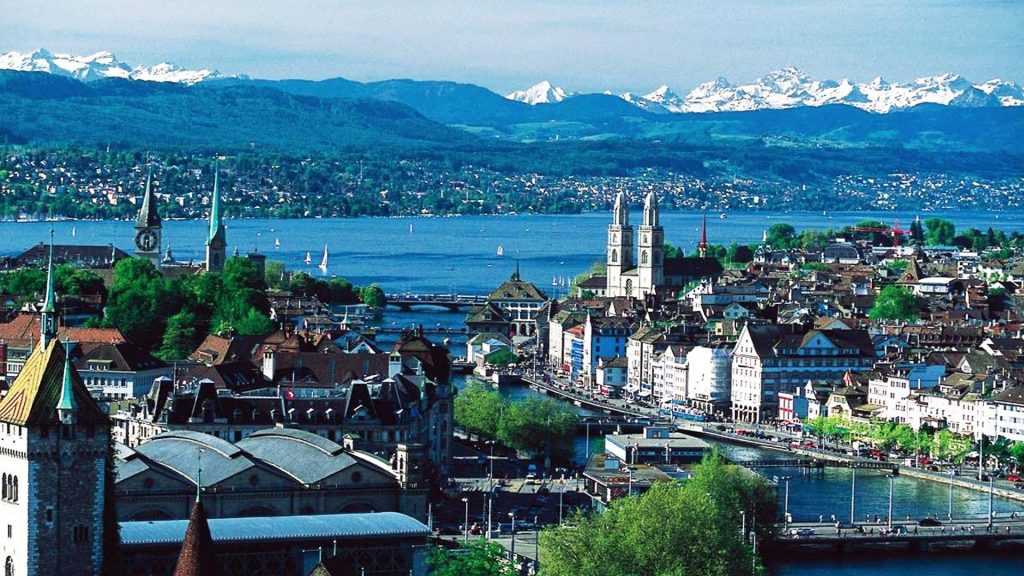
تقع مدينة زيورخ في كانتون زيورخ، حيث منبع نهر ليمت من بحيرة زيورخ, ويبلغ عدد السكان قرابة 400000 نسمة، حيث يشكل موقعها الجغرافي أحد أهم أسباب تطورها الضخم من الناحية التجارية والصناعية: فهي تقع على مفترق طرق مهمة تؤدي إلى إيطاليا وفرنسا وألمانيا.
وتتمثل مكانتها الصناعية بمصانع للنسيج والماكنات والكيماويات وحفظ الطعام. كما أنّ زيورخ هي مركز الأعمال والتجارة والموضة والثقافة في سويسرا. وتتميز بمستوى معيشة عالٍ.
شارعها الرئيسي هو باونهوفشتراسا (Bahnhofstrasse) ويعني شارع محطة القطار، الذي يبدأ بمحطة القطار المركزية وينتهي في البحيرة. ويمتاز هذا الشارع بكونه فخمًا وتتجمع فيه المتاجر ذات البضائع الغالية والبنوك البارزة وفروع شبكات الموضة والتسوق الرائدة.
جنيف عاصمة السياحة والتجارة والدبلوماسية
تُعتبر جنيف عاصمة السلام الدولية, فهذه المدينة الرائعة بتضاريسها وتفاصيلها تحتضن مؤسسات دولية كبرى جعلت منها مركزًا دوليًا للمداولات والاجتماعات الدولية.
جنيف هي عاصمة كانتون جنيف الذي يقع جنوب غرب سويسرا. وتتمركز جنيف عند الطرف الغربي من بحيرة جنيف (Lac Léman)، على الحدود الفرنسية, وتشكل جنيف مركزًا سياحيًا وتجاريًا ودبلومسيًا مهماً جدًا، وهي ثاني أكبر مدن سويسرا من حيث عدد السكان (بعد زيورخ) حيث يزيد عدد سكانها عن 190000 نسمة (أكثر من 800000 نسمة في منطقتها الحضرية)، كما أنها أكبر مدينة في منطقة روماندي، وهي القسم الفرنسي من سويسرا. ويعيش ثلثا سكان منطقة جنيف في سويسرا بينما يعيش الثلث في داخل مناطق سيادية لفرنسا.
يوجد في جنيف مطار دولي وهي مقرّ العديد من المؤسسات الدولية ذات الطابع الإنساني عمومًا، ومن أهمها: المفوضية العليا للاجئين، منظمة الصحة العالمية ومنظمة الصليب الأحمر الدولي, كما توجد في جنيف مبنى عصبة الشعوب الذي يستخدم اليوم كمركز الأمم المتحدة في أوروبا, وقد سبب هذا الوضع حالات طريفة خاصة بالمدينة منها أنّ ثلث السائقين في جنيف يتمتعون بحصانة دبلوماسية.
وتتوسط مدينة جنيف سلسلتين جبليتين كبيرتين: جبال الألب من الجنوب وجبال جورا من الشمال. وتبلغ مساحة المدينة قرابة 16 كيلومترًا مربعًا، في حين يمتد الجزء المجاور لها من البحيرة على 38 كيلومترًا ويُسمى البحيرة الصغرى (Petit lac). وترتفع جنيف 373 مترًا عن سطح البحر، فيما يقطعها نهر أروو الذي يصب في نهر الرون غربي مركز المدينة.
140 متراً في نافورة جنيف
ومن مميزات جنيف المشهورة نافورتها التي تضخ المياه حتى 140 مترًا إلى الأعلى، وهي رمز المدينة، ومعلم سياحي جذاب.
ومن معالم مدينة جنيف العمرانية كاتدرائية سانت بيير والبلدة القديمة وقصر الأمم, ومنطقة Quartier des Grottesالمتميزة بمتاجرها الخاصة والفريدة، وغيرها. كما تحوي جنيف المتاحف وصالات العرض، ومنها: المتحف الدولي للإصلاحات ومتحف Musée ARIANA ومتحف الفن المعاصر،Musée d’Art Moderne et Contemporain كما تشكل المتنزهات حزًا خاصًا ومركزيًا في تضاريس جنيف الجميلة.
العقارات في سويسرا
تشهد السوق العقارية في سويسرا استقراراً ونمواً في حركة الاستثمار والتي تزيد بتدفق السياح في النصف الثاني من كل عام, وهنالك توجهات عديدة لتعامل السياح والمستثمرين مع العقار إما بالإيجار أو الشراء والتملك, حيث ينظم قانون كولَّر الفدرالي كيفية تَمَلُّك الأجانب للعقارات في سويسرا, بيد أنَّ امتلاك منزل أو شقة أو قطعة أرض، لا يُخوّل الشخص الأجنبي الحصول على تصريح إقامة في سويسرا, وتقع مهمة تنفيذ هذا القانون، ومَنح تصاريح وأذون شراء العقارات بالتالي على عاتق الكانتونات.
وهنالك فرصاً تمويلية لشراء العقارات (قروض عقارية) تتراوح بين 60 و80% , فيما يسدد المشتري 20% أو أكثر من جملة التكلفة كتمويل ذاتي, كما يتعين عليه دفع تكاليف الشراء الإضافية ومختلف الضرائب والرسوم لإتمام الصفقة وتسجيل العقار في. أما أسعار الفائدة فتكون منخفضة في الغالب وبمعدل 4% أو أقل.
شراء منزل عطلة
يمكن للأجانب شراء منازل للعطلات، ولكنهم بحاجة إلى ترخيص خاص للقيام بذلك, وهنا تسري العديد من الشروط؛ إذ لابد للعقار أن يكون في مكان محدد مُصَنَّف من قبل سلطات الكانتون كمنتجع سياحي، وهنا يسري تطبيق نظام الحصص, كما يمكن أن تضيف الكانتونات والبلديات قيوداً خاصة بها، مثل السماح للأجانب بشراء عقارات تعود ملكيتها لأجانب بالفعل فقط.
ولا يمكن تأجير منازل العطلة لطرف ثالث على مدار السنة، لكنه مسموح بشكل دوري فقط, كما يجب أن تكون الوحدات السكنية في الفنادق (الشقق الفندقية) مُتاحة لتشغيل صاحب الفندق ذي الصلة في مواسم الذروة, وفي الوقت الراهن، يستمر العمل على تنفيذ مبادرة شعبية تدعو للحد من بناء المنازل الثانية في بعض البلديات.
وكقاعدة عامة، يجب ألاّ يتعدى صافي مساحة المعيشة (أو المساحة التي تشمل غرفاً مثل المطبخ، صالة المعيشة، المرحاض، المسبح المغلق، الساونا، وغرفة الهوايات – لكنها لا تتضمن الشرفات أو الدرج أو القبو) والمساحة السطحية للعقار 200 م² و1000 م² على التوالي. وبالنسبة المساحات الأكبر التي تصل إلى 250 م² و1000 م² على التوالي، يمكن الحصول على ترخيص تلقائياً إذا كنت قادراً على إثبات حاجتك لهذه المساحة. ولا يمكن الحصول على مساحات أكبر إلّا في حالات استثنائية فقط.