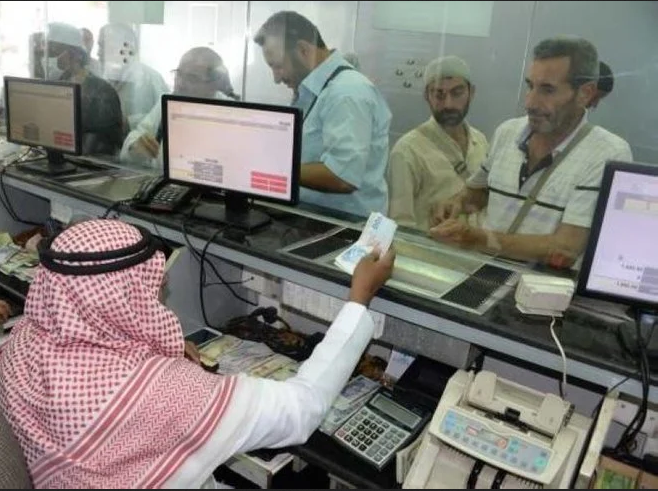

Talal Al-Haqil, head of the mergers examination unit at the General Authority for Competition, confirmed that the merger of 32 exchange companies and institutions is the largest merger in the history of the Authority in terms of the number of companies, not in terms of the value of the deal, out of a total of 73 exchange companies in Saudi Arabia.
The authority announced yesterday that it has no objection to the completion of the economic concentration process between 32 exchange companies and institutions, explaining that the type of concentration is the merger of all companies under one entity.
Al-Haqil explained that banking companies and institutions represent 34 percent of the banking market, while merger-related establishments constitute only 17 percent, and traditional banks represent 45 percent of the banking market, while hotels represent 3 percent.
According to Al-Haqil, after studying the currency exchange market (buying and selling foreign currencies) very carefully, the Authority concluded that the merger of the 32 exchange companies would not lead to the creation of a new entity capable of raising prices or limiting products.
Al-Haqil revealed that the Authority is currently studying other economic concentration requests, as it received 156 requests during the current year, while it issued 61 letters of no objection to mergers.
He said that many of these companies were affected by the coronavirus pandemic, including 19 institutions located in the Makkah region, nine institutions in Madinah, one in the Riyadh region and one in the Eastern Province.
He pointed out that these mergers, according to the companies’ statements, allow them to open branches in any region in Saudi Arabia, even in malls, to keep up with tourism, for example.
“Munafisa” explained that the currency buying and selling market is characterized by high transparency and fluctuating exchange rates according to the state of the global market, and therefore it is difficult for dominant institutions in it to raise prices.
The Authority also carefully studied the efficiency factor and concluded that the merger process would lead to increased economies of scale and reduced variable costs depending on the state of the global market, and therefore the merger process may contribute to investment in innovation and product development.
The Competition Authority said that when evaluating any merger or acquisition request, it ensures that the new entity is not in a dominant position in the market. The Authority also considers structural or regulatory barriers to entry in the sector when analyzing the sector, and based on this, it informs the sector regulator if barriers are found in the sector.