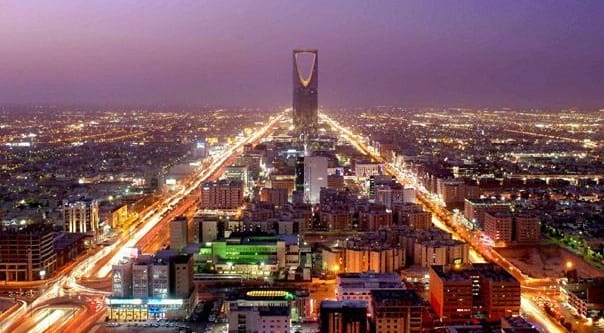
How does a city market itself when flights are disrupted, risks escalate, and an attack attempts to instill fear in its image before the world?
In moments like these, the answer is not an announcement or a promotional campaign, but the city's ability to protect people, manage the crisis, continue its business, and provide alternatives that maintain its connection with the world.
When the brutal Houthi attacks targeted King Khalid International Airport , operations were suspended to ensure the safety of its facilities. This highlighted the value of integration between the Kingdom's cities and their networks. Airports in other cities, the SAR railway connecting Riyadh to Dammam, Hofuf, and Qassim, and the road network all became alternatives that supported access to the capital and ensured the continuity of movement. Here, infrastructure transforms from a mere transportation service into a national resilience system that protects the economy and provides visitors and investors with multiple options.
At the same time, Riyadh continued to host the 25th World Petroleum Congress and the Ministerial Meeting of the International Energy Forum, with the participation of leaders and experts from around the world, confirming that it is not just a location for hosting events, but a capital for dialogue and decision-making, even in the most difficult circumstances.
His Royal Highness Prince Abdulaziz bin Salman, the Minister of Energy, summarized this spirit by saying, “The word fear does not exist in the Saudi dictionary,” stressing that dialogue becomes more important when circumstances become more difficult.
From a city marketing perspective, a crisis is a true test of a city's promises. A reliable destination is not one that avoids risks, but one that prepares for them, manages them effectively, and maintains human safety and the continuity of services and businesses.
This is Riyadh's message today: a city that does not allow its role to be disrupted; rather, it protects people, manages alternatives, and maintains its economic and international presence.
Great cities are not built on their image solely by what they say about themselves during times of prosperity, but by what they prove when tested. Riyadh does not market its strength with words; rather, it lets the world see it through its actions.
Riyadh: Flexibility that adapts to changing circumstances
The capital has proven its ability to manage the crisis and protect economic and international activity through effective transportation alternatives and by continuing to host major events.