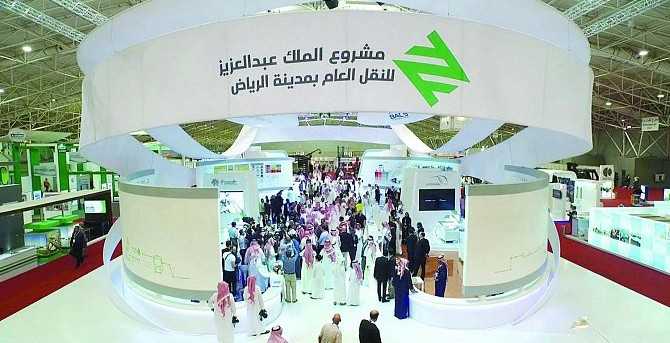
With a massive booth covering more than 50% of the space allocated to government agencies, the Riyadh Development Authority showcased the King Abdulaziz Public Transportation Project in Riyadh—which includes trains and buses—during its participation in the Kingdom’s leading public transportation exhibition, which kicked off last Sunday and will remain open to visitors until Wednesday evening at the Riyadh International Convention and Exhibition Center.
Projects showcased using touchscreen technology
The booth, which attracted the attention of visitors and exhibitors from both government agencies and the private sector, featured several sections within a single space, including a section introducing the Riyadh Train and Bus Project and its key components, as well as three booths for the international consortia implementing the train project—namely BACS, FAST, and Riyadh Neomobility—in addition to a section dedicated to the public transportation consortium implementing the Riyadh Bus Project. The Supreme Commission utilized the latest display technologies in its exhibition booth, including visual technologies such as giant screens showing documentary films about the project, interactive displays via touchscreen panels showing maps of the project’s routes and stations, as well as scale models of the four main stations, wall-mounted information panels, and infographics explaining the project’s key elements and components.
176 kilometers and 85 stations
One of the pavilion’s most prominent features is a large satellite image of Riyadh displayed on a glass panel covering a significant portion of the pavilion floor, illustrating the city’s train and bus routes, Six lines branch out from the image, illuminated in the colors of the train routes, each ending at the corner of the consortium implementing that route, in addition to a seventh line connecting to the pavilion of the consortium implementing the Riyadh bus project. The pavilion also used illustrative images to highlight the main train stations and their levels, which ranged from above ground level to at ground level and below ground level.
The pavilion highlighted the Riyadh Metro network, which serves as the backbone of Riyadh’s public transportation system. Spanning 176 kilometers and comprising 85 stations, covering most densely populated areas, government facilities, and commercial, educational, and healthcare activities, and connecting to King Khalid International Airport, the King Abdullah Financial District, major universities, the city center, and the public transportation hub.
Three International Consortia
The sections of the project’s implementing consortia at the pavilion included an introduction to the international companies participating in the consortium, a presentation of their expertise and experience in implementing and operating numerous public transportation projects in major capitals around the world, as well as an explanation of the routes being implemented by the consortia as part of the King Abdulaziz Public Transportation Project in Riyadh, the most notable work completed on these routes to date, and an overview of the job opportunities currently available to qualified Saudi professionals within each consortium.
Tunnel-boring machines… “Zafra” and her sisters
A large crowd of visitors gathered around a giant television screen to watch the giant tunnel-boring machines at work, including the machine ”Zafra,” which impressed and amazed the audience and drew the attention of photographers. Seven giant tunnel-boring machines are in operation, each ranging in length from 90 to 120 meters. They can safely drill to depths of up to 30 meters below ground without affecting surrounding structures, Neighbors do not hear any noise or feel any vibrations from them, and they perform numerous tasks, including: transporting soil, constructing tunnel walls, and laying railroad tracks inside the tunnels.