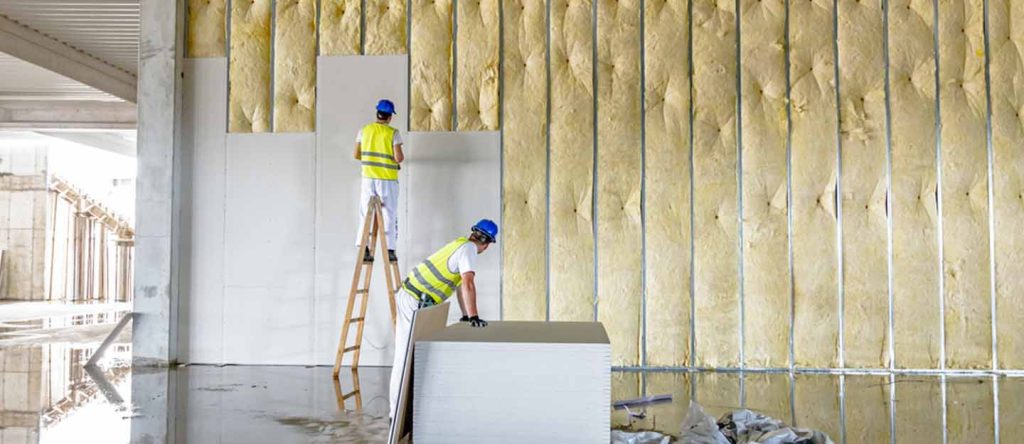

Thermal insulation.
Modern thermal insulation are materials that reduce heat transfer from outside to inside the building or vice versa, especially when there is a large temperature difference between them.
These materials are applied to the entire exterior building envelope, which includes the upper roof, exterior walls, windows, domes, and exterior doors by filling walls or cavities in buildings, giving the building excellent thermal insulation properties, and sometimes other properties such as durability, fire resistance, or even sound insulation.
Modern fleece is a material that reduces heat transfer from the outside of a building to the inside, especially the temperature difference between them.
Glass wool
There are many types of thermal insulation, one of the most important and most common types is glass wool, also called “fiberglass” and consists of very fine glass fibers, which are formed into panels by adding binders <Glass wool is one of the most widespread and environmentally friendly insulation materials. It is commonly used in many different forms of insulation: blanket (rolls), loose fill, and is also available as rigid panels.
Organic insulation
Cellulose insulation is made from recycled paper products, mainly newsprint.Cellulose insulation is made from recycled paper products, mainly newsprint.
Polystyrene insulation is made from recycled paper products, mainly newsprint. <Polystyrene is commonly used to make foam board. It is a type of soft packaging insulation made up of small granules of the material.
Polystyrene is commonly used to make foam board.
Foam and paint
Foam insulation is a modern technology that is effective in improving thermal and acoustic comfort in buildings. Foam is widely used in construction for its many advantages, including the ability to effectively insulate heat and sound.
This technology is based on the use of an insulating foam applied to the surface of a ceiling or wall. Insulating foams are able to minimize heat leakage and provide effective thermal insulation.
Foam insulation is characterized by its ability to minimize heat leakage and provide effective thermal insulation.
Thermal coating, this technique uses a thermal coating that reflects ultraviolet and infrared rays, reducing heat absorption and improving thermal insulation efficiency.
Thermal coating is based on the use of a thermal coating that reflects ultraviolet and infrared rays, reducing heat absorption and improving thermal insulation efficiency.