The digital transformation of smart cities in the Kingdom, supported by the Saudi Data and Artificial Intelligence Authority (SDAIA) in collaboration with a number of government agencies through the use of data and artificial intelligence technologies, to the rise of five Saudi cities in the rankings of the IMD World Smart Cities Index for 2024, issued by the International Institute for Management Development, compared to the 2022 report
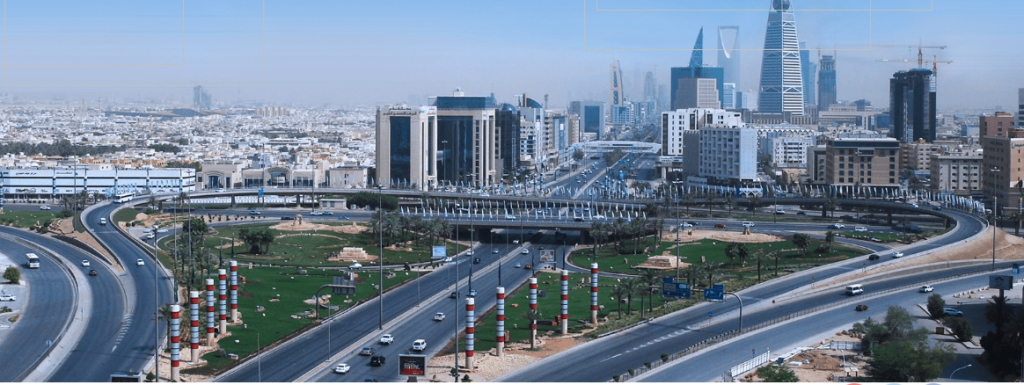
The city of Al-Khobar joined the index for the first time this year alongside the cities of: Riyadh, Makkah, Jeddah, and Madinah. Some cities rose in their global rankings within this index, with Riyadh maintaining its third place in the Arab region, while Makkah ranked fifth, Jeddah ranked sixth, and Madinah ranked seventh. Globally, Riyadh ranked 25th, moving up five spots from last year, while Makkah maintained its 52nd position, Jeddah ranked 55th, up one spot from last year, Medina ranked 74th, up 11 spots from last year, and Al-Khobar ranked 99th, out of 142 cities worldwide.
The IMD Smart City Index for 2024 focused on several criteria, including how residents perceive the scope and impact of efforts to make their cities smart, the extent to which economic and technical aspects are balanced without neglecting the human dimensions, as well as the contribution to bridging the gap between residents" aspirations and needs and modern trends
in building smart cities, alongside the use of digital technologies to optimize resource utilization, reduce carbon emissions, and make public spaces more responsive to residents" needs.
The efforts led by SDAIA in collaboration with government agencies have contributed to improving the ranking of the Kingdom’s cities within the IMD Smart City Index through a package of projects and initiatives that supported the realization of the smart city concept, such as: developing the National Smart Cities Platform, which provides advanced analytics through simulation models that support the development of future plans and strategies using solutions based on artificial intelligence algorithms.
This platform includes real-time operational indicators to monitor vital sectors in the city of Riyadh in order to achieve sustainable urban development that contributes to improving the quality of life in Riyadh, in addition to ongoing efforts to develop a tool for detecting visual distortion in the city of Riyadh using cameras that patrol the city’s roads. This data is analyzed using AI technologies, and visual distortion data is identified weekly. In a first step, this initiative will expand to four other cities in the Kingdom, where priority areas will be surveyed weekly to support planning efforts and improve the quality of life in these cities and improve their urban landscapes by harnessing innovative technical solutions for more developed and sustainable cities.
As part of this initiative, SDAIA has stepped up its national efforts to promote the concept of smart cities in the Kingdom to leverage global expertise in this field and localize it within the Kingdom. Last February, it organized the first global forum for smart cities in the Kingdom under the slogan “A Better Life,” which was attended by 100 speakers representing 40 countries, including experts in smart cities and artificial intelligence, economic policymakers, senior officials from the public and private sectors, and investors from around the world.
The forum witnessed the launch of several national projects, including the Center of Excellence for Congestion Solutions using data and artificial intelligence, which is dedicated to developing smart solutions for various government agencies in the Kingdom; to enhance the quality of life for urban residents, as the center works to utilize data and artificial intelligence technologies; to support efforts to reduce congestion and facilitate traffic flow, develop smart solutions for various government agencies, and support data-driven decision-making to reduce congestion levels, as well as enhance sustainability, efficiency, and quality of life in cities.
As part of these national efforts by SDAIA to transition to smart cities in line with the standards of this international index, the value-added services it provides through the Tawakkalna system enrich the user experience in cities, and reinforces joint efforts with various government agencies to provide advanced, high-quality services that can be accessed digitally with ease and convenience. Additionally, SDAIA provides technical support to the national platform for charitable work, the "Ihsan" platform, which is a trusted digital platform for charitable donations in the Kingdom, utilizing advanced technologies to facilitate donations from benefactors and ensure their contributions reach those in need as quickly as possible to have a positive impact on their lives, under the oversight of a supervisory committee comprising 13 government agencies.
In the health sector, which is a focus of the 2024 Smart Cities Index, SDAIA launched the Center of Excellence for Artificial Intelligence in Health, as part of its collaboration with the Ministry of Health to develop the National Strategy for Data and Artificial Intelligence in Healthcare, and to assist in establishing the fundamentals and standards for health data and artificial intelligence capabilities, in addition to establishing a national center for innovation in data and artificial intelligence within the health sector. The "Ainay" project was also launched, a technical solution that uses artificial intelligence to diagnose diabetic retinopathy, and the "Sawtak" project, which uses an AI system to convert speech into text via voice recognition in Modern Standard Arabic and local dialects.
It is worth noting that the International Institute for Management Development (IMD) is one of the world’s most prestigious business schools and an important reference for other international organizations and institutions regarding competitiveness among nations, It is also a key reference for decision-makers worldwide in measuring the impact of national strategies on enhancing welfare levels, achieving progress, and improving quality of life.
The transition to smart cities supported by #SDaya .. Saudi cities climb in the IMD 2024 World Smart Cities Index compared to 2023 #Five_Saudi_Cities_Among_Smart_Cities pic.twitter.com/yQST2FMn7O
— SDAIA (@SDAIA_SA) April 9, 2024