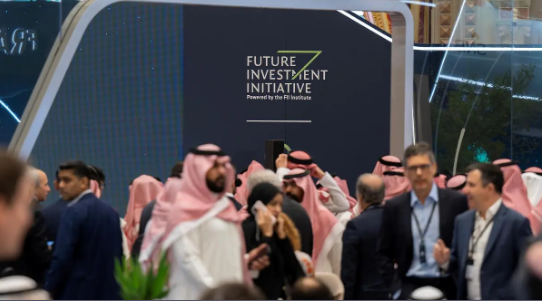

The panelists emphasized the importance of investment in the UAE's future, and the role of artificial intelligence (AI) in driving digital transformation. Al-Falih emphasized that the Kingdom is doing its best to bring security and prosperity, and has been able to face various geopolitical tensions globally thanks to the strength of its economy, adding that the Saudi economy is able to face challenges strongly, reviewing the increase in GDP of since the launch of the Kingdom's Vision 2030 and the results it achieved in the G20, reaching the second fastest growth among the economies of the group.
H.E. Al-Falih revealed that the Kingdom has been able to face the various geopolitical tensions globally thanks to the strength of its economy, adding that the Saudi economy is able to face challenges strongly. His Excellency revealed the significant growth in foreign direct investment, the value of which exceeded the targets set last year of $26 billion, and the growth in the number of licenses for international companies, which increased tenfold compared to before Vision 2030, reflecting significant progress in attracting foreign investments to the Kingdom.
The regional headquarters program, which aimed to attract 500 regional headquarters by 2030, exceeded this goal, reaching 540 international companies that chose Riyadh as their regional headquarters, adding that the Kingdom has become an economic center in the Middle East, reviewing the great achievements achieved in the tourism sector, including recording 100 million tourist visits last year, and increasing the number of foreign investor licenses tenfold since the launch of Vision 2030.
Engineer Al-Falih touched on the achievements made in the tourism sector, including recording 100 million tourist visits during the past year, and increasing the number of licenses for foreign investors tenfold since Vision 2030. Al-Falih discussed inflation rates, the progress made in controlling it to reasonable levels, and the decline in interest rates in many countries, as the US Federal Reserve has already started a cycle of interest rate cuts and quantitative easing, and the G20 economies have not recorded major recessions.
Al-Falih said that investor confidence has increased tenfold since the launch of Vision 2030. Investor confidence has increased by 50% compared to the previous period, and the tourism sector has returned to pre-Covid-19 levels, praising the tremendous technological changes the world is currently witnessing, such as the shift towards green energy and the role of artificial intelligence in driving economic growth, stressing that these developments not only strengthen capital markets, but open new opportunities to rebalance global competitiveness between companies and countries, if they find the appropriate support from systems and infrastructure will contribute to building a better economic future.
These developments not only strengthen capital markets, but also open new opportunities to rebalance the global competition between companies and countries, if they find the appropriate support from systems and infrastructure will contribute to building a better economic future.