
The Public Authority for Real Estate concluded yesterday the “Real Estate Training Forum” which it organized at the Riyadh Convention and Exhibition Center, in the presence of the CEO of the Authority, Engineer Abdullah bin Saud Al-Hammad.
The Real Estate Training Forum discussed the reality of real estate training and its role in providing the needs of the real estate market and supporting the culture of innovation and entrepreneurship, which contributes to raising the quality of real estate training. Real Estate Training Forum discussed the reality of real estate training and its role in providing the needs of the real estate market and supporting the culture of innovation and entrepreneurship, which contributes to raising professional standards in the real estate sector, in addition to highlighting modern trends and paths in real estate training and their impact on the professionalism of real estate transactions.
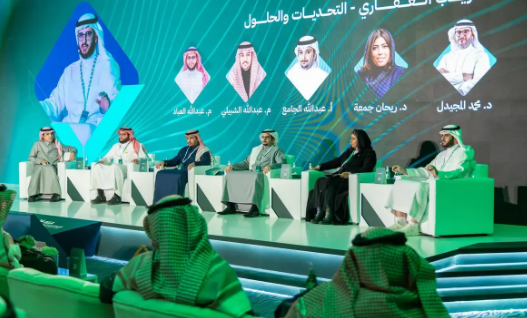
The speakers in the first dialogue session, which brought together a group of personalities specialized in human capacity development and the development of the real estate sector, reviewed the importance of enhancing the competitiveness of the citizen locally and globally, and stated that what the General Authority for Real Estate provides through the Saudi Real Estate Institute emphasizes the importance of training as a strategic tool to support competitiveness and achieve human capacity development, and that in light of the Kingdom's Vision 2030 and its ambitious programs, there is an urgent need for a Saudi real estate university that provides specialized education in real estate sciences.
They pointed out that the Kingdom has succeeded in preparing a Saudi citizen who competes skillfully in various sectors, and that the Saudi experience in the journey of learning using artificial intelligence is a national achievement because of its success at the global level and that the Saudi citizen has become more aware and interested in developing his skills to become a global competitor in various sectors."
Speakers also discussed the importance of real estate education as a strategic tool to support competitiveness and achieve human capacity development. The speakers in the second panel discussed the importance of real estate training in innovating solutions and facing challenges, and that the academic programs adopted by Saudi universities contribute to bridging the gap between academic education and the requirements of the real estate market, and that reliance on real estate technologies represents the future of real estate transactions and improving the experience of beneficiaries, and the practitioner in the real estate sector must adopt modern technologies and understand how to adapt them in his daily work to improve efficiency and enhance productivity.
The panelists also called on the real estate sector to adopt modern technologies and understand how to adapt them in their daily work to improve efficiency and enhance productivity. The speakers called for the need to adopt academic programs and specialized fellowships in real estate development activity to train and qualify Saudi youth to help them build their professional capabilities and provide them with the most important knowledge and skills needed to practice real estate work. They also pointed out that reviewing international experiences gives pride in what the Saudi experience has reached in the real estate sector, especially the Ejar network and the real estate brokerage system.
It is noteworthy that the Real Estate Training Forum comes within the framework of the ongoing efforts of the General Authority for Real Estate to enhance the efficiency of workers in real estate activities, build a strong and advanced sector that contributes to promoting economic growth and achieving the aspirations of the comprehensive strategy for the real estate sector, achieving sustainability in providing quality real estate services for a more developed real estate future.
Real Estate Training Forum is part of the ongoing efforts of the General Authority for Real Estate.