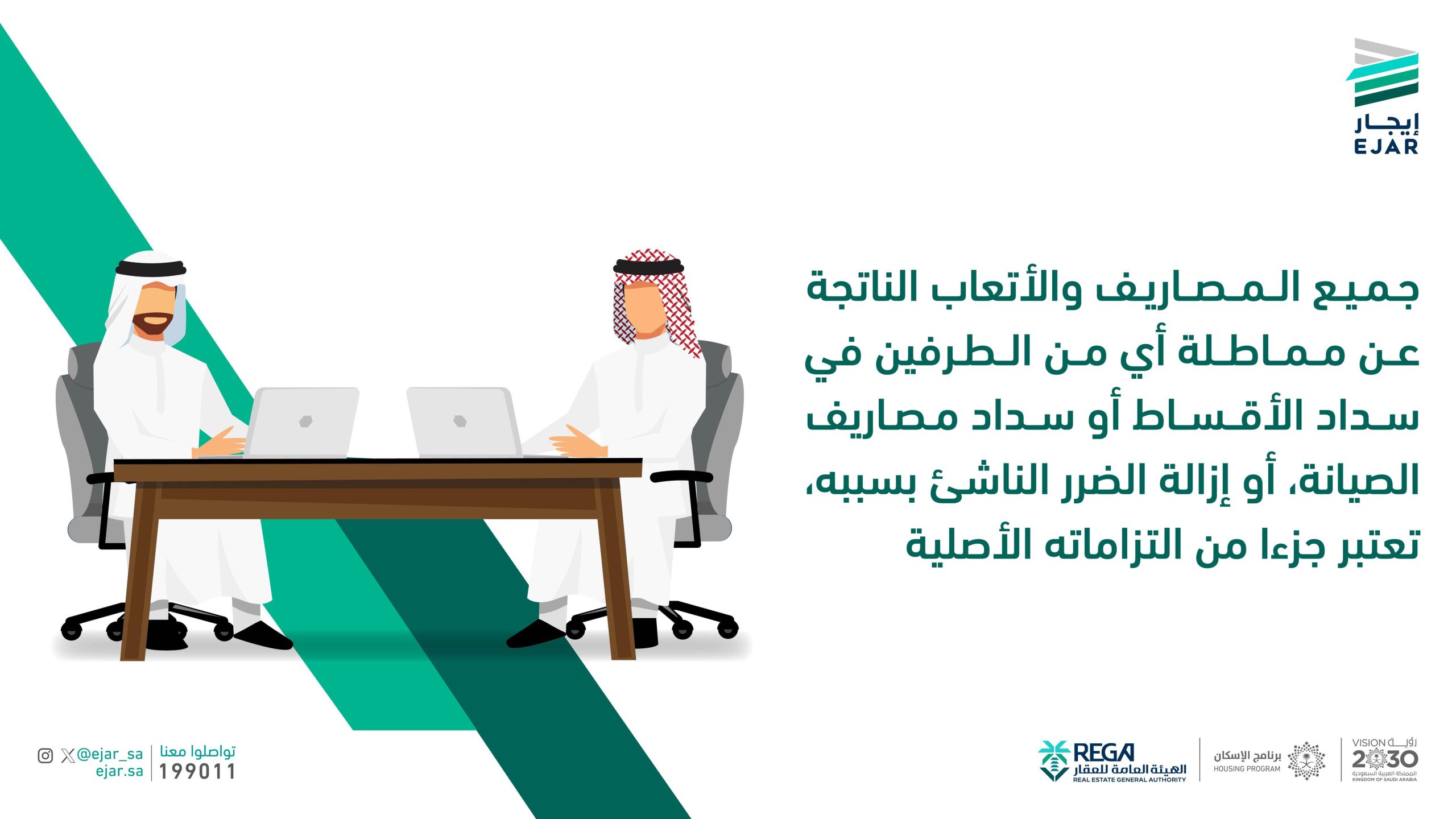

In the context of regulating the contractual relationship between the parties to the lease agreement, the “ Ejar ” network reiterated its confirmation that all expenses and fees resulting from delays in fulfilling obligations – whether by the lessor or the lessee – are considered part of the original obligations of the contract, and the party responsible bears the financial consequences.
Ejar explains that the obligation is not limited to the main clauses in the contract, such as the rent amount or the contract duration, but also includes secondary obligations related to the normal functioning of the contractual relationship, such as:
- Late payment of rental installments.
- Failure to pay maintenance expenses that fall under the responsibilities of one of the parties.
- Delay in removing damage or repairing faults caused by one of the parties.
According to the system, all these costs are treated as resulting from one of the parties breaching the terms of the contract, and therefore the party responsible is obligated to bear them, without the need for a special clause for that, which reinforces the principle of “the harm is removed from the one who caused it.”
The importance of this clarification for both tenant and landlord
This clarification provides a solution to many disputes that arise in the rental sector, where some parties resort to laxity in fulfilling their obligations, believing that delays will not result in additional liabilities. However, as Ejar confirms, inaction carries legal and financial consequences, such as:
Maintenance fees resulting from negligence or procrastination will be borne.
Pay any accumulated fines or late fees.
Compensation for damages incurred by the other party due to the delay.
Integration with judicial systems
This approach enhances transparency in lease contracts, ensures fairness for the affected party, and contributes to reducing recourse to judicial authorities, as it becomes legally clear who bears the cost in the event of negligence.
Real estate experts emphasize that clarifying such principles strengthens mutual trust between tenants and landlords, and enhances the efficiency of the rental market in the Kingdom, especially in light of the regulatory trends associated with Saudi Vision 2030, which focuses on:
- Improving the accommodation experience.
- Increasing the percentage of digitally documented contracts.
- Reducing real estate disputes.