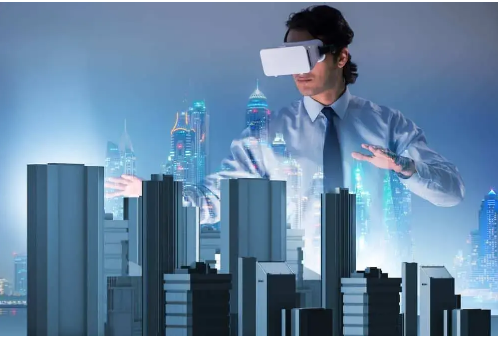

Driven by rapid technological advancements, the real estate industry is undergoing a radical transformation, with a growing number of real estate brokers using virtual reality (VR) and augmented reality (AR) to deliver a whole new experience to prospective buyers and tenants. Once used in the entertainment and gaming industries, the technology is now making its way into real estate brokerages, giving clients 3D virtual tours of real estate units without having to leave their homes.
Will it work? <Can VR replace the physical experience of a field visit? Or are these tools just an auxiliary tool that does not replace traditional methods?
Marketing real estate with glasses
VR technologies allow a buyer to put on a VR headset and navigate inside an apartment, villa, or an entire residential project, as if he were actually visiting it. They can open doors, walk through rooms, change colors, and even explore the view from a balcony, all without physically being on site.
Real estate brokers say the new technology has made a big difference in the way real estate is shown, as they are able to show dozens of units to the client in one session, compared to a cumbersome field visit that may not exceed only three or four units."
Saving time and effort and reducing costs
One of the most prominent benefits of VR in the real estate market is that it reduces the time required for the sale or rental process, and it also reduces the cost of transportation and frequent visits, especially for foreign investors or out-of-town clients.
One of the most prominent benefits of VR in the real estate market is that it reduces the time required for the sale or rental process. A number of digital marketing experts in the real estate industry believe that this technology ”enhances the chances of initial persuasion,” noting that many customers decide to book their units based on virtual tours, especially if they are accompanied by clear plans and competitive prices.
A number of real estate digital marketing experts believe that this technology "enhances the chances of initial persuasion.
Technical and behavioral challenges
Despite the advantages, VR in real estate faces clear challenges, most notably the high cost of equipment, the need to train brokers to use the technology efficiently, and the resistance of some clients to the idea of making major financial decisions based on a digital experience.
According to experts, despite the development of technology, virtual tours still sometimes suffer from issues related to accuracy or presentation quality, and some customers only feel confident after a field inspection.”
Also, some customers do not feel confident until they have seen the property.
The future of real estate marketing. Digital in excellence
The growing trend towards digitization of real estate operations, including marketing, contracting, and even online auctions, indicates that the near future will see more reliance on virtual reality and artificial intelligence in the sector.
In countries such as the UAE In countries such as the UAE and Saudi Arabia, major developers have started building integrated ”virtual showrooms" for their real estate projects, allowing customers to explore every detail in high definition, from the materials used in the finishes to the size of the windows and the type of flooring.
Experts believe that the new generation of buyers, who are "digital natives“, will be more receptive to these means, making it imperative for brokers to keep up with this change and renew their tools.
Between innovation and reality. What's the solution?”
VR offers clear added value, but it is unlikely to completely displace traditional marketing tools in the near term. The integration of virtual tours and real-life previews, backed by professional customer service, will be the most successful model.
Real estate experts emphasize that VR offers clear added value, but is unlikely to completely eliminate traditional marketing tools in the near term. <"VR is a powerful tool, but it won't sell a unit on its own. The human element remains important to persuade the client, read their needs, and give them appropriate advice."
Real estate experts emphasize that VR is a powerful tool, but it won't sell a unit on its own. <“VR is a powerful tool, but its success depends on its integration with other elements of real estate marketing, customer acceptance, and the development of supporting infrastructure. As we move towards a more digitized future, it seems that those who keep up with technology today will be the winners in tomorrow's market.