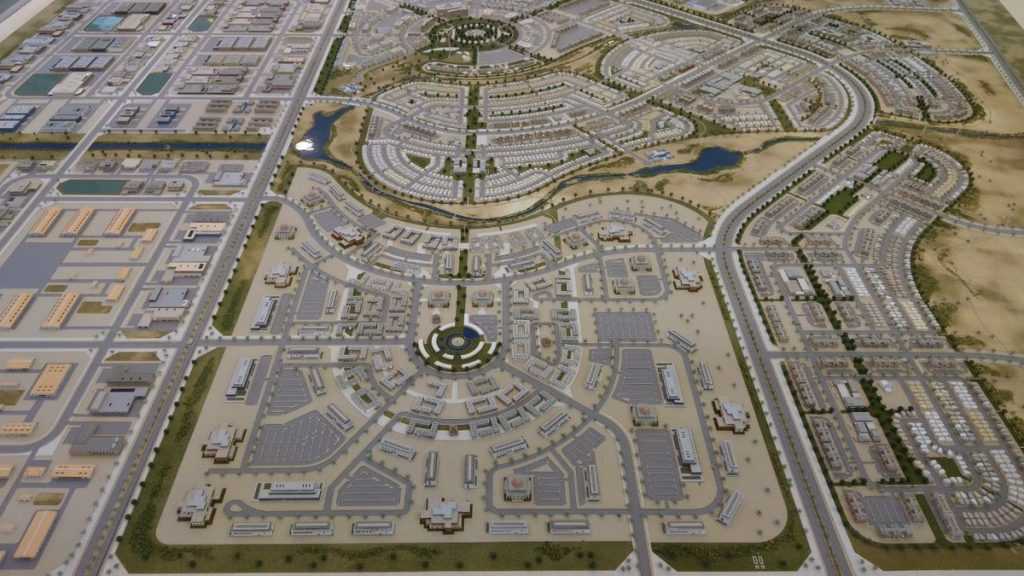
Saudi Aramco continues its accelerated efforts to develop “King Salman Energy Park (SPARK)“ and prepare it for the National Transformation Program, as well as to attract diverse global investments linked to industries supporting the energy sector.
These efforts began with an announcement in December 2017, when the Council of Ministers approved the establishment of King Salman Energy Park (SPARK) in the Eastern Province. The Council also approved the mandate for Aramco to establish a company responsible for developing the city’s infrastructure and managing its fixed assets (the developer), as well as a company responsible for operating, managing, and maintaining the city (the operator).
Enabling the supply chain for related industries
The city is located at the heart of the energy sector, between the cities of Dammam and Al-Ahsa, making it fully integrated with the Third Industrial City in Dammam, The city will be developed in three phases across a total area of 50 square kilometers, with the first phase covering an area of 12 square kilometers.
The city contributes to enabling the supply chain for industries and support services related to the energy sector in the region and the Kingdom. This will be achieved by providing world-class infrastructure and an attractive environment for global investors, in addition to offering integrated services that support investors in ensuring the sustainability of their investments.
Aramco has begun construction of the city and is conducting studies and surveys with major global suppliers; these efforts have identified a number of key components for creating an integrated and sustainable business environment on par with the world’s best hubs.
Five Core Zones
The city comprises five core zones: 1- The Industrial Zone: Divided into five specialized areas, it contributes to the development of an integrated value chain for energy products and services. The specialized zones will focus on general manufacturing, electrical and equipment, liquids and chemicals, metal forming, and industrial services, 2- The Dry Port: A modern logistics services zone, featuring a customs area that can be connected to the Gulf Railway in the future. The zone will include a logistics services complex and other support facilities; upon completion, it will feature a high degree of automation, and the port’s capacity will reach eight million metric tons of cargo annually,
3- Business District: This district houses Aramco’s headquarters for drilling and well maintenance operations, as well as commercial properties featuring office space, restaurants, and retail stores. 4- Training Zone: Designed to accommodate ten specialized training centers for the training and development of national talent and to meet the needs of investors in the region. 5- Residential and Commercial Zone: Includes residential complexes, hotel units, a health center, schools, and recreational facilities.
Start of engineering design work
The completion rate for the engineering designs of the entire project has reached 20%, while land will be allocated to investors in the third quarter of 2018, with work on the city’s infrastructure and other facilities set to begin in the second half of 2018, while construction of the entire first phase is scheduled to be completed in 2021.
These efforts began with the announcement that Schlumberger is the first investor to lay the cornerstone for its new facilities in the city, and negotiations are currently underway with numerous investors as part of a plan to attract more than 120 investments by the end of the project’s first phase.
ESPARK is one of the requirements of Saudi Vision 2030
His Excellency Khalid bin Abdulaziz Al-Falih, Minister of Energy, Industry, and Mineral Resources; Chairman of the Board of Directors of Saudi Aramco; and Chairman of the Board of Directors of the Saudi Authority for Industrial Cities and Technology Zones (MODON), confirmed that King Salman Energy City (SPARk) represents a response to the requirements of Saudi Vision 2030 regarding enhancing economic diversification, supporting private sector growth, and continuing to develop the energy sector, thereby contributing to the creation of a safer and more stable work environment, which supports the achievement of the growth objectives we seek through these projects. He noted that the economic impact following the city’s full development in 2035 will include an annual contribution of 22.5 billion riyals to the gross domestic product, and the establishment of more than 300 new industrial and service facilities that will foster innovation, development, and global competitiveness.