
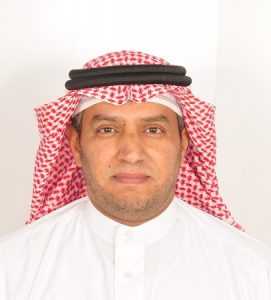
Prepared by / Turki bin Saad Al-Bawardi
When the Council of Economic and Development Affairs set 2030 as the year for the completion of the Kingdom of Saudi Arabia’s renaissance and its placement on the path of industrial and technological nations, based on the goals of Vision 2030 built on the National Transformation Program, it was sending a clear message to the private sector to immediately begin restructuring the sector to align with the Kingdom’s Vision goals. Within a year and a half, most of the private sector ignored reviewing the National Transformation Programs and Initiatives, setting priorities, studying impacts, and setting a timetable for correction. Everyone was then shocked by a number of decisions that disrupted their work and halted their projects, and the cost of correction afterward was very high.
Why real estate?
Real estate is everywhere: on roads, in hotels, resorts, sports clubs, stadiums, hospitals, schools, factories, offices, towers, malls, airports, farms, rest areas, government buildings, residential and commercial complexes, and infrastructure. In short, it's all around us!
Importance of real estate
The importance of real estate lies in its crucial role in the economy. In industrialized nations, real estate has four key pillars that shape its influential strategic trajectory.
First : An enabling factor for economic activity by providing spaces for companies and factories to operate, providing and developing land to build schools, hospitals and other projects, providing high-quality commercial infrastructure that attracts capital and creates a good reputation for the country as a vital center for investment.
Second : A major source of job creation for “citizens” such as engineers, architects, surveyors, builders, financial and legal advisors, facility managers, and many others.
Third : An attraction factor for foreign and local investors to invest in the real estate sector, real estate funds, and others, whether the investor is an individual or an institutional entity, which helps to expand commercial and residential activities.
Fourth : A source of income for the state treasury through taxes that vary according to the type of property and the owner's status.
The Saudi real estate sector, in its current state, is not as influential on the economy as it is in Western and Eastern countries. It does not play an active role in the Saudi economy; on the contrary, it poses a burden on the state and drains enormous sums from the budget in compensation for expropriated properties used for infrastructure projects or land purchases for service projects. It also harms citizens, both because they are unable to own homes due to inflated residential property values and because a significant portion of their salaries is consumed by rent or loans. As for the value-added tax (VAT), it is negligible compared to the taxes imposed on real estate in developed countries.
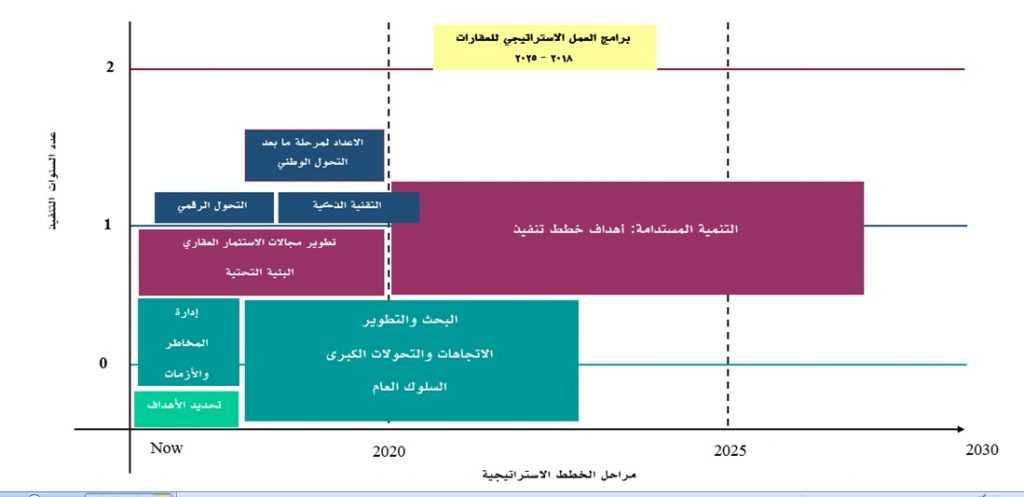
The National Transformation Program, announced by the Council of Economic and Development Affairs in June 2015, has become a fundamental basis for business activity. Traditional investment that ignores the goals and initiatives of the National Transformation Program is no longer acceptable! The Kingdom’s Vision 2030 is radically based on the National Transformation Program.
The National Transformation Program is linked to lifestyles, therefore it lays the foundation for the post-2020 era, as it is known that there are three generations currently living:
The millennial generation, whose ages today range between (21-34)
The generation born after 2000
The aging generation of tomorrow, whose ages today range between (35-49)
The success of real estate investment over the next decade depends on studying both the social and economic trajectories. Major shifts in social patterns, for example, are considered one of the most significant positive impacts of the National Transformation Program. It is well-established that investment in commercial and residential real estate is based on consumer behavior and the type of property best suited to the anticipated lifestyle. Therefore, studying the social trajectory up to 2030 increases the likelihood of investment success. The most important expected outcomes of the National Transformation Program, related to social patterns and which will create opportunities for real estate investment, are as follows:
Youth category (males and females)
- Independence: I have no doubt that the shift in awareness among young people has created a tendency towards complete independence from living under parental supervision, and a desire to rely on themselves in managing their lives. This will likely be further solidified after the abolition of guardianship. Investing in providing real estate products for this rapidly growing demographic will open up significant opportunities for profit.
- Technology: For young people, technology is the soul and the body. With the development of services provided by technology, the development of the concept of open communication, and what distance education will be like in the future, all of this necessitates that real estate development companies begin to offer smart real estate products with a high competitive advantage.
- In the civil sense, integration means reinterpreting religious texts and placing them within their proper framework, in accordance with scholarly principles. Real estate investment here will focus on providing properties that offer suitable environments for both genders, such as sports clubs, intellectual centers, public gathering places, and the like.
- Work and Study: Will leisure time disappear from the lives of young people? The indicators suggest so. The economic situation and the demands of success and securing high-paying jobs will compel students to combine part-time work with studies, and will motivate young employees to continue their education and acquire new skills. Consequently, habits like loitering in markets and gatherings will fade away. This concept falls under the third pillar of Vision 2030, "An Ambitious Nation," which is:
(Each of us is responsible for building our future, developing ourselves and our abilities to be independent and active members of our communities, and planning for our financial and professional futures.) This creates investment opportunities to provide high-quality, sophisticated entertainment products that serve as havens for relaxation and weekend enjoyment.
Elderly category:
The departure of children from home and their subsequent independence will significantly alter the lifestyles of the elderly, especially when considering the impact of economic trends on the lives of young people, which may include delayed marriage and childbearing, family planning, and so on. Real estate opportunities lie in providing housing options for the elderly that include care services and a healthy environment.
Economic path and real estate investment:
When studying national transformation programs and government initiatives, you will find that some of the most profitable real estate opportunities in the coming period will be in the tourism sector.
Tourism: It is considered one of the promising sectors stipulated in the second pillar of Vision 2030: a prosperous economy.
The National Transformation Program, under the auspices of the Tourism and Heritage Authority, identified a number of objectives, including:
First strategic objective:
Creating and developing new integrated tourist destinations, sites, islands, and entertainment cities for all family groups, and encouraging the private sector to invest in and operate them.
Strategic Objective 4: To increase and develop hospitality facilities and tourism services.
There are two types of tourism:
Religious tourism and general tourism: In the first axis of Vision 2030, a vibrant society, this was mentioned (working to revive national, Arab, Islamic and ancient heritage sites and enabling everyone to access them).
(Establishing an Islamic museum that will be a major attraction for our citizens and guests to learn about the rich Islamic history).
Real estate investment in the tourism sector will be completely different from what it was in the past, as the state’s direction, as announced, is to open the field to attract tourists from all over the world throughout the year. This means the permanent involvement of Eastern and Western societies in Saudi society, and this requires providing tourism real estate products that accommodate the culture and customs of foreign tourists, thus providing them with a flexible life and a safe environment.
The possible and the not impossible
When the real estate sector absorbs the four aforementioned axes and the following factors are available, it will not be surprising in the future for the real estate sector to present itself as one of the most important economic tools and play a huge and pivotal commercial role.
- Increased per capita income in Saudi Arabia.
- Opening the door for foreign investors to own property.
- Opening the door for foreign investors and residents to own property from within.
- A strong legal system and environment.
- Major cities like Riyadh, for example, are being transformed into smart cities.
- A good tax environment.
- High-quality assets.
- Property type.
- Political stability.
- Economic growth.