
Smart Facility Management Systems
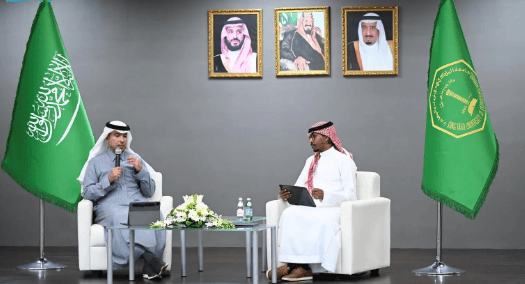
He pointed out that scientific research in the ministry is based on the actual needs of the nation, and includes the development of Saudi algorithms and models in the fields of housing, transportation and sustainability, including forecasting housing demand, raising energy efficiency in buildings, and smart systems for managing water networks to maximize the national impact. The ministry seeks to establish national living laboratories for AI applications, from generative urban design to the use of drones supported by computer vision, to accelerate the transfer of innovation from the laboratory to the streets of cities while ensuring the responsible application of technologies, and to develop the “digital twin” of cities to simulate future scenarios before implementation and support proactive decision-making based on accurate data to enhance the efficiency of operations and sustainability of resources.
Development of algorithms and models for housing, transportation and sustainability.
<Al-Haqeel pointed out that engaging students and researchers in realistic projects enables the next generation of experts to use AI ethically and responsibly, and that cooperation with universities, including King Saud University, has contributed to the development of urban design programs, the authentication of Saudi architecture, and the adoption of 19 design guides, which has raised the quality of the urban landscape. He stressed that the adoption of modern technologies such as computer vision and smart control contributed to raising the compliance rate to 64%, reducing operating costs by 80%, reducing reliance on in-person reviews to 2%, in addition to achieving operational savings of more than 250 million riyals from improving the quality of road layers.
He addressed the role of school experience in shaping the leadership vision, explaining that the experience was a factory to refine the way of thinking, and taught how to analyze complex issues, work in a team spirit and assume responsibility, principles that are applied today in managing more than 140 governorates and cities serving more than 15 million people. He also touched on the role of universities, led by King Fahd University, in building smart cities, where university graduates contribute to the implementation of the Municipal Sector Impact Measurement Framework (MCIF) through 14 indicators to analyze data and turn it into decisions and tangible impact.<His Excellency pointed to the fundamental shift in the work philosophy from developing services to re-engineering the way of thinking and decision-making, explaining that this shift raised residents“ satisfaction with municipal services from 49% to more than 65%, satisfaction with the cleanliness of cities from 53% to 76%, and reduced the rate of unsanitary waste treatment from 64% to 49%. He explained that cognitive cities represent the future of urban life, using data and advanced technologies to proactively manage huge assets, including more than 8,000 parks and plazas and a road network spanning more than 196,000 kilometers, to ensure quality of life and sustainability of resources.
<He emphasized that scientific research turns into tangible economic value when applied on the ground, by increasing the efficiency of asset management, creating startups, and achieving direct operational savings such as improving the quality of road construction layers and reducing the costs of construction and energy projects, which enhances the sustainability and attractiveness of cities for investment. He also addressed the role of modern construction technologies, 3D printing and drones, with a focus on localizing these technologies in the Kingdom and developing national minds, to ensure building smart cities led by local competencies.
He concluded his speech by stressing that the Ministry's ambition is to build an integrated national model that combines knowledge and decision-making, driven by the power of artificial intelligence, to serve the entire nation and achieve the goals of the Kingdom's Vision 2030.