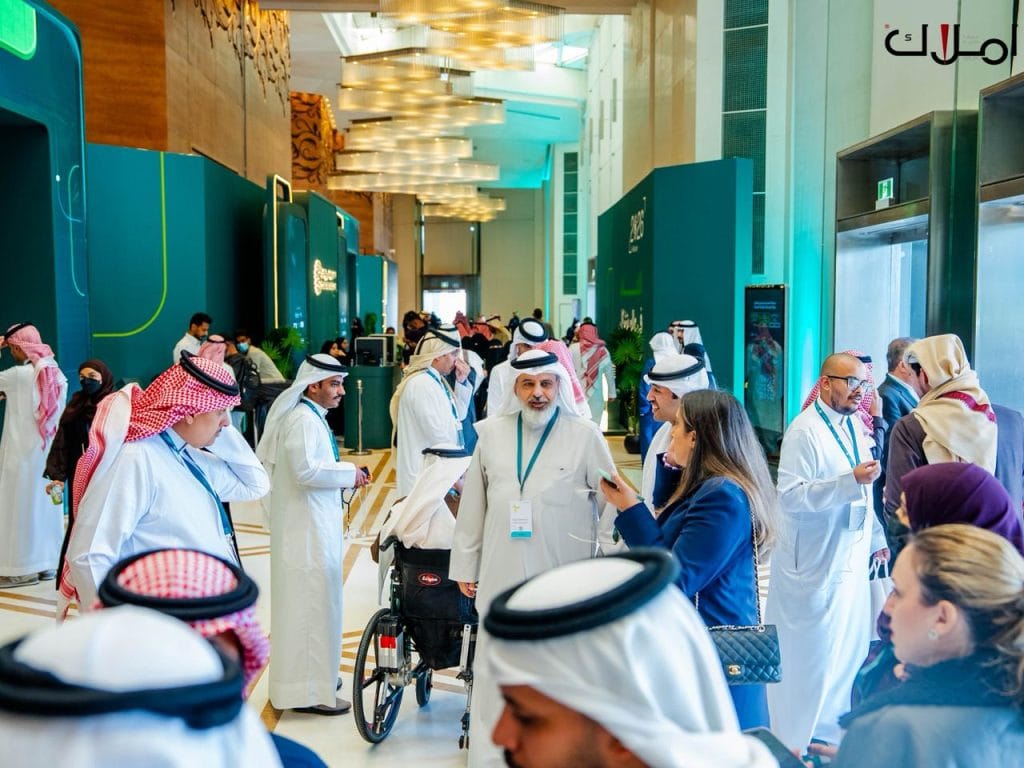

The Saudi Media Forum continued in its fifth edition, held in Riyadh, with in-depth discussions on the future of media, in light of rapid digital transformations, the role of the audience, algorithms, artificial intelligence, and media as a tool for diplomatic influence, reputation and image-making.
Audience from recipient to content creator
The session «Audience: From Recipient to Content Creator» discussed the radical shift in the role of the audience within the media ecosystem, where the recipient is no longer a passive element, but an active partner in the creation and spread of the message. Patrick Rizk, President of Meta in Saudi Arabia, emphasized that digital platforms have become one of the largest media arenas globally, noting that Meta has nearly 4 billion monthly active users, equivalent to about 60% of the world's population. He explained that this shift came as a result of a cumulative development in technology, starting with the spread of smartphones, to social media platforms that gave individuals the ability to own their content and build virtual communities across borders.
Rizk pointed out that modern content creation tools have transferred the power of influence from large institutions to individuals, considering this shift a promising opportunity for the Kingdom in light of its competitive digital human potential.
Rizk pointed out that this shift is a promising opportunity for the Kingdom in light of its digital human potential.
For her part, Karina Mehanna, Director of the Arabic Department at Sputnik and International Radio, emphasized that the audience has become the decisive factor in determining influential content, noting that media competition has become global, and is no longer limited to local or regional frameworks. She emphasized the importance of designing interactive content that invites the audience to participate and create the story, in a way that promotes belonging and trust.
Tomorrow's Journalism in the Face of Algorithms
In the session "Tomorrow's Journalism: Truth in the Age of Algorithms," participants discussed the challenges of artificial intelligence and algorithms in journalism and their impact on credibility and newsmaking. Mohammed Al-Bishi, editor-in-chief of Al-Eqtisadiya newspaper, emphasized that newsrooms, especially economic ones, face double challenges in the era of algorithms, due to their reliance on numbers that require high accuracy, noting that the speed of reaching the audience has increased, but the risks associated with fake news have escalated.
The Independent's editor-in-chief for the Middle East - Turkish edition, Mehmet Zahid Gul, explained that the public's awareness of misleading and AI-generated content has become higher, pointing out that the technologies themselves have become a tool for detecting fakes. The President of the Moroccan National Press Council, Younes Mogahed, emphasized the need for clear policies and effective governance to manage dealing with algorithms, stressing that understanding the philosophy of AI is a prerequisite for practicing professional journalism in the digital age.
Digital partnerships to enhance national content
The Saudi Media Forum 2026, the comprehensive national application "Tawakkalna" signed a memorandum of understanding with Eight Publishing and Distribution Company to enhance cooperation in enriching digital content, developing user experience, and supporting the publication of Saudi sports content through the «Wakeb» service. The memorandum included cooperation in the fields of training, organizing workshops, exchanging experiences and initiatives, contributing to raising the quality of digital services and achieving the objectives of the Kingdom's Vision 2030 in improving the quality of life and government services.
Digital Reputation Race and Crisis Management
The session "Reputation Race. Between the speed of information and crisis management" discussed the concept of digital reputation as a strategic weapon for countries and organizations in the era of information flow. Jamal Al-Kashki, Editor-in-Chief of Al-Ahram Al-Arabi magazine, stressed that the digital impression sometimes precedes the information, stressing that confronting misleading news requires responding with reliable information and figures, and not leaving the scene for rumors.
For her part, Sabina Inderjit, Secretary General of the Federation of Journalists of India and Vice President of the International Federation of Journalists, warned that artificial intelligence has contributed to complicating media crises between countries, especially in conflict zones, calling for a balance between speed and credibility.
Sabina Inderjit said that AI has contributed to the complexity of media crises between countries, especially in conflict zones.
Media and the reshaping of international relations Participants noted that the media has become a key partner in diplomacy and consensus-making in a changing and interconnected world.
Diplomacy of Influence and Image-Making
In turn, the Ambassador of Spain to the Kingdom, Javier Carbajosa Sanchez, stressed that the media is no longer a neutral carrier, but an influential actor in political action, while the Ambassador of India, Dr. Sohail Ejaz Khan, stressed the importance of delivering the right message to the right audience, using soft power tools. South African Ambassador Mogobo David Mugabe noted that media acceleration and the spread of misinformation are the most prominent challenges of diplomacy today.
In the session "Media and the shifting maps of international relations", international speakers emphasized that the media has become a key partner in diplomacy and consensus-building between countries in a changing and interconnected world. Participants pointed out that preserving the truth and countering rumors is a major responsibility, and that public confidence can only be achieved through transparency and professional verification, with the need to develop media tools to keep pace with globalization and cross-border challenges.
The discussions concluded with the session «Diplomacy of Influence. Media and Image Shaping,» which highlighted the role of media in enhancing the soft power of countries.
The Dean of the Diplomatic Corps and Ambassador of Djibouti to the Kingdom, Diaa Eddine Bamkherma, emphasized that public diplomacy has become a pivotal tool for countries, noting that Saudi Arabia offers a successful model in influence diplomacy through culture, sports and international forums.