Real estate in Saudi Arabia is no longer just a «roof over your head.»unprecedented urban expansion and financing programs that have raised ownership rates to historic levels.
But behind this rapid growth, a deeper question arises: is the real estate market still performing its primary function as a sector that serves housing and development, or is it gradually turning into a financial speculation arena managed more by expectations than real need? <Is the real estate market still performing its primary function as a sector that serves housing and development? Or is it gradually turning into a financial speculation arena that is managed more by expectations than real need?
Huge funding. And a hotter market
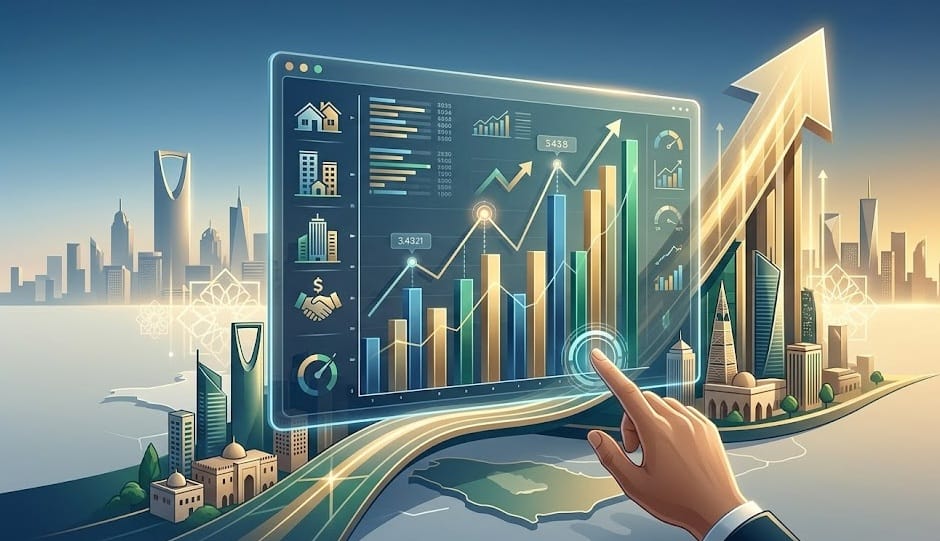
In less than a decade, residential real estate financing in the Kingdom has jumped to unprecedented levels, driven by government support programs and the expansion of banks and finance companies.According to data from the Saudi Central Bank (SAMA), total outstanding mortgage financing for individuals will exceed SR950 billion in 2025, compared to less than SR300 billion a few years ago, in one of the fastest waves of real estate credit growth in the region.
The home ownership rate for Saudi households rose to about 64%, compared to 47% in 2016, reflecting a clear success in achieving the housing targets within Vision 2030.
Saudi Arabia's housing market is also on the rise.
But on the other hand, real estate prices have risen faster than incomes for many households, especially in major cities. Riyadh's real estate prices have risen at a faster pace than income growth for many households, especially in major cities.
And this is where the paradox begins to emerge: <The more financing expands, the more prices rise, prompting a large segment of buyers to enter the market for fear of even greater future rises.
But... is the market living in a bubble The description of the Saudi real estate market as a "bubble" may be exaggerated, especially since the Saudi economy has strong support factors, huge government spending and continuous economic growth
In Riyadh, residential apartment and land prices have recorded significant jumps in recent years, while residential rents have increased at rates exceeding 10% in some areas within short periods, according to real estate reports and market indicators.
From «buying to live» to «buying before it's too late», real estate behavior in Saudi Arabia has clearly changed.
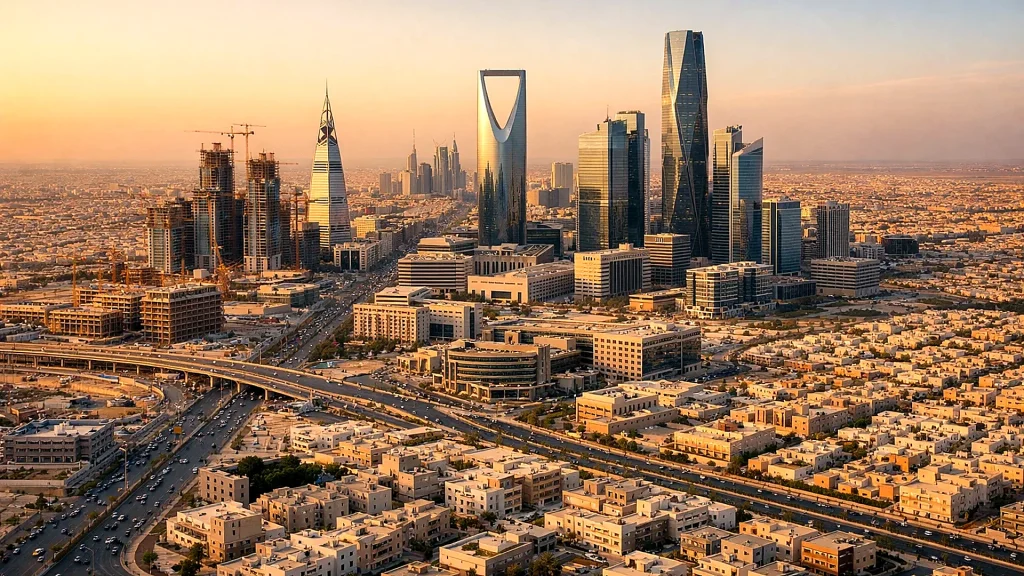
In the past, the decision to buy a house was often linked to family stability and the actual need for housing, but today part of the market is purely investment driven. Many buyers no longer ask: «Do I need this property?» but rather: "What will it be worth in two years?" This psychological shift is often the most dangerous thing that real estate markets face. When real estate turns from a service asset to a financial asset, prices begin to move according to expectations and speculation rather than real value or actual return. This is why some areas have witnessed rapid price increases, even though the actual rental yield does not justify these jumps. If we try to provide an example of what we are talking about, we find that Riyadh... What is happening in the capital reflects the size of the transformation taking place in the sector. Riyadh has become in a short period of time one of the most attractive cities for regional investments, with the relocation of the regional headquarters of international companies, the expansion of major projects, and rapid population growth. These factors have created real demand without a doubt, but at the same time they have raised expectations to very high levels. The investor today does not only buy based on the current market need, but on a future picture that the city is expected to reach in the coming years and this explains the rapid increases in some locations even before the completion of infrastructure projects or actual population density.
But the real danger does not always lie in a traditional bubble, but in the formation of what can be called an "expectations bubble". That is, prices rise because everyone thinks they will continue to rise, not because the actual value is necessarily rising at the same pace. This type of price inflation often leads to: Slower sales, higher difficulty of ownership, increased reliance on long-term financing, and a widening gap between prices and purchasing power.
Housing is no longer just a real estate issue. Any sharp rise in prices is directly reflected in the cost of living and quality of life: The cost of living and quality of life Marriage decisions, stability and the ability to build assets among the middle class, as well as the rise in rents puts pressure on households' consumer spending, and affects the competitiveness of cities in attracting talent and investments Therefore, the success of the real estate sector is not only measured by rising prices or increasing deals, but by its ability to achieve a healthy balance between: The investor, the developer, and the citizen looking for suitable housing
Now where is the market heading? The Saudi real estate market is most likely entering a more mature phase, a phase in which a rapid rise will not be guaranteed as in previous years, but the market will begin to distinguish between real productive real estate and real estate based solely on speculation, and criteria such as development quality, location, rental yield, and project efficiency will become more important than just expectations of continuous rise. In the end, the question remains: Can the Saudi real estate market maintain its investment attractiveness... without housing becoming a burden beyond the ability of the citizen?