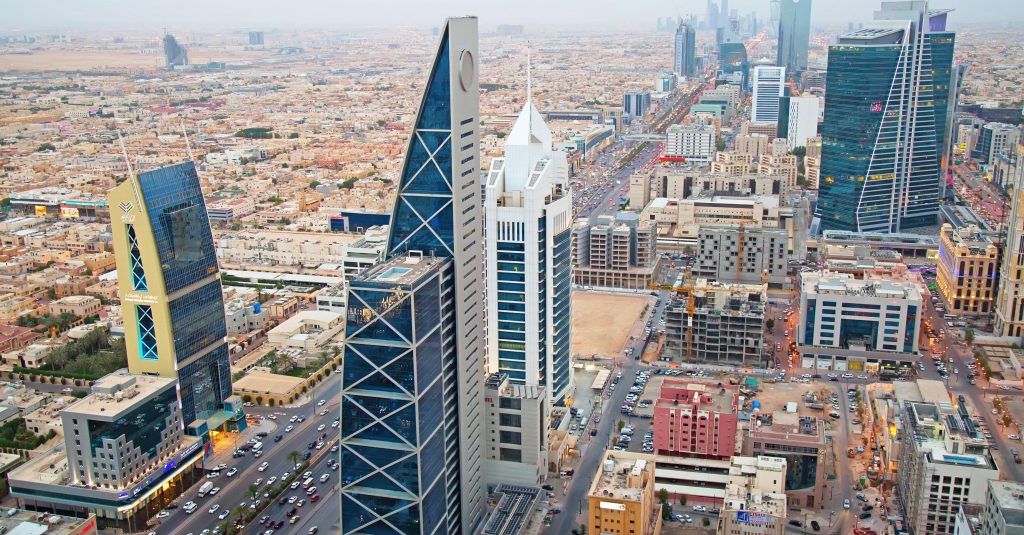

The indicators of housing in Saudi Arabia during 2025 reveal the continued expansion in the number of dwellings inhabited by Saudi families, in conjunction with population growth and urbanization witnessed in various regions of the Kingdom, as the number of inhabited housing units recorded a remarkable increase compared to last year, with the largest proportion of housing still concentrated in the main cities, mainly Riyadh, Mecca and the Eastern Province.
Riyadh, Makkah and the Eastern Province.
According to the data of the Housing Statistics Bulletin issued by the General Authority for Statistics, the number of dwellings occupied by Saudi families during 2025 increased by 118 thousand dwellings compared to 2024, an increase of 2.7%, bringing the total number of dwellings to 4.5 million dwellings.The data showed that dwellings occupied by Saudi families accounted for 50.3% of the total occupied housing in the Kingdom, while the average number of Saudi family members reached 4.8 members, reflecting the continued relatively large family character in Saudi society.
The data showed that the number of dwellings occupied by Saudi families in 2025 increased by 118,000 dwellings compared to 2024, an increase of 2.7%, bringing the total number of dwellings to 4.5 million dwellings.
Riyadh region tops the list of occupied dwellings
Riyadh region topped the list of regions in terms of the number of dwellings occupied by Saudi families, with about 1.08 million dwellings, accounting for 24% of the total dwellings in the Kingdom.<The Makkah region came second with 1.07 million dwellings, accounting for 23.8% of the total, while the Eastern Province ranked third with 719.6 thousand dwellings, with a share of 16%.
In other regions, the number of dwellings occupied by Saudi families in the Asir region amounted to about 328.9 thousand dwellings, accounting for 7TP3T.3% of the total, while the Medina region recorded about 325.2 thousand dwellings with a share of 7.2%.
Jazan region recorded 226.3 thousand dwellings representing 5% of the total, while the number of dwellings in Qassim region reached about 209.2 thousand dwellings with 4.6%.
In Tabuk region, the number of dwellings occupied by Saudi families reached about 142.6 thousand dwellings representing 3.2% of the total, while Hail region recorded about 115.1 thousand dwellings with 2.6%. The number of dwellings in Al-Jouf region reached about 87.3 thousand dwellings, and Najran region about 84.8 thousand dwellings, each of which accounted for 1.9% of the total dwellings.<The Al-Baha region recorded about 60.4 thousand dwellings with 1.3%, while the Northern Borders region came last with about 53.6 thousand dwellings representing 1.2% of the total housing occupied by Saudi families.
Apartments most prevalent among Saudi families
At the level of housing types, the data showed that apartments were the most prevalent among Saudi families, after they accounted for 46.8% of the total housing stock, equivalent to 2.1 million apartments.
Villas came second, with 1.33 million villas representing 29.5% of the total housing stock, while the number of popular houses amounted to about 557.The number of «houses» units amounted to 491.4 thousand units, accounting for 10.9% of the total housing, while other types of housing recorded only 19.1 thousand units, accounting for 0.4%.The data showed that 40% of individuals in Saudi households lived in villas, while 37.3% of the population resided in apartments.
15.8% of the population resided in "Dor" type units, while 6.8% of the population resided in traditional houses.
Also, 15.8% of the population resided in «Dor» type units, while the proportion of residents in traditional houses amounted to 6.8%.
Housing type distributions between regions
In the Riyadh region, 59.4% of the population live in villas, 21% in apartments, and 19% in dor units, while the percentage of residents in traditional houses does not exceed 0.In the Makkah region, apartments dominate the dominant residential pattern, with 63.7% of the population residing in apartments, 19.4% in villas, 10.5% in dour units, and 6.4% in traditional houses.The Medina region recorded a similar pattern, with 63.9% of the population residing in apartments, compared to 15.6% in villas, 7.8% in dor units, and 12.7% in traditional houses, compared to 19.4% in villas, 10.5% in dor units, and 6.5% in traditional houses.In Qassim region, villas emerged as the most prominent housing option, with 68% residents, compared to only 8.8% in apartments, 17.2% in dor units, and 6% in traditional houses.
In Qassim region, villas emerged as the most prominent housing option.
The proportion of residents living in villas in the Eastern Province amounted to 50.4%, compared to 35% in apartments, 11.8% in dor units, and 2.8% in traditional houses.In Asir region, the percentage of population in villas amounted to 37.6%, compared to 28.4% in apartments, 25.5% in dor units, and 8.5% in traditional houses.
Tabuk region recorded 52.3% of population in apartments, compared to 18.8% in dor units, and 2.8% in traditional houses.9% in villas, 16.8% in dor units, and 12% in traditional houses.
In Hail region, the percentage of residents residing in villas was 54.6%, compared to 9.1% in apartments, 15.9% in dor units, and 20.The Northern Borders region also recorded a relatively high percentage of the population residing in «dwelling» units of 35.2%, compared to 39.9% in villas and 16.2% in apartments.
The Northern Borders region recorded a relatively high percentage of the population residing in "dwelling" units of 35.2%, compared to 39.9% in villas and 16.2% in apartments.
In Jazan, housing patterns were similarly distributed, with 29.2% in apartments, 26.8% in villas, 20.5% in dour units, and 23.4% in traditional houses.In Najran, the percentage of residents residing in apartments was 29.5%, compared to 31% in villas, 27.9% in dor units, and 11.In Al Baha region, the percentage of residents residing in apartments was 47.2%, compared to 22.4% in villas, 19.4% in dor units, and 11% in popular houses.
Jouf region recorded 47.9% of residents in villas, compared to 23% in apartments, 16.1% in dor units, and 12.9% in popular houses.The data showed that 28.3% of dwellings occupied by Saudi families have between 4 and 5 members, while the percentage of dwellings with 6 or more members amounted to about 27.9% of the total dwellings.
With regard to basic services, the statistics revealed that about 4.3 million dwellings depend on the electricity network.3 million dwellings depend on the public electricity grid, representing 95% of the total housing units.
The number of dwellings connected to public water networks amounted to about 3.5 million dwellings, compared to 932.6 thousand dwellings dependent on private networks and 59.5 thousand dwellings dependent on other sources of water.
With regard to basic services, the statistics revealed that about 4.91 million dwellings depend on the public electricity grid, representing 95% of the total dwellings.
As for sanitation services, the number of dwellings connected to public networks reached about 3 million, while 101 thousand units relied on private networks and 1.37 million on other means of sanitation.
The number of dwellings connected to public networks amounted to about 3 million dwellings.