One of the most frequently heard phrases in the business world is: "We want to become a corporate, well-governed company ." However, the reality is that wanting to transform is one thing, and being able to achieve and implement it is quite another. Many founders have succeeded in building large companies that have achieved remarkable growth and results over many years, but some of these companies face a real challenge when they decide to move from founder-led management to structured corporate governance.
Misconception of institutional work
The problem often lies not in a lack of resources or capabilities, but in the belief that institutional transformation is limited to creating a new organizational structure, issuing policies and procedures, or changing job titles. In reality, institutional transformation is much deeper; it represents a comprehensive change in work methods, decision-making mechanisms, and the management of responsibilities.
In many successful family businesses, the founder is the visionary, the decision-maker, the one with accumulated experience, and the one with connections. Over time, the company becomes more closely tied to this individual than to its internal systems, procedures, and departments. This situation represents the crux of the problem and the danger. When the success of a business depends on the presence of a single person, the company becomes strong with them and weak without them, which constitutes one of the greatest risks to the sustainability of such companies.
Relying on the system for continuity and growth
True institutional work is that which can endure and grow regardless of the founder's presence or absence, because it relies on the system, not on individuals. One of the main reasons for the failure of institutional transformation is that some companies want to build a complete organization without actually abandoning the individualistic management style. They create organizational structures, attract talent, and adopt policies and procedures, but ultimately all decisions revert to a single person. In this case, systems become mere documents, organizational structures become empty shells, and the way things work remains unchanged.
Confusing ownership and management
This stumbling block in institutional transformation often stems from a confusion between ownership and management. Ownership is an inherent right of the founder, who is credited – after God’s grace – with the achievements realized. Institutional management, on the other hand, is an integrated collective effort based on clear authorities, approved systems, effective oversight, and defined responsibilities.
A common misconception in this regard is the belief that organizational transformation can be achieved in a short period. In reality, building an organization is a long journey that requires patience, commitment, a willingness to change, acceptance of the inevitable errors inherent in any transitional phase, and continuous learning from them. While establishing systems is relatively easy, adhering to them is the real challenge. Defining authority is simple, but respecting it when making decisions is the most difficult test.
From what I've observed, companies that succeed in organizational transformation are not necessarily the largest, but rather those that most strongly believe in the importance of organizational work, are most committed to governance, discipline, and clarity in roles and responsibilities, and are most willing to embrace change. Furthermore, an effective board of directors, a qualified executive management team, clear performance indicators, and oversight and accountability mechanisms are all elements that contribute to shifting a company from reliance on the founder to reliance on an integrated system capable of continuity and growth.
Ultimately, the success of companies lies not only in their ability to build businesses and generate profits, but also in their ability to maintain what the founders built by building an institution capable – God willing – of continuing and growing for future generations.
In conclusion: We don't want the success of the business to depend on the presence of a specific person; the company becomes strong with him and weak without him.
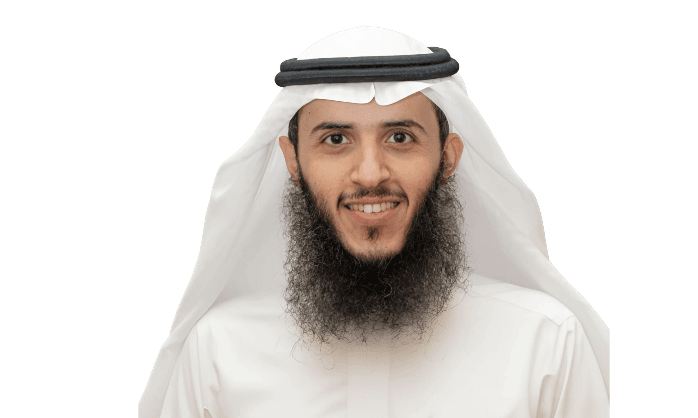
CEO of Asas Makin Real Estate Development and Investment Company