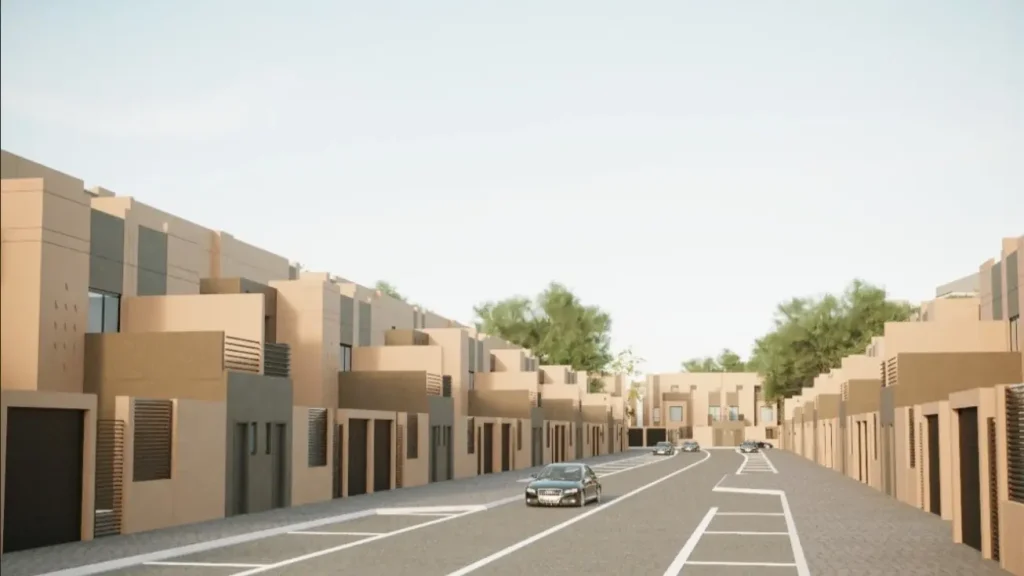

Saudi Arabia’s housing expansion plans face a new challenge as construction costs rise, even as major markets prepare to welcome millions of new units in the coming years, according to the latest report from Knight Frank. The firm forecasts that Riyadh’s housing supply will increase from approximately 2.81 million units in 2026 to 3.30 million units by 2030, while Jeddah’s supply is expected to reach around 1.47 million units, and the Dammam metropolitan area 986,000 units during the same period. Supply growth is also projected to continue in Mecca and Medina.
However, Knight Frank points out that the announced supply volume does not necessarily guarantee that all units will reach the market on schedule, given the changing development cost environment. Raw material costs used in construction have risen by approximately 201 TP3T since the beginning of the year, adding pressure to the economic viability of projects and potentially impacting developers' decisions and delivery timelines.
The company believes that assessing the future balance between supply and demand will not depend solely on the size of announced projects, but will become increasingly linked to the actual pace of unit deliveries and the composition of the supply reaching the market.
This comes amid mixed performance in key residential markets during the second quarter. Apartment values in Riyadh rose by 3.11 TP3T year-on-year to SAR 6,369 per square meter, while Jeddah saw an increase of 1.21 TP3T and the Dammam metropolitan area by 2.81 TP3T.
In contrast, villa values declined in the three cities, by 2.2% in Riyadh, 1.4% in Jeddah, and 0.9% in the Dammam metropolitan area.
According to Knight Frank, these moves indicate the increasing importance of multiple factors in determining demand, including affordability, location, product quality, and infrastructure.