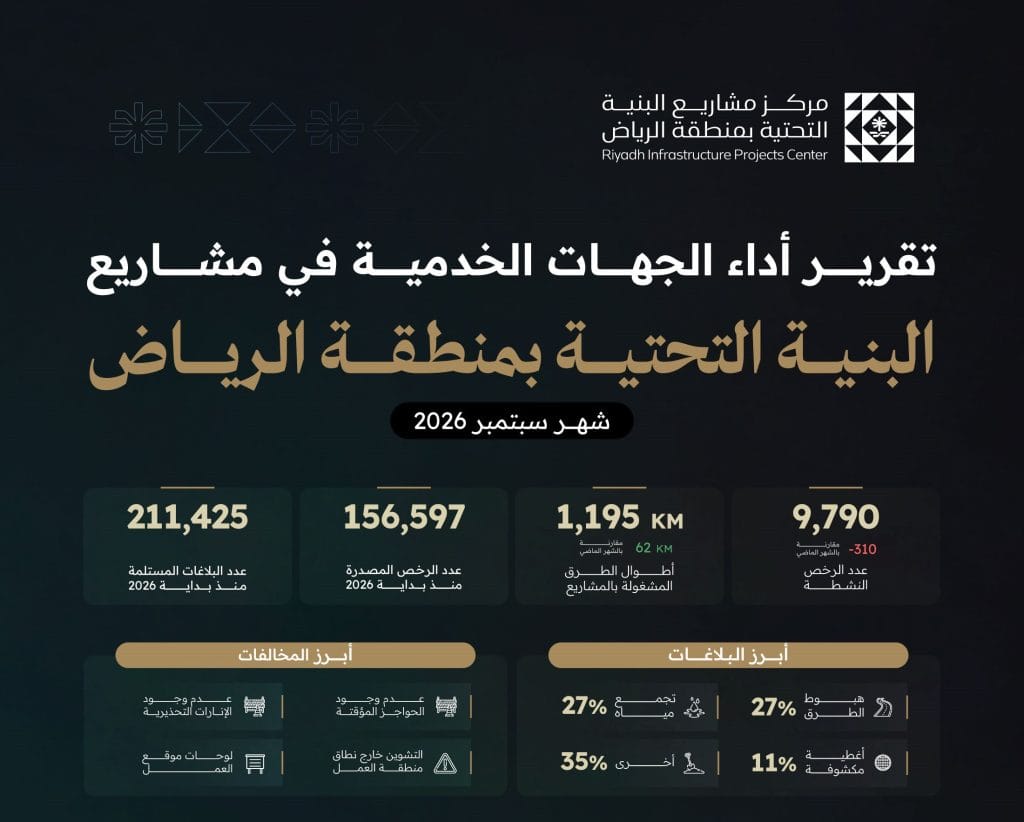

The Riyadh Infrastructure Projects Center issued its periodic report on the performance of service providers for September 2026, as part of its ongoing efforts to enhance the efficiency of infrastructure projects, raise the level of transparency and compliance, and improve the quality of field work in the region.
The number of infrastructure work permits issued during the month exceeded 18,000, including (9,790) active and under implementation permits, bringing the total number of permits issued since the beginning of the year to more than 156,000, as part of its efforts to regulate project work and enhance compliance with approved requirements and standards.
The lengths of roads occupied by project works have reached 1,195 kilometers, reflecting the scale of development work underway on road networks, services and infrastructure.
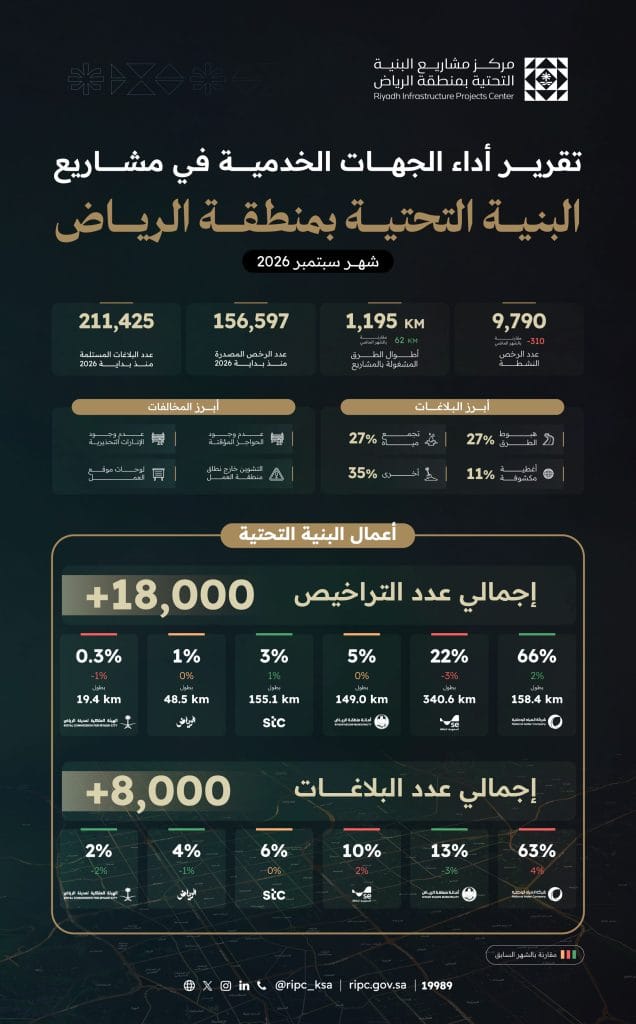
Receiving more than 8,000 reports
During September, the center received more than 8,000 reports, with road subsidence and water accumulation accounting for 27% each, while exposed covers accounted for 11%, and other reports for 35%, bringing the total number of reports received since the beginning of the year to more than 211,000.
The field teams identified a number of violations at the project sites, most notably the lack of temporary barriers, the lack of warning lights, and stockpiling outside the work area, which requires strengthening commitment to improve the quality of implementation and maintain the safety of the sites.
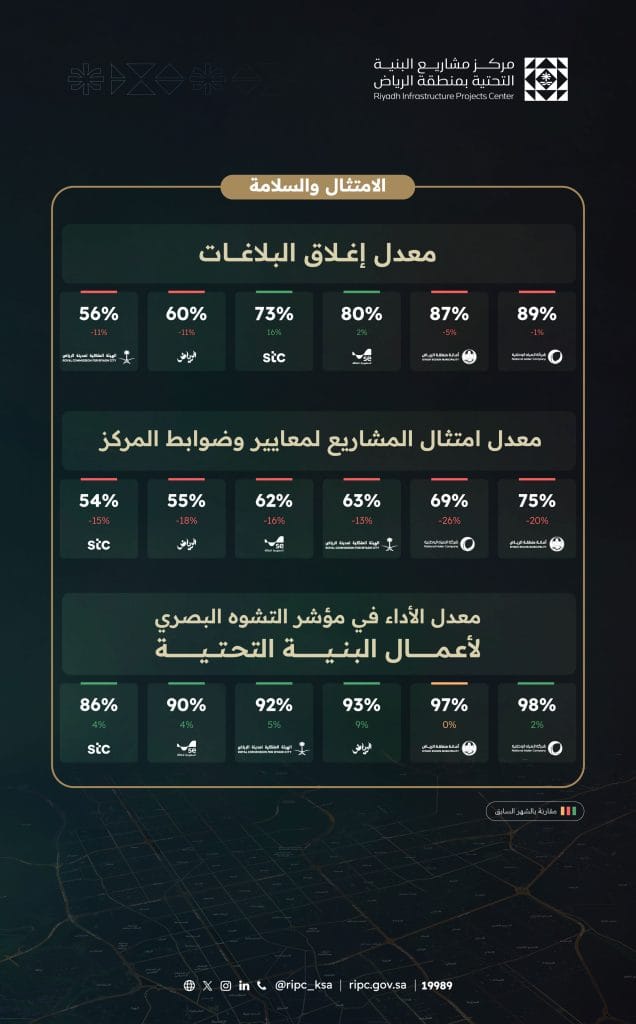
The center emphasized that periodic reports represent an important tool to support transparency, raise the efficiency of follow-up, and provide operational indicators that contribute to supporting decision-making, which is reflected in improving the quality of infrastructure projects and enhancing the quality of life in the Riyadh region.
The Riyadh Region Infrastructure Projects Center is a Saudi government entity established by royal decree in July 2023 (Cabinet Resolution No. 902), and aims to organize, coordinate, supervise and monitor infrastructure projects in the Riyadh region to improve the quality of life, develop the urban landscape and increase spending efficiency.
The center's main tasks and objectives:
- Planning and coordination: Developing unified regulations and comprehensive strategic plans for infrastructure projects (such as roads, water, sanitation, communications, and energy).
- Issuance and Control: Issuing licenses for infrastructure works, and conducting field inspection tours to ensure compliance.
- Empowering the private sector and innovation: launching initiatives such as technical accreditation for infrastructure contractors, and developing digital platforms.
Read also:
Launch of a new company to develop economic infrastructure in Riyadh