
Dr. Emad Al-Abd Al-Rahman
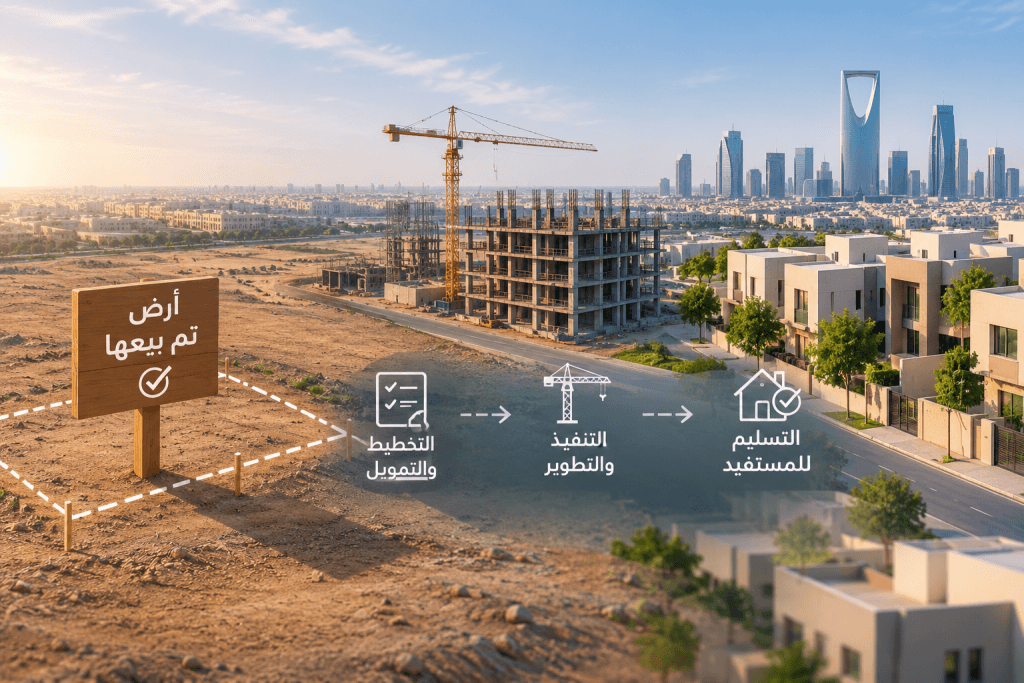
In the Saudi real estate market, the question is no longer limited to the volume of land traded or the value of transactions executed, but has become more important: how much of this land will actually be transformed into completed residential projects, and when will its units reach the beneficiaries?
This issue is of particular importance in light of the regulatory and economic transformations taking place in the sector, and the increasing need to measure the real estate supply that actually enters the market, rather than just the size of the land and announced projects.
The numbers reveal one side of the picture.
According to Knight Frank's September 2026 report, the Kingdom recorded 45,740 residential transactions during the second quarter, a decrease of 121,000 TP3T compared to the same period of the previous year. Residential land accounted for approximately 50,510 TP3T of the total number of transactions, with a value of SAR 21.7 billion.
These figures do not mean that land trading is a problem, nor do they alone prove that there is a shortage of housing units, but they raise a legitimate question about the distance between buying land, developing it, and delivering a real estate product that meets market needs.
From real estate origin to economic value
The development cycle may falter for multiple reasons, including high construction costs, difficulty in financing, implementation challenges, or the proposed product not matching actual demand.
The Knight Frank report indicated that building material costs have risen by approximately 20% since the beginning of 2026, a development that could put pressure on the economic viability of some projects and affect the timing of their implementation.
Therefore, an increase in land available for trading does not automatically mean a similar increase in ready-made housing; each stage has financial, technical and marketing requirements that must be taken into account.
Required: To measure what reaches the market
The next phase requires more detailed indicators that measure the land that has moved into actual development, the projects under implementation, completion and delivery rates, and the alignment between new products and actual demand.
Partnerships between landowners and developers are also important, as they allow for the pooling of expertise and funding and accelerate implementation based on clear feasibility studies.
The success of the real estate market is not measured by the number of land plots sold alone, but by its ability to transform assets into productive projects, sustainable investment opportunities, and housing units that reach beneficiaries at the right time and cost.
The most important question is not: How much land was sold? But: How many projects were completed, and how many units actually reached the market?