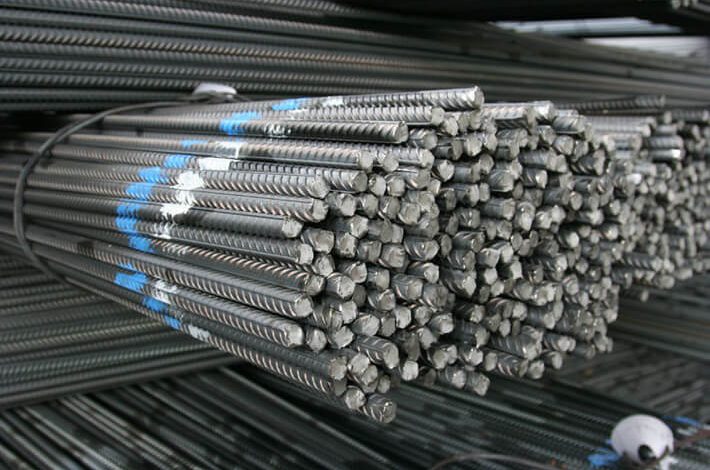

Historical data from the Building Materials Price Index on the Contractors platform of the Saudi Contractors Authority revealed remarkable shifts in the prices of building materials in the local market, after national electrical wires recorded record levels during 2026, while cement prices showed a clear disparity between the white and black types, according to indicators that monitor price developments over about 18 years.
The data on electrical wires showed that the price per meter reached its highest level at 3.37 riyals, while the average price during the monitoring period from 2009 to 2026 was about 1.47 riyals, and the median was 1.38 riyals, while prices ranged between 0.60 riyals and 3.37 riyals per meter, depending on the dimensions.
The price movement of the most traded sizes, namely 2.5, 4 and 6 millimeters, reflected three main stations; it began with a period of relative stability and gradual decline until 2016, which witnessed the lowest price levels, as the price of a meter of 2.5 millimeters wire fell to 0.60 riyals, while the prices of the 4 and 6 millimeters sizes declined to less than one riyal and 1.5 riyals respectively.
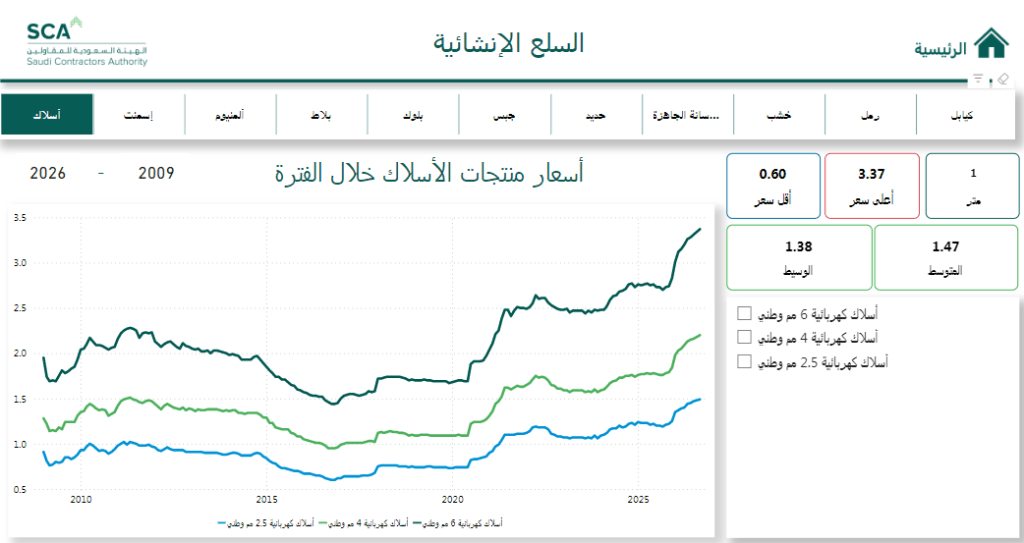
With the second half of 2020, prices took an accelerated upward trend, reaching unprecedented peaks in 2026. National wires measuring 6 millimeters topped the price list at 3.37 riyals per meter, while the 4 millimeters size exceeded the level of 2.2 riyals, and the 2.5 millimeters size approached 1.5 riyals.
There is a significant difference in the prices of electrical cables.
The data also revealed a significant difference in the prices of national electrical cable products during the period from 2009 to 2026, as the average recorded price reached 108.81 riyals, while the median reached 62.67 riyals, according to data from the “Construction Goods” platform.
According to statistical indicators, prices ranged from a low of 11.28 riyals to a high of 658.08 riyals, with different products and sizes included in the monitoring, which include national electrical cables in sizes of 10, 25, 30, 35, 50, 70, 95, 120 and 300 square millimeters, in addition to steel iron binding cable.
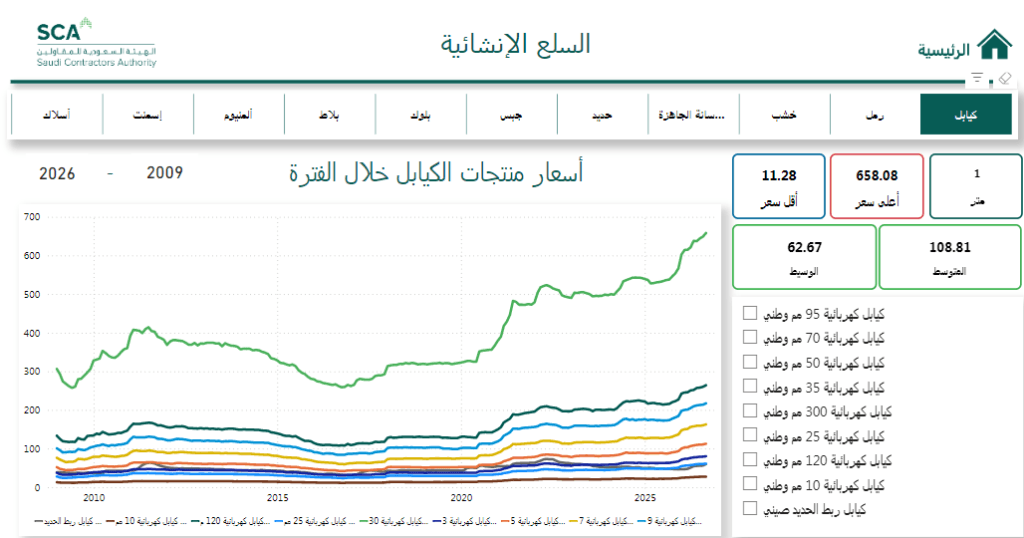
The price movement showed a clear disparity between the different sizes; the national electricity cable, measuring 95 square millimeters, recorded the highest price levels among the listed products, after starting its journey at levels close to 300 riyals at the beginning of the monitoring period, before witnessing successive rises and falls, reaching a remarkable jump during recent years, to exceed the level of 650 riyals in 2026.
In contrast, the prices of the remaining sizes moved at lower levels, with varying waves of increase recorded during the period, especially since 2020, before the increases accelerated again in a number of products during 2025 and 2026, reflecting the widening price gap between different categories of electrical cables.
White cement is at 43.30 riyals, and black cement is stable.
In the cement market, the average price of a 50-kilogram bag was approximately 26.41 riyals between 2009 and 2026, with a median price of 23.97 riyals, according to data from the Saudi Contractors Authority. Prices fluctuated within a range of 11.81 riyals to 43.30 riyals per bag during this period.
The indicators showed a difference in price trends between white and black cement; white cement recorded its highest level at 43.30 riyals before 2015, after starting its journey from levels close to 32 riyals in 2009. Despite its gradual decline to about 36 riyals at the beginning of 2020, it rose again, exceeding 40 riyals during the same year, before later settling between 37 and 39 riyals until 2026.
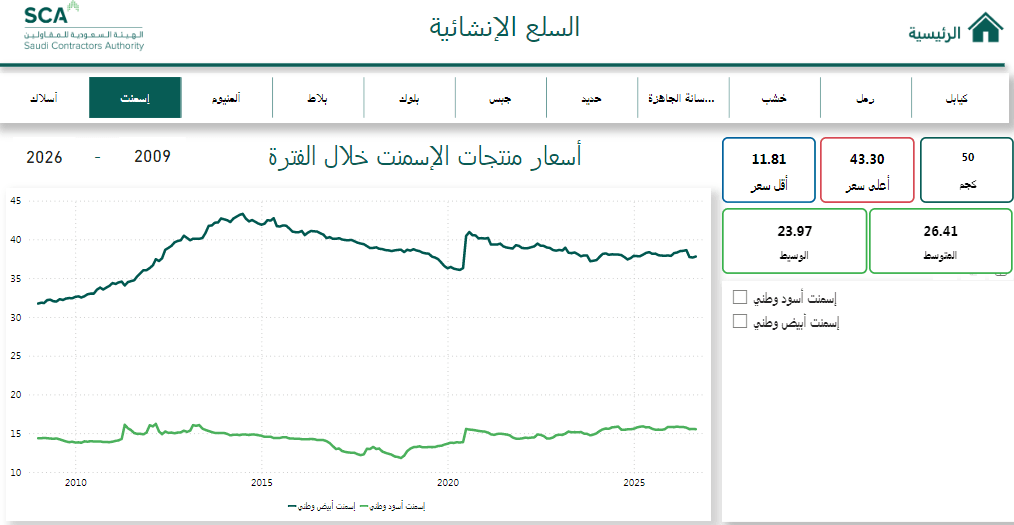
As for national black cement, it maintained a price range between 14 and 16 riyals during the period from 2009 to 2016, before it declined to the lowest level recorded in the index at 11.81 riyals in 2018. Prices regained their upward trend starting from mid-2020, exceeding 15 riyals, then settled in a range between 14.5 and 16 riyals until 2026.
Ready-mix concrete prices exceed 230 riyals per cubic meter.
Data from the Construction Goods Index on the “Contractor” platform of the Saudi Contractors Authority showed that the average price of ready-mix concrete products in the local market was around 196.45 riyals per cubic meter during the period from 2009 to 2026, while the average price was 196.73 riyals.
According to the Authority’s historical indicators, the prices of the products included in the monitoring ranged between a minimum of 154.15 riyals per cubic meter and a maximum of 230.64 riyals. The index included four main types: ordinary concrete and resistant concrete, with grades of 250 and 350.
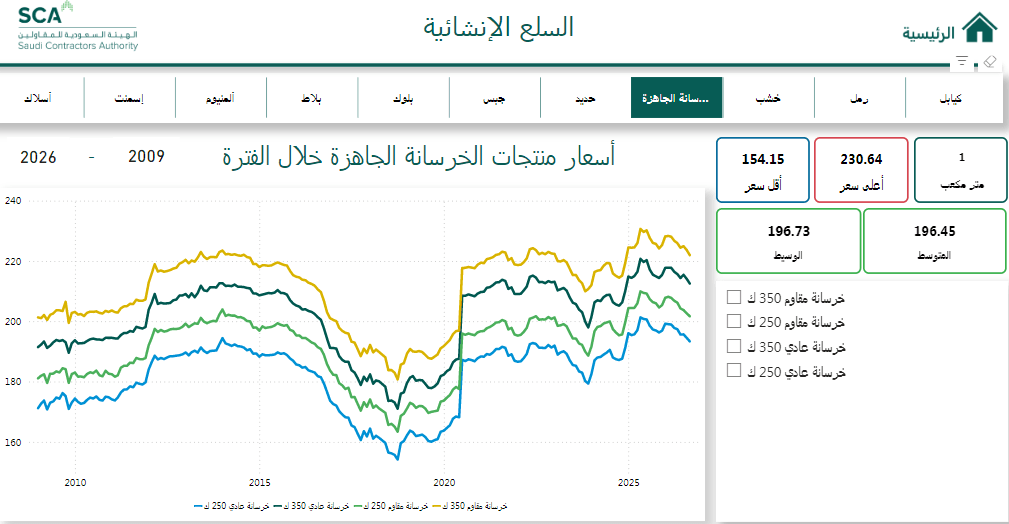
Reading the price trajectory of the four products showed a converging trend in price movements; the first period witnessed a gradual rise until 2013, followed by a decline that lasted for several years, with prices reaching their lowest levels during 2018 and 2019.
With the start of 2020, prices recorded a clear jump, before entering a phase of fluctuation at relatively high levels. The upward and downward movements continued during the following years, reaching the highest levels of the index during 2025 and 2026.
The same data showed that the average price per ton of national reinforcing steel products was around 2.87 thousand riyals during the period from 2009 to 2026, while the average price was 2.80 thousand riyals.
According to historical indicators, iron prices ranged from a low of 1.82 thousand riyals per ton to a high of 4.81 thousand riyals. The monitoring included several sizes of national reinforcing iron, ranging between 8 and 18 millimeters.
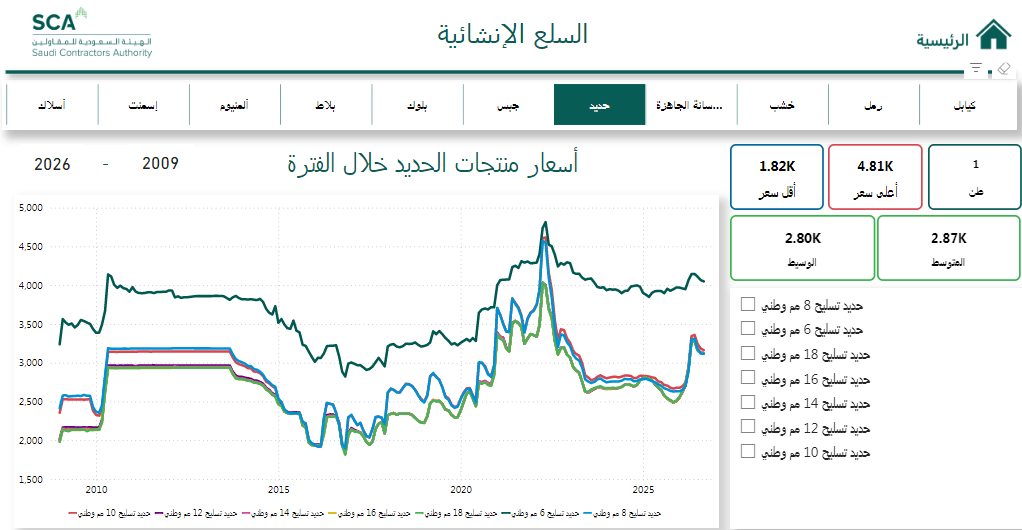
The graph of reinforcing steel prices showed high levels during the first years of the monitoring period, before a gradual decline began in 2014, which accelerated during 2015 and 2016, after which prices entered a phase of fluctuation and upward and downward movements until 2020.
Iron prices witnessed a strong jump at the beginning of 2021, coinciding with recording the highest level in the index at 4,810 riyals per ton, before resuming their decline during the following period, moving in lower ranges, with fluctuations continuing until 2026, which witnessed renewed increases, with prices reaching levels exceeding 3,000 riyals per ton at the end of the monitoring period.
Read also:
Domestic demand boosted cement sales to 4.78 million tons last month.
Cement sales last month: What happened to production and export indicators?
Rebar prices fell during September, while electrical cables and timber prices rose.
Iron and electrical cables led the surge in building material prices last month.