
Building material prices in Saudi Arabia during August 2026 revealed a clear division in cost trends. While some basic materials continued to move within a limited range, key components in construction work were subjected to strong price pressures, led by cables, electrical wires and reinforcing steel, in contrast to the decline in prices of concrete and blocks.
Data from the General Authority for Statistics shows the different price trends of building materials from one material to another, which makes the impact of price changes on project costs related to the structure of each project, the type of materials used, and the stages of implementation.
Cables are leading the way in building material price increases.
Electrical wires and cables saw the largest year-on-year price increases in August, with increases exceeding 20% for all items included in the data. The 50mm national standard electrical cable recorded the highest annual increase, with the price per meter rising by 27.12% to SAR 110.70, followed by 35mm cable, which increased by 25.65% to SAR 79.11 per meter.
The price of 25mm cable also increased by 24.98% to SAR 60.08, 70mm cable by 24.59% to SAR 160.04, and 95mm cable by 23.7% to SAR 213.76. Other price increases included 10mm cable, which rose by 23.92% to SAR 27.09 per meter, 120mm cable by 20.91% to SAR 259.90, and 300mm cable by 20.98% to SAR 648.83. Prices of electrical wires also increased. The price of 2.5 mm wire increased by 23.33% to 1.48 riyals per meter, 4 mm wire by 23.86% to 2.18 riyals, and 6 mm wire by 22.34% to 3.34 riyals. This increase was not limited to the annual comparison; prices for all wires and cables rose on a monthly basis by percentages ranging between 0.25% and 0.93%.
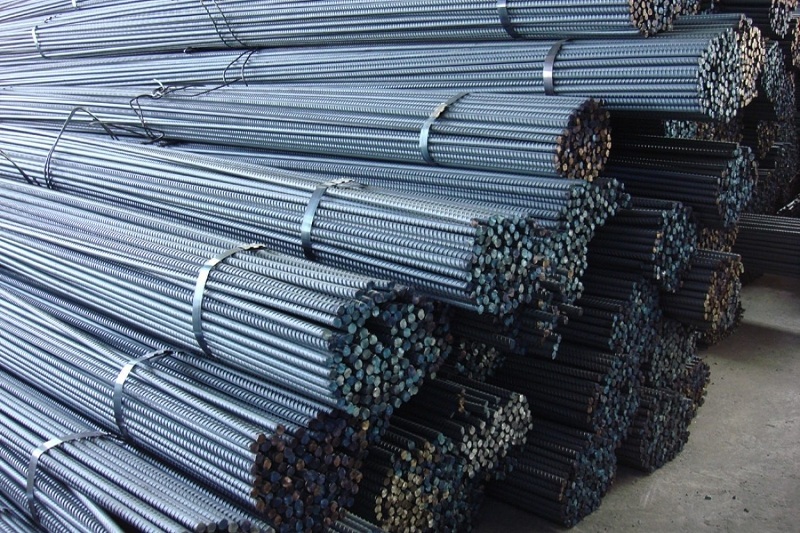
Reinforcing steel adds pressure to construction costs.
In the reinforcing steel market, most sizes recorded annual increases exceeding 171 TP3T. The price of a ton of locally produced 12mm rebar rose by 21.571 TP3T to SAR 3,129.78, while 16mm rebar increased by 21.521 TP3T to SAR 3,127.02, and 14mm rebar by 21.401 TP3T to SAR 3,127.74. Similarly, the price of 18mm rebar rose by 21.041 TP3T to SAR 3,124.92 per ton, 10mm rebar increased by 17.361 TP3T to SAR 3,183.93, and 8mm rebar rose by 16.81 TP3T to SAR 3,119.22. 6mm rebar recorded the smallest annual increase among the listed sizes, at 4.33%, reaching SAR 4,065.87 per ton. Despite the significant annual increases, rebar prices moved in the opposite direction on a monthly basis during August, with all sizes declining by percentages ranging between 0.99% and 1.97%.
Concrete and blocks run in the opposite direction to steel.
In contrast, prices for ready-mix concrete and blocks trended downward during August on an annual basis.
Prices for all types of concrete included in the data declined, with 250K-strength concrete experiencing the largest decrease by 2.25% to 202.67 riyals per cubic meter, while the price of ordinary 250K-strength concrete decreased by 2% to 194.53 riyals.
The price of 350 kg resistant concrete also decreased by 1.74% to 223.67 riyals per cubic meter, and ordinary 350 kg concrete decreased by 1.4% to 214.10 riyals.
On a monthly basis, concrete price decreases ranged between 0.52% and 0.61%.
The downward trend extended to the black block, with the price of 1,000 pieces of the 15cm size decreasing by 1.88% year-on-year to SAR 1,674.77, while the 20cm size fell by 1.24% to SAR 1,732.66. Both sizes also saw a monthly decrease of approximately 0.2% each, with the 15cm size registering a drop of 0.19% and the 20cm size a decrease of 0.18%.
Cement and sand: relative stability
Aside from materials that experienced sharp increases or significant decreases, a range of raw materials used in construction moved within limited price ranges. The price of a 50-kilogram bag of locally produced black cement rose by 0.581 TP3T year-on-year to SAR 15.55, while the price of a sand and gravel mix increased by 1.41 TP3T to SAR 53.05 per cubic meter.
In contrast, the price of national white cement decreased by 1.31% to 37.67 riyals per bag, and the price of local crushed marble tiles decreased by 2.53% to 23.11 riyals per square meter, which is the largest annual decrease among the listed raw materials.
National gypsum recorded a slight increase of 0.19% to 15.80 riyals per 40-kilogram bag, while the price of fine white sand increased by 0.14% to 77.45 riyals per cubic meter.
As for red sand, its price decreased by 0.87% to 38.56 riyals per cubic meter.
On a monthly basis, these materials moved within a narrow range, with black cement rising by 0.13%, crushed marble tiles by 0.22%, gypsum by 0.25%, and sand and gravel mix by 0.44%, while white cement fell by 0.16%, white fine sand by 0.17%, and red sand by 0.05%.
Timber prices are registering varying increases.
Timber also saw year-on-year increases, led by Romanian timber, which rose by 10.211 TP3T to SAR 1,620.85 per cubic meter. Chilean timber followed with an increase of 6.081 TP3T, while African teak saw a price rise of 3.391 TP3T to SAR 6,956.13 per cubic meter.
Indonesian plywood, however, recorded the lowest annual increase among the listed wood species, at 1.39%.