
Ambitious projects
The Supreme Commission for the Development of Riyadh held its third meeting of 1434 AH, chaired by Prince Khaled bin Bandar bin Abdulaziz, Chairman of the Commission, in the presence of Prince Turki bin Abdullah bin Abdulaziz, Vice Chairman of the Commission, at the Commission's headquarters in the Embassies neighborhood.
Prince Khaled started the meeting by extending his thanks and appreciation to the Custodian of the Two Holy Mosques King Abdullah bin Abdulaziz for approving the award of the King Abdulaziz Public Transport Project in Riyadh. He also expressed deep thanks and gratitude to Prince Salman bin Abdulaziz, Crown Prince, Deputy Prime Minister and Minister of Defense, and Prince Muqrin bin Abdulaziz, Second Deputy Prime Minister, Advisor and Special Envoy of the Custodian of the Two Holy Mosques, for their support of the project from its inception until its award, praying to God to complete it with his grace and to write in it the good and benefit of Riyadh, its residents and visitors.
His Highness pointed out that the meeting dealt with a number of topics and projects and took a number of decisions on them, including: Approval of the controls for the building system on streets with a width of 30-36 meters, which aims to enhance the positives from the application of the system and avoid the observations and negatives that have been observed since the beginning of the application of the developed building system in these streets, and the meeting also approved the amendments to the building system on activity nerves, public transport routes and Al-Ma'zer Street.
Building controls
Engineer Ibrahim bin Mohammed Al Sultan, member of the Supreme Authority for the Development of Riyadh City and head of the Projects and Planning Center, explained that the meeting approved a number of controls for the building system on streets with a width of 30-36 meters in Riyadh, including:
- Commitment to residential use as stated in the Supreme Authority's decision, which does not include furnished apartments and other services, while giving developers a five-year deadline to amend all uses that do not comply with the aforementioned decision.
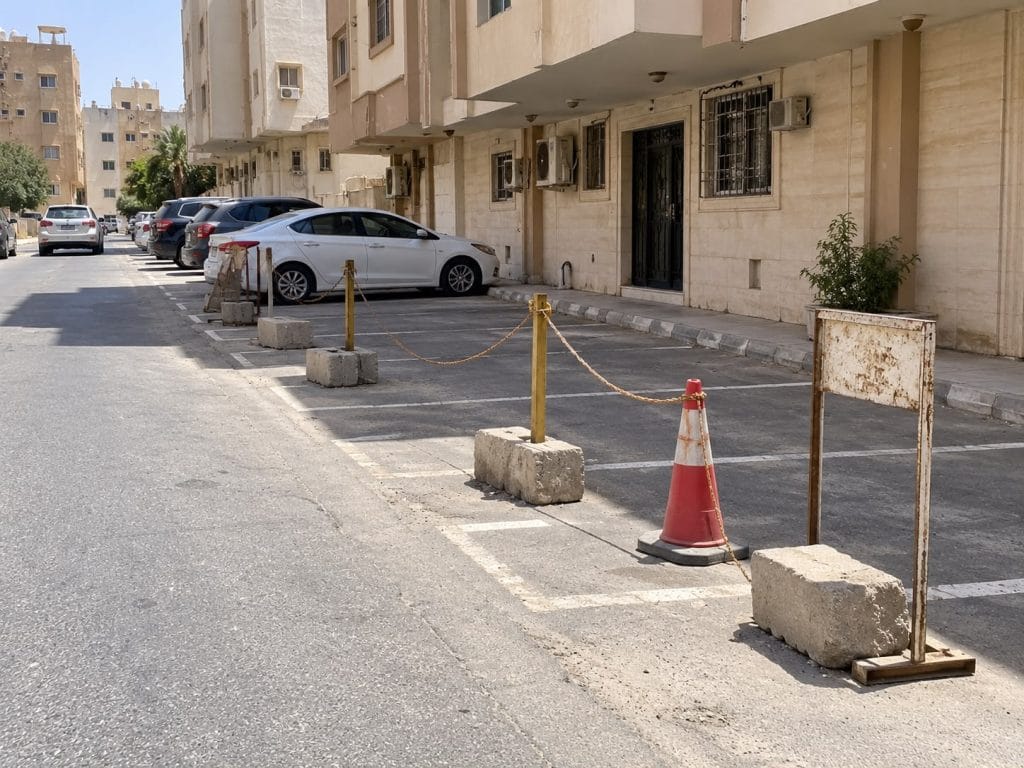
- Linking the building completion certificate to the commitment to provide the necessary parking spaces for residential units within the building.
- Preserving the privacy of neighbors with authentic architectural solutions.
- The maximum facade of buildings overlooking the streets shall be 30 and 36 meters, two pieces, according to the approved organizational plan, provided that the facade of the building does not exceed a maximum of 60 meters.
- It is allowed to merge the front plot overlooking the streets 30 and 36 meters wide with the rear plot with a maximum of two plots, with adherence to the current building system for the rear plots (residential with a height of two and a half floors), and not to open entrances or exits from the rear plot overlooking the main street, The entrances and exits shall be within the boundaries of the front plot overlooking the main street, and as for the depths of large plots, the depth of the building with a height of three and a half floors shall not exceed 30 meters from the property boundary as a maximum towards the streets with a width of 30 and 36 meters, and the rest of the depth of the land with a height of two and a half floors with the commitment not to open entrances or exits towards the side and rear side streets.
- It is forbidden to open entrances or exits on side streets with a width of less than 20 meters, and within the boundaries of the front plot overlooking the main street with a width of 30 and 36 meters.
- The developer shall coordinate with the Saudi Electricity Company and the National Water Company, before starting implementation, to obtain the necessary requirements and controls for the delivery of electricity, water and sewage services.
- Adhere to the decision of the Honorable Council of Ministers and the circular of His Royal Highness the Minister of Municipal and Rural Affairs to implement a separate network for gray water, follow the applications and controls of rationalization and controls of separating the feed of siphons and link the building completion certificate to adherence to the decision of the Honorable Council of Ministers.
Amendments to the tracks system
Engineer Ibrahim Al-Sultan pointed out that the meeting approved a number of amendments to the building system on the nerves of activities, public transportation routes and Al-Ma'adhar Street in Riyadh city, after re-studying and reviewing the building controls developed in Riyadh city in 1434 AH, through a committee composed of the Supreme Commission for the Development of Riyadh City, the Riyadh Municipality and the Emirate of Riyadh Region.