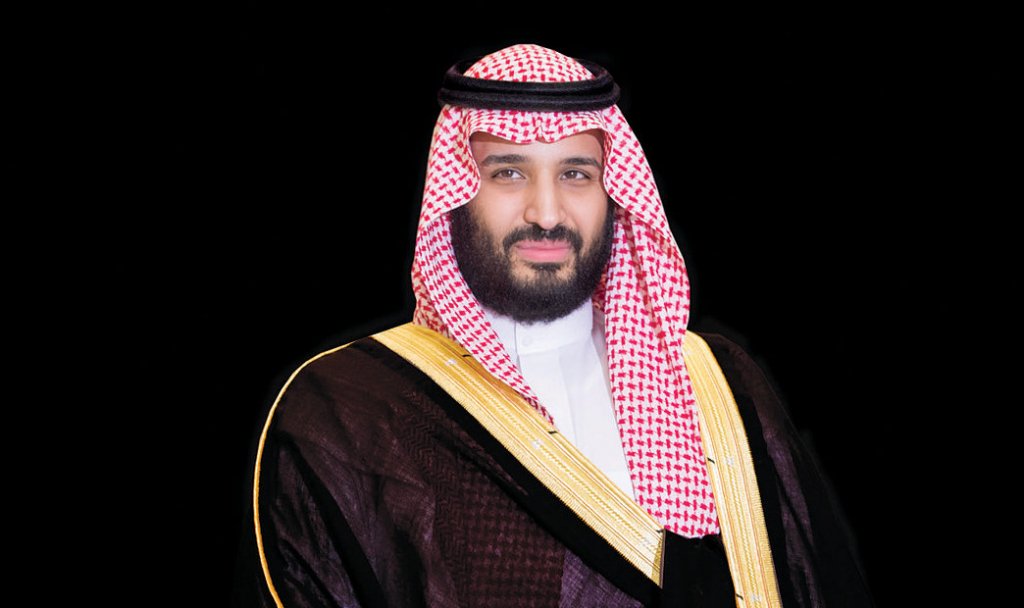
The Saudi-Chinese Business Forum ended its work yesterday with the signing of a number of joint agreements, with the participation of Saudi Minister of Trade and Investment Majid Al-Qasabi, Minister of Energy, Industry and Mineral Resources Khalid Al-Falih and Vice President of the China International Trade Development Council Weng Jinzhen, the forum takes its importance by coinciding with the visit of the Deputy Crown Prince, Second Deputy Prime Minister and Minister of Defense Prince Mohammed bin Salman to China.
Chinese investments are promising for the Kingdom
At the beginning of the forum, Weng delivered a speech in which he welcomed the attendees and talked about the economic cooperation relations between the Kingdom of Saudi Arabia and the People's Republic of China, calling for expanding this cooperation to greater horizons to serve the interests of the two friendly countries. He said that there are promising investments in the Kingdom that motivate the Chinese business sector to invest in them, pointing out that China is the first partner of the Kingdom in terms of trade and investment.
For his part, Al-Qasabi expressed his thanks and appreciation to the Saudi-Chinese Business Council for organizing this forum to promote and develop trade and investment alliances between the Kingdom and China.
He pointed out that Saudi-Chinese relations are witnessing a tangible development in all fields, especially in the economic, commercial, investment, industrial and service fields, indicating that Prince Mohammed bin Salman's visit to China came to confirm this.
Vision to expand investments
Al-Qasabi explained that the Kingdom's development and economic vision is an ambitious and strong vision based on expanding investments and partnerships between countries, noting that China is the Kingdom's first trade partner, and assured the Saudi-Chinese Business Forum that the vision came to accelerate the desires to improve the investment environment, raise its international competitiveness and develop investment opportunities in many promising sectors with untapped potential such as information technology, housing, real estate development, transportation, mining, military industries, alternative energy and others.
Qasabi said. Al-Qasabi referred to the opening of foreign investment in the Kingdom with 100% ownership in the commercial sector within controls, as one of the steps towards achieving more stability, and indicated that the Chinese business sector is looking for more opportunities for growth and expansion in investment and production outside its borders, and the Kingdom is the main and most appropriate center that allows it to expand in the markets of the Middle East and Africa where all ingredients and opportunities are available to serve investors to achieve the highest profit rates with less risk in a competitive environment and an advanced infrastructure environment.
Al-Qasabi indicated that the Chinese business sector is looking for more opportunities for growth and expansion in investment and production outside its borders.
Reviving the Silk Road
Minister Al-Qasabi said: "China's serious efforts to revive the Silk Road, focusing on the Middle East region to connect the Eastern and Western hemispheres, are in line with the Kingdom's Vision 2030. The vision is based on transforming the Kingdom's unique strategic location between major global waterways into a global logistics center and taking advantage of this to make the Kingdom a connection point between Asia, Europe and Africa, a hub for trade and a gateway to global markets, so the Kingdom can play a vital and pivotal role in implementing the Silk Road strategy."
Minister Al-Qasabi said.
While Minister of Energy, Industry and Mineral Resources Khalid Al-Falih pointed out that "the Kingdom's Vision 2030" is determined to diversify its economy, expressing pride that the Kingdom leads the world in the field of energy and will not give up this leadership, adding that the Kingdom and China will have effective investment relations that add to what exists now in the field of energy, and explained that "Vision 2030" launched under the patronage of the Custodian of the Two Holy Mosques King Salman bin Abdulaziz and led by the Council of Economic and Development Affairs with continuous follow-up from Prince Mohammed bin Salman to transfer this vision from its name to reality on the ground comes integrated with the initiative Economic Belt and Road Silk Road.
Industrial cooperation complements energy
Falih pointed out that energy will not be the only axis of the Saudi economy and the joint relationship between the two countries, explaining that industry will be another complementary axis to this international leadership achieved by the Kingdom, calling on the Chinese business sector to seize this opportunity and be proactive in investing in the industrial field in the Kingdom.
Falih called on the Chinese business sector to seize this opportunity and be proactive in investing in the industrial field in the Kingdom.
Expressing his aspiration to double the giant investments between major companies, as well as medium and small companies in the Kingdom and China in addition to what exists between many companies in the two countries, he invited the Chinese business sector to invest in the mining sector, noting that the Ministry of Energy, Industry and Mineral Resources continues to double the contribution of the mining sector to the total output of the Saudi economy, and that this sector is open to foreign investment and will be opened more in the future.
He expressed his aspiration to double the giant investments between major companies, in addition to medium and small companies in the Kingdom and China, in addition to what is existing between many companies in the two countries.
9 trade and investment agreements
After the end of the forum sessions, Al-Qasabi, Al-Falih and Wong witnessed the signing of a number of trade and investment agreements between the Saudi and Chinese sides, as follows:
Agreement between the Council of Saudi Chambers of Commerce and Industry and the China International Trade Development Center.
An agreement between Ajlan & Brothers Group of Companies and the local government of Zaozheng City.
An agreement between Ajlan & Brothers Group of Companies and the local government of Zaozheng City
Agreement between Al Jabr Holding Company and Haier Company for household appliances and electronics.
Agreement between Al Jabr Holding Company and Haier Company for household appliances and electronics.
Agreement between RAMS International Group and Top Trans TTG Group.
Agreement between Alpha Feed Factory and Gitan Limited.
Agreement between Alpha Feed Factory and Gitan Limited.
Agreement between Al Jomaih Power & Water Company Limited and CGN Energy Company.
Agreement between Al Jomaih Power & Water Company Limited and CGN Energy Company.
Agreement between Al Juraisi Group and ZH Saudi Arabia Limited.
Agreement between Al Juraisi Group and ZH Saudi Arabia Limited.
Agreement between Juraisi Group and Huawei Saudi Arabia Limited.
Agreement between Juraisi Group and Huawei Saudi Arabia Limited.
Agreement between SEDA Business Centers Company and Credit International Cooperative Company.
Agreement between SEDA Business Centers Company and Credit International Cooperative Company.