
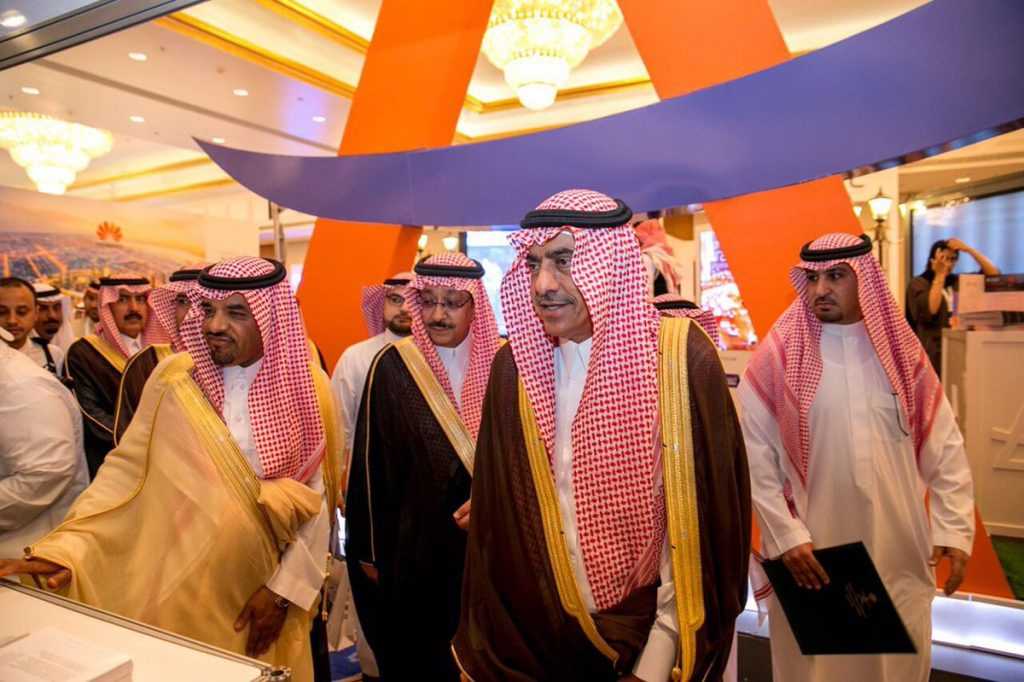

During his speech at the first Saudi Smart Cities Conference, organized by the Ministry under the slogan “Smart Solutions for a Better Life,” held at the King Faisal Hall in the Riyadh Intercontinental Hotel from May 17-19, 2017, the Minister of Municipal and Rural Affairs, Engineer Abdul Latif bin Abdul Malik Al-Sheikh, affirmed that the Ministry’s strategy includes detailed plans to develop urban planning systems and standards, transportation planning within cities, and to implement smart city concepts according to the best global practices in this field. This will, God willing, contribute to enriching living conditions and well-being throughout the Kingdom, attracting local and international investments, and helping to bring about a qualitative shift for the Kingdom’s cities and increase their competitiveness.
Forming partnerships to implement smart city projects
Al-Sheikh explained that the Ministry's strategy is based on several key pillars that primarily aim to achieve sustainable and balanced urban development to raise the level of quality of life and enhance the human dimension in all cities and regions of the Kingdom in a way that meets the aspirations of our wise leadership, the hopes of citizens, and the requirements of all partners. The strategy includes, and Al-Sheikh announced the Ministry's commencement of forming partnerships to implement smart city projects for ten cities in the Kingdom to achieve one of the most important goals of the Municipal Transformation Program 2020, noting that the Custodian of the Two Holy Mosques entrusted the responsibility of implementing the Saudi Smart Cities Initiative and coordinating its projects to the Ministry of Municipal and Rural Affairs as of 17/5/1438 AH. The Minister of Municipal and Rural Affairs noted the hopes that the Kingdom places on Vision 2030 to make the Kingdom a successful and pioneering model in the world on all levels.
The connection between smart city concepts and municipal work
The conference activities included a dialogue on smart Saudi cities with the participation of a group of young men and women, with the participation of a select group of local and international experts to contribute to enriching the conference content and discussions and to contribute to the exchange of experiences and experiences and to localize the concepts of smart cities. The speakers stressed that the concepts and standards of smart cities are closely related to the goals of municipal work, as both seek to achieve quality of life, contribute to solving urban problems, achieve efficient operation of services and infrastructure networks, effective city management, improve urban performance, smart management of land uses and urban growth, increase economic efficiency, reduce negative impacts on the environment, in addition to achieving sustainability and urban prosperity.
A study of the application of smart city components in 17 cities
For his part, the Undersecretary of the Ministry for Urban Planning, Chairman of the Organizing Committee, Dr. Abdulrahman bin Hassan Al-Sheikh, affirmed that the Ministry is dealing with many challenges to transform Saudi cities into smart cities, including the integration of information and data and the ability to reach appropriate partnership models with the private sector in order to achieve the goals of smart transformation, in addition to building specialized capabilities and creating smart community partnerships.
Dr. Abdulrahman Al-Sheikh pointed out that in 2015 the Ministry launched a project entitled “Study of the Application of Smart City Components in Urban Planning,” where the study targeted 17 major cities in the Kingdom, including the capitals of the regions inhabited by 75 % of the total population of the Kingdom. The readiness of these cities was assessed according to agreed international standards, including: the availability of a strategic vision for the smart transformation of the city, the readiness of the technical infrastructure, the availability of a culture of innovation and participation, the availability of data and clarity of procedures.
Dr. Abdulrahman Al-Sheikh explained that the ministry added to those standards the standard of “urban planning and management” in order to integrate smart concepts in preparing the guiding plans for the cities of the Kingdom. The study included conducting field surveys that included more than 3,300 samples of the population, in addition to sixty executive officials in the municipalities affiliated with those cities, and one hundred and fifty executive officials in the relevant governmental and private ministries and agencies. The study concluded by ranking the cities of the Kingdom that were studied according to these standards and identifying the gaps and priorities of services that must be converted into smart services.


