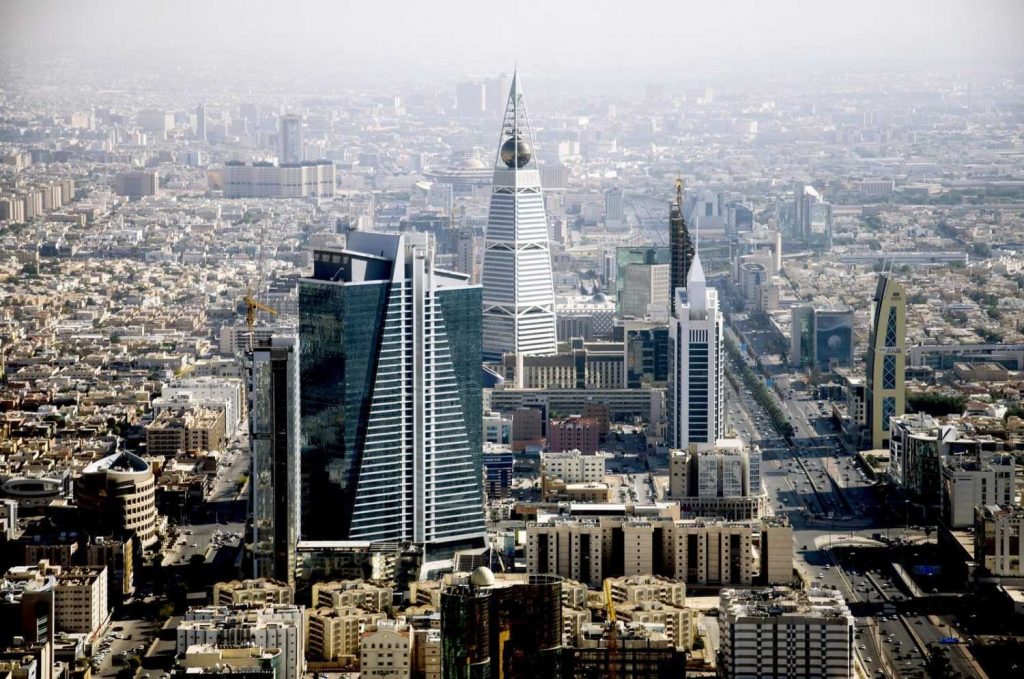

The city of Riyadh ranked 30th, placing it in the “High” category, in a pioneering e-government assessment study conducted by the United Nations on the websites of 40 municipalities worldwide, with the aim of improving urban resilience and sustainability through e-government.
The study identified 60 LOSI indicators covering the technical aspects and content of municipal and secretariat websites, as well as the provision of e-services and e-participation initiatives available through the portal. The UN study sought to demonstrate the feasibility of the methodology used to assess the development of local e-government and to present a set of findings illustrating the value of this type of information to policymakers, decision-makers, and relevant managers in promoting e-government at the local level, with the aim of contributing to the sustainable development of cities and communities.
The study classified participating cities into four groups: very high, high, medium, and low. The Riyadh Municipality’s e-portal met 31 indicators, enabling it to be placed in the “high” group.
The study concluded with a number of key lessons learned, most notably that local governments recognize the importance of e-government for achieving sustainability and resilience, and that cities in these countries with high e-government development index (EGDI) and high performance outperform others; and that 42.5 percent of cities received a LOSI rating lower than the rating assigned to their respective countries, according to the UNI OSI 2018.
In a related context, the Director General of the e-Government Program (Yesser), Engineer Ali bin Nasser Al-Asiri, that Riyadh’s achievement of meeting more than half of the criteria in the first-of-its-kind assessment of this index is an accomplishment that could only have been realized through God’s grace and the constant, ongoing support of the wise leadership, which has taken upon itself the task of ranking three Saudi cities among the smartest in the world as part of the Kingdom’s Vision 2030.
Al-Asiri highlighted the ongoing efforts and cooperation between the (Yasser) with nearly 180 government agencies—most notably the municipal sector and its various affiliated bodies—emphasizing the program’s readiness to support all government agencies in the Kingdom in achieving their goals and enabling them to serve beneficiaries in line with their aspirations.
He explained that the Kingdom has advanced in the Open Government Services Index (OSI) by 17%, with the index rising from 0.6739 in 2016 to 0.7917 in 2018. He noted that work is still ongoing in cooperation with all government agencies to achieve further progress on this index and all
international indices.
For his part, Engineer Sulaiman bin Hamad Al-Batahi, Deputy Secretary-General for Services at the Riyadh Region Secretariat, affirmed that Riyadh’s high ranking is due to the continuous support of the wise leadership, as well as the tireless follow-up and continuous encouragement Riyadh receives from His Highness the Governor of the Riyadh Region to elevate the city, and the ongoing efforts of His Excellency the Secretary of the Riyadh Region, Engineer Tariq Al-Faris, to improve and streamline the services provided by the Secretariat to the residents of Riyadh.
Al-Bathi emphasized that the Municipality will work with the Ministry of Municipal and Rural Affairs, the e-Government Program (Yasar), and relevant agencies to improve the set of service indicators and municipal content, in addition to working to increase community participation, ensuring that Riyadh advances in the next evaluation to the top tier among cities that have received a “very high” rating in indicators for improving urban resilience and sustainability through e-government.
It is worth noting that the cities selected for the study and ranking included: (Moscow, Cape Town, Tallinn, London, Paris, Sydney, Amsterdam, Seoul, Rome, Warsaw, Helsinki, Istanbul, Shanghai, Madrid, New York, Dubai, Prague, Addis Ababa, Tokyo, Toronto, Buenos Aires, Berlin, Jakarta, Mumbai, Almaty, Kuala Lumpur, Athens, Cairo, Nairobi, Riyadh, Bogotá, Mexico City, Colombo, Bangkok, Akra, Abidjan, Launda, Santo Domingo, Karachi).