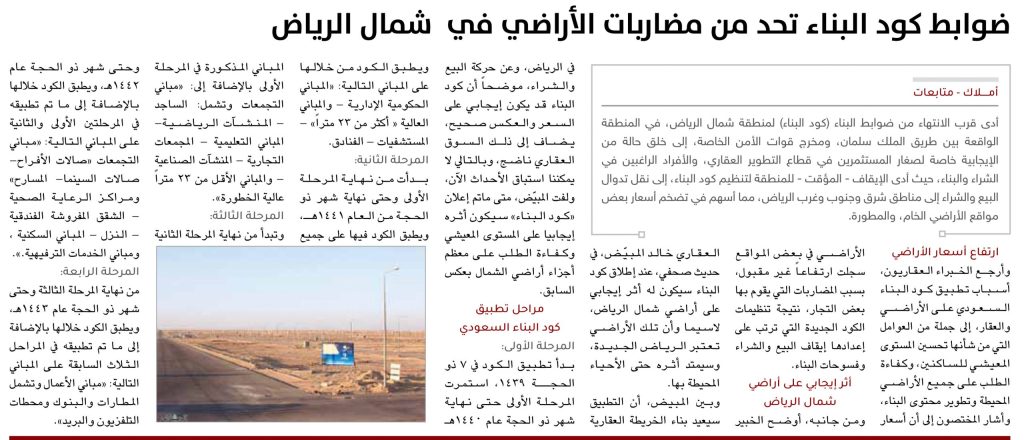

The near completion of building regulations (Building Code) for the northern Riyadh region—specifically the area between King Salman Road and the Special Security Forces exit—has created a particularly positive climate for small investors in the real estate development sector and individuals looking to buy and build. The suspension – temporary – suspension of the building code in the area shifted buying and selling activity to the eastern, southern, and western regions of Riyadh, contributing to a surge in prices for some undeveloped and developed land plots.
Rising Land Prices
Real estate experts attributed the reasons The implementation of the Saudi Building Code for land and real estate is one of a number of factors that will improve residents" standard of living, optimize demand for all surrounding land, and enhance construction quality. Experts noted that land prices in some locations have risen to unacceptable levels due to speculation by certain developers, as a result of the new code regulations that entail suspending sales, purchases, and building permits.
Positive Impact on Land in Northern Riyadh
For his part, real estate expert Khalid Al-Mubayyad explained in a press interview that the launch of the building code will have a positive impact on land in northern Riyadh, especially since that area is considered "New Riyadh,« and its impact will extend to the surrounding neighborhoods.
Al-Mubayyad noted that the implementation will reshape the real estate landscape in Riyadh and influence buying and selling activity, explaining that the building code could have a positive effect on prices—and vice versa. In addition, the real estate market is mature, so we cannot predict the outcome at this time. Al-Mubayyad noted that once the "Building Code" is announced, it will have a positive impact on the standard of living and the efficiency of demand in most parts of the northern areas, unlike in the past.
Stages of Implementing the Saudi Building Code
Phase One:
Implementation of the Code began on the 7th of Dhu al-Hijjah 1439; the first phase continued until the end of Dhu al-Hijjah 1440 AH, during which the Code applied to the following buildings: "Government administrative buildings—high-rise buildings (over 23 meters)—hospitals—hotels.
Phase Two:
This phase began at the end of the first phase and continued until the end of Dhu al-Hijjah 1441 AH. The code applies to all buildings mentioned in the first phase, as well as: »Public gathering buildings, including: places of worship, sports facilities, educational buildings, commercial complexes, industrial facilities, and high-risk buildings less than 23 meters tall."
Phase Three:
This phase begins at the end of the second phase and continues until the month of Dhu al-Hijjah in the year 1442 AH. During this phase, the code applies—in addition to what was applied in the first and second phases—to the following buildings: «Public gathering venues—wedding halls, movie theaters, and theaters—as well as healthcare centers, furnished hotel apartments, hostels, residential buildings, and recreational facilities.»
Phase Four:
From the end of Phase Three until the month of Dhu al-Hijjah in the year 1443 AH, during which the code will be applied, in addition to what was applied in the previous three phases, to the following buildings: "Commercial buildings, including airports, banks, television stations, and post offices.«