
President Sisi’s Directives Remove Obstacles for Investors and Pave the Way for Foreign Investment
Major Efforts in the Real Estate Sector Led by the Minister of Housing and the New Urban Communities Authority
Investment – Hisham Al-Aqraa, Chairman of the Board of Directors of Al-Fan Media and Television Production Company, called on Gulf businesspeople and investors to invest in Egypt following the significant efforts made by the state under President Abdel Fattah Al-Sisi to improve the investment climate.
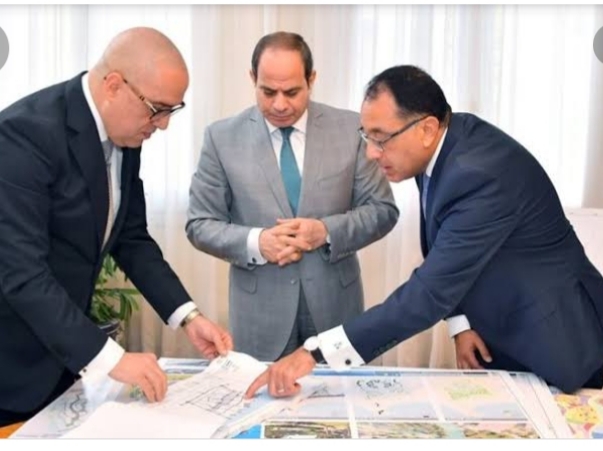
Al-Aqraa praised the efforts of the Ministry of Housing, Utilities, and Urban Communities, led by Minister Assem Al-Jazar and Deputy Minister of Housing Dr. Walid Abbas, particularly in the areas of urban development and the real estate sector, which have seen a major boom over the past few years.
Al-Aqraa said that Egypt has recently implemented a large number of measures to improve the investment climate, most notably the formation of a ministerial group for investment, a group for improving the investment climate and maximizing private sector participation, as well as a ministerial group for tourism.
Among the measures taken was the creation of a regulatory framework for investment in Egypt, including the amendment of the executive regulations of the Investment Law, and rules and conditions were approved allowing expansions of existing investment projects to benefit from the incentives stipulated in the Investment Law. Furthermore, a number of governorates and regions were designated as areas most in need of development, thereby activating special investment incentives, In addition, licenses were granted to fertilizer projects and industries that use natural gas as a production input, as well as energy-intensive projects, to operate under the free zone system.
To overcome the obstacles facing investors, more than 1,180 investors were met with during field visits to governorates and weekly meetings with major investors, and coordination took place with various ministries and agencies to resolve investors“ issues. In this context, the frequency of meetings of the Ministerial Committee for Dispute Resolution was increased to twice a month, and 492 issues were presented to the committee.
To attract more investment, efforts were focused on major foreign companies seeking to expand and make new investments. Notable examples include Samsung’s investment increase of $84 million over five years, an increase in Pfizer’s investments by $70 million during the 2020–2021 fiscal year, and an increase in PepsiCo’s investments by $100 million during the 2020–2021 fiscal year.
Coca-Cola also increased its investments by 1 billion Egyptian pounds this year, and Procter & Gamble raised its investments by $50 million during 2020–2021, while Etisalat’s investments rose by 4 billion Egyptian pounds during the current year, and LG’s investments increased by $40 million over three years, in addition to 40 billion pounds in new investments by Emaar and 500 million pounds by Al-Kharafi.
Efforts have also been made to develop investor service centers, with 10 centers already in operation and 6 more being prepared for opening, and the first online investor service center is currently being developed, alongside the digital transformation and automation of services at the investor service centers.
Among the most prominent opportunities and sectors within Egypt’s investment map is the industrial sector, which offers investment opportunities across all types of industrial activities—ranging from manufacturing and assembly to mineral exploration and processing, as well as all other supporting and complementary industries.
Another area is the development of new urban communities, which represents a fertile ground for investment in new industrial zones such as East Tafrea and Northwest Gulf of Suez through the establishment of industrial cities and the construction of facilities and infrastructure projects therein, as well as various housing projects.
Among these sectors is the field of technology and software, where investment opportunities are available in the design, production, and operation of computer programs and their applications, as well as the establishment and management of technology parks, as well as infrastructure sectors, where investment is made through the construction, operation, and management of drinking water and wastewater treatment plants, in addition to power plants and the construction of roads and transportation networks.
It also includes agriculture, where investment in this sector takes the form of agricultural land reclamation and the export of agricultural produce, as well as the establishment and management of fish farms and other related ventures, It should be noted that the agricultural sector’s output as a whole is estimated at approximately 21% of Egypt’s total industrial output, reaching about $4.7 billion in 2010.
Then there is tourism, where Egypt’s favorable climate in both summer and winter offers investors opportunities to invest in various tourism sectors, such as the construction of hotels and tourist resorts, as well as tourist transportation projects and others.
Tourism currently accounts for 4% of Egypt’s gross domestic product, and after growing at a rate of 24.2 % in 2007–2008, tourist numbers declined during 2011–2012 due to the relative instability that characterized Egypt’s transitional period.
Another key sector is retail trade; both wholesale and retail trade in Egypt are thriving. Total retail sales rose from $35 billion in 2003 to $42.6 billion in 2006, and sales reached $67.4 billion in 2011. These rapid growth rates have led international markets to recognize the importance of this sector.