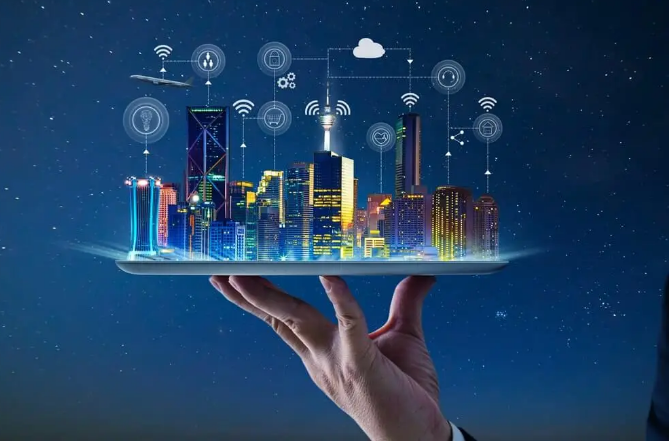

In recent years, new forms of life have been introduced to the world as a result of various social, economic and environmental changes. <Space design, regardless of its function, always prioritizes the needs of users and ensures practicality and functionality, but recently, keywords such as flexibility, privacy, inclusion and environmental awareness have become driving forces behind design processes. In this interior approach, we will see how current cities and living trends around the world are reshaping interior design and making adjustments to traditional styles.
This interior approach, we will see how current cities and living trends around the world are reshaping interior design and making adjustments to traditional styles. <Economic, political and cultural challenges have certainly raised endless questions about how people will live and work together in the future. Since 2030, it is estimated that 60% of the world's population will reside in urban areas and the workforce is still undergoing continuous transformations, especially after the pandemic, architects have addressed these changes by implementing new features and modifying classic, commercial and cultural projects.
Architects have addressed these changes by implementing new features and modifying classic, commercial and cultural projects.
Working from home
Traditional workplaces have undergone significant changes over the past years, after a completely unexpected period of lockdown, employees have had to find ways to integrate their offices at home.
<Not everyone had an extra room, so they installed a desk in the corner of their living room or bedroom, or converted their dining table into a desk, without thinking about ergonomics, privacy, and well-being. That's why, after 2020, architects began to implement a radical adjustment to how and where people live and work, especially in small housing projects.
co-living
As more cities grow, urban density remains a major concern for architects and city planners. How can they ensure residents" privacy while providing communal and recreational spaces? This puts coexistence projects in the spotlight, showing that if designed correctly, building density does not necessarily mean overcrowding. Although this community-driven categorization accommodates unrelated people in the same housing unit, each gets their own home with basic amenities, complete with common areas. In addition, multigenerational life has also returned to modern housing.
Sustainability
Sustainability and responsibility to achieve a sustainable environment remains an important ethos in the practice of architecture, architects and urban planners are always wondering how the built environment can be ecological and energy efficient while keeping its functions intact.
Various solutions have been devised to minimize the fact that the construction industry, to this day, accounts for nearly 40% of the world's carbon dioxide emissions (11% of which are caused by manufacturing).
Different solutions have been devised to minimize the fact that the construction industry, to this day, accounts for nearly 40% of the world's CO2 emissions (11% of which are caused by manufacturing). <Either using local materials, blurring the boundaries between nature and architecture, or addressing the issue of sustainable living and the housing crisis.
Micro-housing
As the world's population is constantly evolving and moving from one place to another, employees are increasingly migrating to major cities, creating a new challenge in life, finding an affordable and reasonable place to live within these crowded megacities.
As the world's population is constantly evolving and moving from one place to another, employees are increasingly migrating to major cities, creating a new challenge in life, finding an affordable and reasonable place to live within these crowded major cities. Some workers choose to settle away from city centers, taking advantage of larger homes and quieter areas, but in return they have to spend more time and money on commuting.
Some workers choose to settle away from city centers, taking advantage of larger homes and quieter areas, but in return they have to spend more time and money on commuting. By contrast, others choose to live in small city studios that provide the basic functions of a home, gaining proximity to commercial, transportation, and recreational facilities in return.
Others choose to live in small city studios that provide the basic functions of a home, gaining proximity to commercial facilities, transportation, and recreational facilities in return. Combined with cultural changes and different lifestyles experienced by millennials such as having different financial means or favoring smaller households, one of the increasingly frequent lifestyle trends around the world in the past decade is micro-housing.
This is in addition to the cultural and lifestyle changes experienced by millennials such as having different financial means or favoring smaller households. Although wellness has long been a top priority, the COVID-19 pandemic has dramatically impacted how people value their physical, mental and emotional well-being, leading to rapid and unprecedented changes in almost every aspect of life.
While wellness has long been a top priority, the COVID-19 pandemic has dramatically affected how people value their physical, mental and emotional well-being, leading to rapid and unprecedented changes in almost every aspect of life. In architecture, residential projects are now incorporating integrated gyms and natural elements, or utilizing aesthetically special interior design to create a sense of warmth and comfort, promoting physical and mental well-being.
The COVID-19 pandemic has dramatically impacted how people value their physical, mental and emotional well-being, leading to rapid and unprecedented changes in almost every aspect of life. <In offices, employers were already concerned about the well-being of their teams and how to attract new talent to work in their physical spaces long before the pandemic. So they incorporated quiet zones and recreational areas, giving employees the opportunity to relax and optimize their performance.