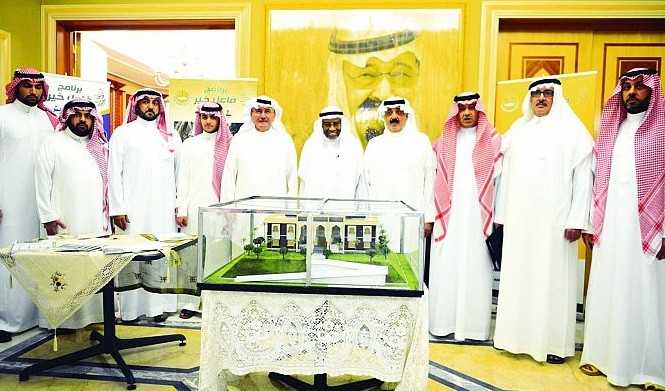
The Custodian of the Two Holy Mosques King Abdullah bin Abdulaziz Al Saud International Foundation for Humanitarian Work has completed 1,922 housing units across various regions and provinces, including Madinah, Riyadh, Jeddah, Al-Makhwah, Al-Ahsa, Amlaj, Yanbu, Al-Leith Al-Ghazalah, and Samtah. The Foundation’s Board of Trustees approved this during its third meeting yesterday evening in Jeddah, chaired by His Royal Highness Prince Khalid bin Abdullah bin Abdulaziz, Chairman of the Board of Trustees, and in the presence of His Royal Highness Prince Mutaib bin Abdullah bin Abdulaziz, Vice Chairman of the Board of Trustees, and Their Royal Highnesses, the sons of King Abdullah bin Abdulaziz—may God have mercy on him— the Foundation’s Phase Two projects, which aim to construct 700 housing units in Riyadh, Al-Qassim, Najran, Asir, the Northern Border Province, Al-Jawf, and Tabuk.
The Board also discussed the meeting’s agenda, which includes the Foundation’s mission as mandated by King Abdullah bin Abdulaziz Al Saud—may God have mercy on himto the Board of Trustees, which aims to establish a world-class humanitarian organization to achieve noble and humanitarian goals and objectives, participate in humanitarian activities that serve religion, the nation, the Arab and Islamic nations, and the entire world, and promote the values of tolerance, virtue, and peace, through the Foundation’s seven main pillars, which include: education, economic development, healthcare, the advancement of science and technology, social relief, interfaith dialogue, and the promotion of peace and security.
Discussions also covered the Foundation’s recent initiatives, such as the opening of the King Abdullah bin Abdulaziz Mosque at the beginning of the current blessed month of Ramadan in Riyadh, which can accommodate approximately 200 worshippers, as well as the project to provide iftar meals for fasting people, and the enhancement of the mosque’s role through the organization of Ramadan lectures and seminars. The Foundation also contributed to the restoration of the 1,400-year-old Al-Shafi’i Mosque, in collaboration with the General Authority for Tourism and Antiquities, the Ministry of Islamic Affairs and Endowments, and the Jeddah Municipality.
In the health sector, the Foundation has also launched a health project aimed at caring for kidney patients by establishing six centers distributed across the Kingdom—two of which are in Riyadh, with one each in Makkah, Madinah, Al-Munawwarah, Jeddah, and Hail. Similar centers will be established in other cities across the Kingdom, with a total capacity of 920 dialysis chairs.
The attendees highlighted other humanitarian efforts carried out by affiliated institutions, such as the King Abdulaziz Public Library. The Foundation has also contributed to supporting economic development in communities by financing projects undertaken by local organizations, such as the Bab Rizq Jameel project, in addition to the Foundation’s collaboration with major international organizations and institutions to support humanitarian projects carried out by the Islamic Development Bank in Asia and Africa, totaling eight projects in Somalia, Niger, Mali, Sierra Leone, Guinea, Liberia, Indonesia, Bangladesh, and Yemen , Afghanistan, Pakistan, India, Tajikistan, Kyrgyzstan, and the Rohingya Muslim minority in Burma. The projects included relief efforts, medical services, education, housing, well-drilling, and other initiatives.