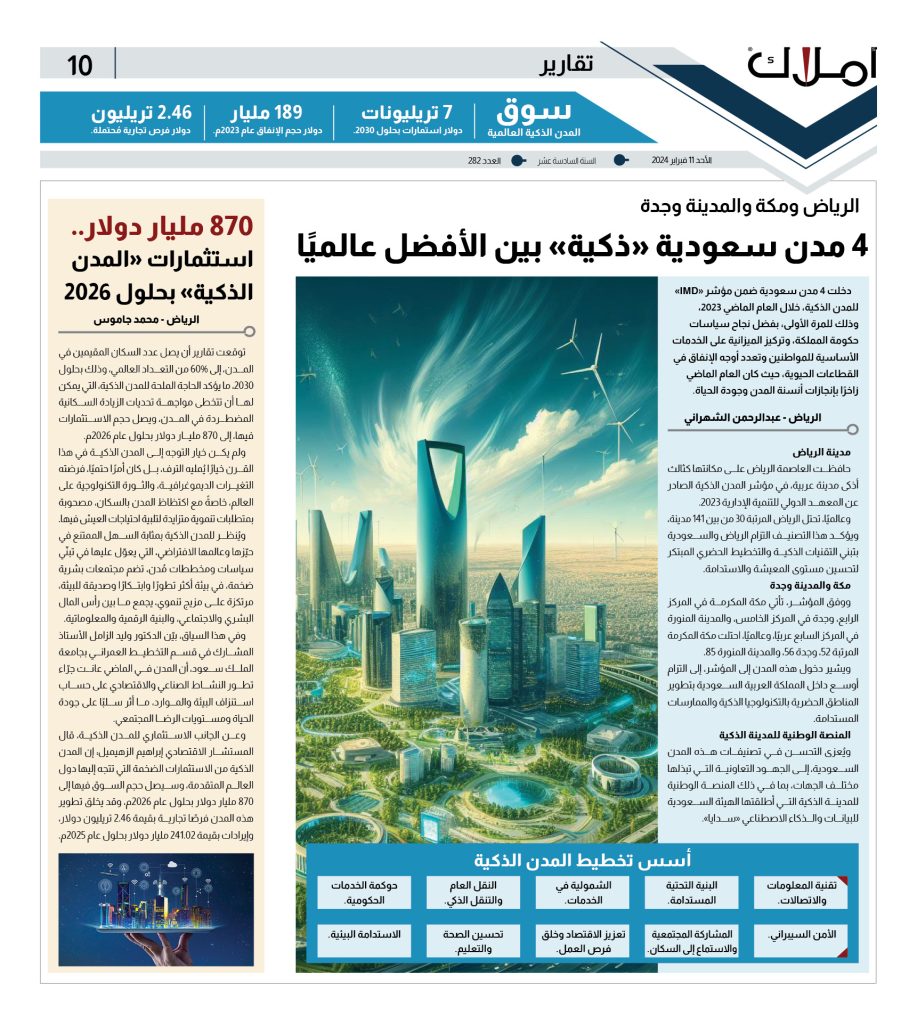
The Saudi government's policies, through focusing the budget on basic services for citizens and multifaceted spending in vital sectors, succeeded in getting four Saudi cities into the IMD Smart Cities Index for the first time; 2023 was a year full of achievements in humanization and quality of life in cities.
Riyadh City
Riyadh
In news details, the Saudi capital Riyadh maintained its position as the third smartest Arab city in the International Institute for Management Development's Smart Cities Index 2023. Globally, Riyadh ranks 30th out of 141 cities, and this ranking confirms Riyadh and Saudi Arabia's commitment to adopting smart technologies and innovative urban planning to improve quality of life and sustainability.
Mecca, Medina and Jeddah enter the index
According to the index, Makkah ranks fourth, Jeddah ranks fifth, and Medina ranks seventh in the Arab world. Globally, Makkah ranks 52nd, Jeddah 56th, and Medina 85th, and the entry of these cities into the Index indicates a broader commitment within Saudi Arabia to developing urban areas with smart technology and sustainable practices.
National Smart City Platform
<The improvement in the rankings of these Saudi cities is attributed to the collaborative efforts of various agencies, including the National Smart City Platform launched by the Saudi Data and Artificial Intelligence Authority (SDAIA). These efforts demonstrate a comprehensive and multidisciplinary approach to enhancing living standards through smart technology systems, illustrating the Kingdom's forward-thinking approach to urban development and digitization.=====
Foundations of smart city planning: Building the future wisely
- Information and communication technology.
- Sustainable Infrastructure.
- Inclusivity in services.
- Public transport and smart mobility.
- Governance of government services.
- Community engagement and listening to residents.
- Cybersecurity.
- Strengthening the economy and creating jobs.
- Improving health and education.
- Environmental sustainability.
====
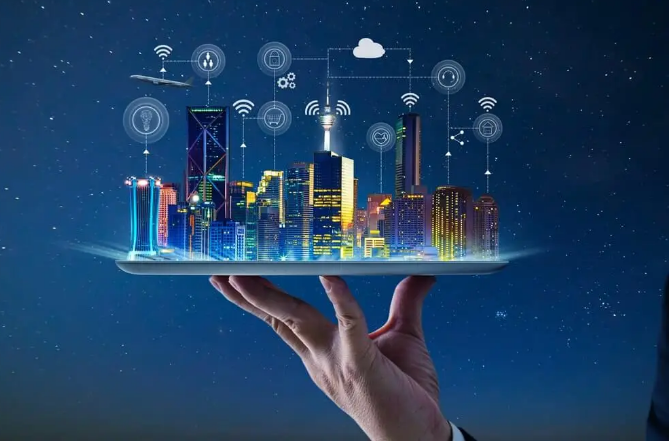
Press reports have predicted that the population living in cities will reach 60% of the global census by 2030, which emphasizes the urgent need for smart cities that can overcome the challenges of the exponential population increase in cities, as well as the huge investments in smart cities, the market size of which will reach 870 billion dollars by 2026.