Bloomberg
Saudi Arabia's real estate and infrastructure spending since the launch of Vision 2030 in 2016.
Great leap in implementing projects and achieving goals
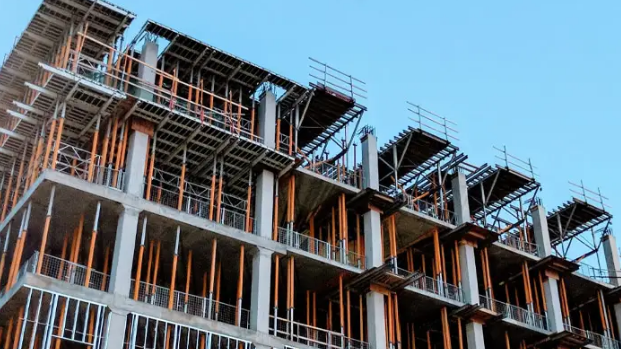
Over the past year, the Kingdom has seen a remarkable development in its economic ambitions, with construction contracts worth $250 billion (937.5 billion riyals) of the total projects announced since 2016. According to the Knight Frank report, these projects include a range of major initiatives in infrastructure and real estate, reflecting the Kingdom's commitment to achieving Vision 2030 and accelerating the pace of economic and social change.
Knight Frank also revealed in its report that since the launch of Vision 2030 in 2016, projects aimed at providing 1,048,000 housing units have been announced in Saudi Arabia. Only 4% of these units have been completed to date, while the rest are scheduled to be completed by 2030, as the Kingdom seeks to achieve its ambitious goals of improving quality of life and increasing homeownership. <Residential transactions in Saudi Arabia, which accounted for 61% of total real estate transactions by value during the first half of 2024, witnessed a notable increase of 41% in the number of transactions, reaching 91,860 sales. The value of these transactions increased by 48% to reach SAR 77.6 billion during the same period.
Government initiatives aimed at boosting housing supply and affordability played a crucial role in spurring sales activity this year. The government launched various housing projects, including the Sakany and Wafi programs aimed at boosting home ownership among citizens. These efforts also included secondary and tertiary cities across the country. <By the end of 2023, the percentage of Saudi homeowners reached 63,74%, an increase of 16.7 percentage points compared to 2016, the year the National Transformation Plan was launched. This achievement exceeded the government's 2023 target of 63%, according to data from the Ministry of Municipalities and Housing, reflecting the success of government policies in increasing the ownership rate among citizens.
Riyadh <Regarding Riyadh, Knight Frank explained that the Saudi capital will see 4.6 million square meters of new office space completed by 2030, in addition to 2.6 million square meters of new retail space. The firm also noted that around 28,800 new hotel rooms will be delivered, increasing the total number of hotel rooms from around 22,300 currently, as part of ongoing efforts to meet the growing demand for commercial and tourism space in the city by 2030. This massive expansion reflects a growing sense of momentum towards the implementation of the vision, especially as the Kingdom strives to reach its goals by 2030, aiming to achieve a comprehensive transformation that reshapes its economy and enhances its global competitiveness.
H4>
The Kingdom's positive economic transformation is evidenced by its hosting of the 2030 World Expo in Riyadh, as well as being the sole candidate for the 2034 FIFA World Cup. These international achievements enhance Saudi Arabia's standing and reflect the confidence of the international community in the Kingdom's ability to host major events, supporting the national economy and attracting more investment.
Despite these successes, the Kingdom's residential real estate market faces some challenges, such as volatility associated with global real estate cycles. However, the market remains active with around 660,000 housing units currently under construction across the country, reflecting efforts to meet the growing demand for housing and provide modern homes that suit the needs of the population.
Through these mega projects, the Kingdom seeks to provide an integrated housing environment for citizens, overcoming current challenges by providing innovative housing solutions within a comprehensive vision for the future.
Hosting global events strengthens the Kingdom's position
Challenges and opportunities in the residential real estate market
Vision 2030: A commitment to comprehensive economic transformation
<Faisal Durrani, Head of Research for the Middle East and North Africa at Knight Frank, said that the Kingdom is on the right track to achieve its ambitious goals, considering that Vision 2030 represents a quantum leap towards building one of the most vibrant and dynamic economies in the world. He noted that the announcement of the vision was a major turning point aimed at reducing dependence on oil and diversifying the economy, thereby enhancing the Kingdom's competitiveness globally.
The importance of Vision 2030 is evident in the fact that the Kingdom is on track to achieve its ambitious goals. <Vision 2030 is a strategic blueprint for Saudi Arabia's future, seeking to establish a society rooted in heritage and tradition, with a focus on developing an economy that is not dependent on oil revenues. Major projects such as NEOM, a $500 billion symbol of future cities, reflect the Kingdom's commitment to delivering innovative urban solutions.
The significance of Vision 2030 is that it is a strategic blueprint for Saudi Arabia's future, seeking to establish a society rooted in heritage and tradition, with a focus on developing an economy that is not dependent on oil.
Major projects to achieve Vision 2030
Vision 2030 is an ambitious plan to provide world-class housing for Saudi citizens and is part of an overall effort to redefine urban life in the Kingdom. As part of these plans, at least 15 new cities are being developed, including NEOM, a model for the smart cities of the future.
The transformation is committed to providing world-class housing for Saudi citizens and is part of an overall effort to redefine urban life in the Kingdom. This transformation reflects the Kingdom's commitment to achieving qualitative change in various sectors, including housing, developing advanced infrastructure that meets the needs of the future, and enhancing the quality of life for citizens and residents alike.
These efforts are evident in the Kingdom's efforts to redefine urban life. <It is clear from these efforts that the Kingdom is seriously seeking to achieve a paradigm shift in its economy through Vision 2030, reinforcing its position as a global economic center and an attractive destination for investments. Through this vision, Saudi Arabia is poised to embark on a bright future that achieves sustainable development and improves the quality of life for all who live on its land.