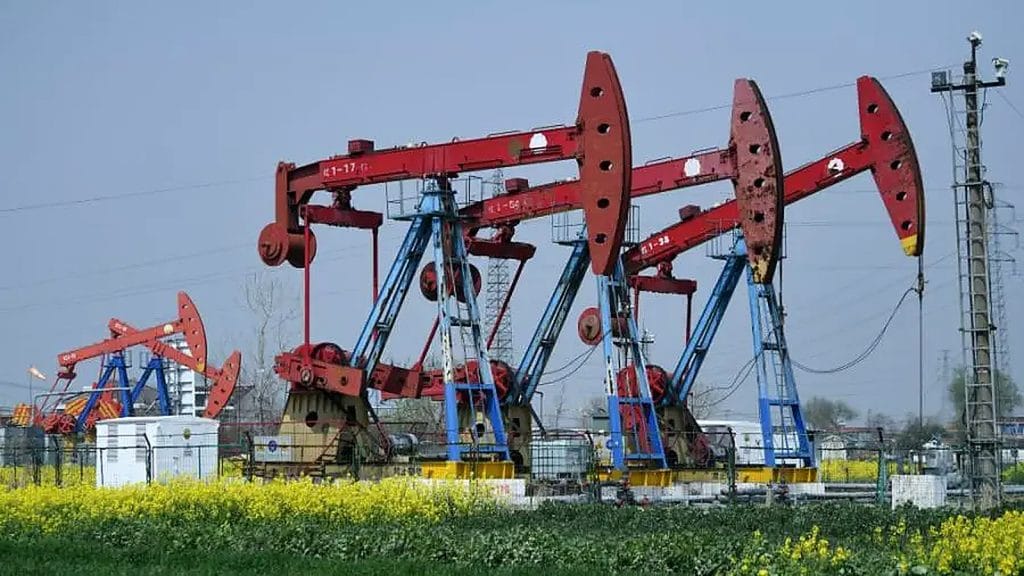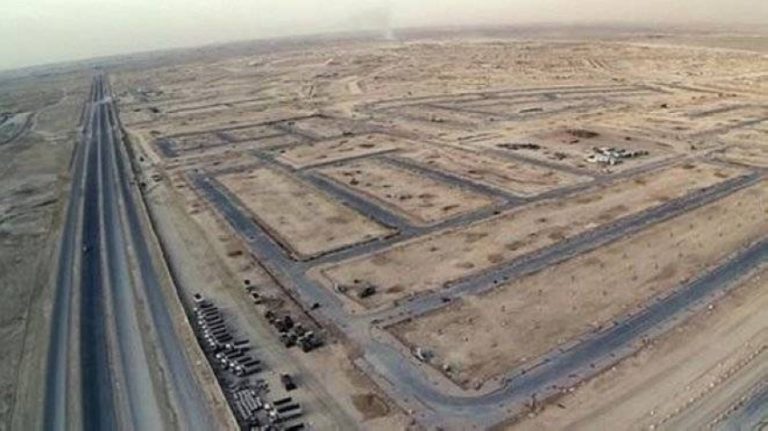

The official newspaper Sharq Al-Amra in its last issue on Friday last published the system of expropriation of real estate for the public interest and the temporary seizure of real estate, which was recently approved by the Council of Ministers.
According to Al-Amqara newspaper, the new system includes 39 articles that regulate the procedures and mechanisms for expropriation and temporary possession, ensuring the achievement of the public interest in accordance with specific legal controls.
The system is scheduled to be implemented 120 days after its publication in the Official Gazette, replacing the previous relevant regulations and serving as a legislative reference for regulating this type of procedure in the Kingdom.
And here is the text of the system as published in the Official Gazette:
Chapter One:
Definitions and general terms
Article 1:
Definitions
For the purposes of applying the provisions of this system, the meanings indicated in front of each of the following words and terms shall be understood, unless the context requires otherwise:
1- The system: a system for expropriating real estate for the public interest and placing temporary control over the properties.
2- The Regulation: The Executive Regulation of the System.
3- The Authority: the General Authority for State Real Estate.
4- The Board: The board of directors of the Authority.
5- The Governor: The Governor of the Authority.
6- The entity that owns the project: Any government agency, company, or non-profit association (the association); which undertakes the implementation of a work aimed at achieving a public interest in accordance with the system.
7- The governmental entity: any ministry, department, public institution, public authority, or any independent public entity in the Kingdom, or any of its affiliated entities.
8- The supervising authority: The governmental authority overseeing the activity of the project owner when it is a company
Or an association.
9- Real estate: The land and everything fixed on it cannot be moved without damage, including construction, plantings, and the like that are permanently attached to the land.
10- Project plan: A drawing showing the properties that are scheduled to be expropriated or placed under temporary possession.
11- The spatial elevation: A technical report that clarifies the boundaries of the property to be expropriated or placed under temporary possession, its lengths, its total area, its geographic coordinates, and the angles of refraction for all its specific angles.
12- Accredited resident: The person with the natural or legal status authorized to practice the profession of evaluation.
13- Evaluation criteria and guidelines: The criteria and guidelines approved by the Saudi Board of Accredited Valuers.
Article 2:
The alienation of the ownership of any property or the temporary possession thereof is permitted only for the public interest and in exchange for fair compensation, in accordance with the provisions of the regulations and the list.
Article III:
The provisions of the system do not apply to real estate owned by the state or one of its agencies.
Article 4:
No measures to expropriate the property or to temporarily take possession of it shall be taken unless there are no state properties that fulfill the purpose.
Article 5:
For the purposes of applying the system, public interest means everything that achieves general benefit from development or prosperity, where the interest of the community outweighs any private interest belonging to an individual, legal entity, or government agency, and everything that causes general harm from disasters, epidemics, or the like; this includes performing any of the following actions:
1- Projects to develop the facilities of the Holy Haram and related to the rituals of Hajj, Umrah or visit.
2- Road and street projects, transportation lines, and facilities for land, sea, and air public transportation.
3- Urban planning and development projects, the construction of mosques, gardens, and buildings for social, educational, and health services, and the like.
4- Energy generation projects, water networks, electricity, gas, petroleum, sewage, flood control, communications, and government radio and television broadcasting.
5- Drilling, prospecting, mining and related projects.
6- Projects to preserve environmental reserves and wildlife, and to preserve the state's cultural, historical, and human heritage.
7- Projects of internal security and the establishment of military facilities.
8- Any other activities that are stipulated in other regulations as being in the public interest.
9- Any other actions that are determined to be in the public interest by a decision of the Council of Ministers.
Article 6:
1- Those whose property has been expropriated are entitled to compensation in accordance with the following:
a- That the value of the compensation is based on the market value of the property.
b- To be added to the market value – referred to in paragraph (1) sub-paragraph (a) of this article – is a compensation for the expropriation amounting to (20%) of the market value of the property.
C- In exchange for the damages resulting from the expropriation procedures.
2- Those whose hands have been placed on their property are entitled to compensation in accordance with the following:
a- The value of the compensation shall not be less than the equivalent fee.
b- That an additional fee for the equivalent - referred to in subparagraph (a) of paragraph (2) of this article - be added to the equivalent fee for temporary possession, equivalent to (20%) of the equivalent fee.
C- In return for the damages arising as a result of the temporary placement of the hand.
3- The evaluation criteria and guidelines determine the provisions specific to this article.
Article 7:
The project owner, in coordination with the supervising authority as appropriate, must submit a request to the authority to approve the commencement of the expropriation procedures or the temporary seizure of the properties, as follows:
1- The request for approval to initiate the expropriation proceedings must include the following:
A- Project plan, and the spatial elevation.
b- Determining the initial estimated cost of expropriation. The regulation specifies the necessary criteria for this.
C- Providing evidence of the following:
1- Adopting the project costs in the budget of the project owner if it is a governmental entity.
2- Financial solvency: If the entity that is undertaking the project is a company or association.
The regulation specifies the controls specific to this paragraph.
D- A timeline for the project implementation.
H – A study on the social, economic and security implications expected to result from the expropriation of property.
2- The request for approval to initiate the interim enforcement proceedings must include the following:
A- Project plan, and the spatial elevation.
b- Determine the initial estimated cost of placing the temporary hand. The regulation specifies the necessary criteria for this.
C- Providing evidence of the following:
1- Adopting the project costs in the budget of the project owner if it is a governmental entity.
2- Financial solvency: If the entity that is undertaking the project is a company or association.
The regulation specifies the controls specific to this paragraph.
D- The estimated duration of the temporary possession of the properties.
Article Eight:
1- The application submitted in accordance with Article (7) of the Regulation shall be studied by a committee –or more– formed within the Authority, called (the Committee for the Expropriation of Real Estate and the Temporary Possession of Real Estate), chaired by the Governor –or the member appointed by him– and with the participation of a representative from each of the following: the Authority, the Ministry of Interior, the Ministry of Finance, the Ministry of Economy and Planning, the Ministry of Municipalities and Housing, the Ministry of Energy, the Ministry of Investment, the Ministry of Justice, the Authority for the Efficiency of Government Spending and Projects, and its members shall be appointed at a rank not lower than (thirteenth) or equivalent, and they shall be invited to attend its meetings without the right to vote.
2- The application submitted in accordance with Article (7) of the Regulation shall be examined in light of the following:
a- Verifying the project's connection to achieving a public interest in accordance with the system.
b- Verifying the availability of project costs in the project owner’s budget or financial solvency – as the case may be – including the booking of costs in accordance with the mechanism determined by the regulation.
C- Ensuring that there are no real estate properties that meet the required criteria.
D- The appropriate nature of compensation for the deprivation of property (cash/in-kind).
H – The social, economic and security impacts of the project.
3- In the event that there is a disagreement between the project owner or the supervising authority (if any), and the Committee for the Expropriation of Real Estate and the Temporary Possession of Real Estate, that party shall submit the request to the Prime Minister for a decision.
4- Meetings of the Committee for the Expropriation of Real Estate and the Temporary Taking of Possession of Real Estate are held in the presence of its Chairman – or the members designated by him – and the majority of its members; its decisions are taken with the approval of a two-thirds majority.
5- The Committee for the expropriation of real estate and the temporary possession of real estate must obtain the information and documents it requires to carry out its work through a request submitted to the Authority, and all parties must cooperate with the Authority in this regard.
6- The Council issues the rules of operation of the Committee for the expropriation of real estate and the temporary possession of real estate.
Chapter II:
Procedures for the expropriation of real estate
Article IX:
1- The Authority shall notify the project owner of the decision of the Committee for the Expropriation of Real Estate and the temporary possession of the properties within a period of (sixty) days from the date of submission of the application in accordance with Article (seventh) of the Regulation.
2- The governor shall issue a decision to initiate the expropriation procedures, provided that the Real Estate Expropriation and Temporary Possession Committee approves them in accordance with the procedures stipulated in Article (Eight) of the Regulation.
Article 10:
No decision to initiate the expropriation proceedings may be issued in accordance with Article (9) of the Regulation until financial or financial solvency credits are available, or alternative land is allocated for the expropriation by the project owner.
Article 11:
For the project owner, upon the issuance of the decision to initiate the expropriation proceedings; take the following actions:
1- Publishing the decision in the official gazette and at least one local newspaper in the area where the property is scheduled to be expropriated, and also publishing it through the available electronic means. The regulation specifies the necessary controls for this.
2- Informing the relevant authorities and property owners of the decision to expropriate their property and the date of commencement of the inventory of the properties to be expropriated, in accordance with Article (Thirty-third) of the Regulation.
3- The notification of the property owners whose property is scheduled to be expropriated who are unable to be informed of the decision in accordance with Article (Thirty-third) of the Regulation shall be completed within thirty days from the date of its publication in the Official Gazette in accordance with paragraph (1) of this Article.
Article Twelve:
Owners of properties scheduled for expropriation must submit documentation proving ownership of the properties located within the project plan to the project owner within the period determined by the project owner, which must not be less than (fifteen) days from the date of notification to the owners of the properties scheduled for expropriation in accordance with Article (eleven) of the regulations.
Chapter III:
Enumeration and evaluation
Article Thirteen:
1- The project owner or the supervising entity, as the case may be, shall enter the property located within the project plan with the participation of the property owners who are scheduled to be evicted or their representatives, or the occupants of these properties, as the case may be, in order to encumber its immovable assets.
2- The project owner or the supervising authority – as the case may be – shall form a committee chaired by the relevant emirate and the Ministry of Interior; to carry out the tasks set forth in this article; in the event that the owners of the properties scheduled to be expropriated in accordance with paragraph (1) of this article refrain from participating for any reason.
3- Without prejudice to the provisions of paragraph (1) of this article, a representative of the company or association shall participate, as the case may be, in the task of entering the property located within the project plan, in the event that the entity that owns the project is a company or association.
4- The project owner or the supervising entity, as the case may be, shall prepare a report on the result of the inventory of immovable property within the project plan, which includes the type of property, its total description and contents, and other elements that may have an impact on the assessment of compensation, with clarification of these using drawings, plans, photographs, and other visual documentation tools – if necessary – in accordance with what is specified in the regulation.
5- A statement of the names of the property owners whose properties are to be expropriated, as well as the relevant instruments and documents, is attached to the report – referred to in paragraph (4) of this article. The regulations specify the necessary controls for this purpose.
6- The report referred to in paragraph (4) of this article shall be signed by the representatives of the project owner or the supervising entity, as applicable, and the owners of the real estate whose ownership is to be expropriated, as well as the members of the committee referred to in paragraph (2) of this article, if any. If any of the owners of the real estate whose ownership is to be expropriated refuses to sign or is in fact unable to sign all the owners of the real estate whose ownership is to be expropriated, this shall be stated in the report with a statement of the reason, and objections shall be recorded if any. The regulations shall specify the necessary controls for this purpose.
7- The project owner or the supervising entity – as the case may be – may seek the assistance of relevant parties to carry out the tasks outlined in this article, and verify that the documents proving ownership of the real estate or the rights attached to it meet the legal and regulatory requirements; such parties must cooperate with the project owner or the supervising entity – as the case may be – to achieve this.
8- The project owner or the supervising authority – as the case may be – shall prepare a comprehensive report on the tasks outlined in this article, accompanied by the report referred to in paragraph (4) of this article, and the documents and data related to the inventory of the properties scheduled for expropriation, and submit it to the authority within a period not exceeding (sixteen) days from the date of publication of the decision to initiate the expropriation procedures in the Official Gazette.
9- The regulation specifies the provisions regarding the encumbrance of immovable property within the project plan, including the timeframes related to the notification of the encumbrance date, taking into account the types of properties and the occupancy status of the properties by non-owners.
Article Fourteen:
1- The assessment of the properties to be expropriated, the alternative properties – in the case of cash compensation – and the determination of the equivalent fee in accordance with the regulations are entrusted to three accredited appraisers.
2- The project owner shall contract with the appraisers referred to in paragraph (1) of this article and pay their fees.
3- Each accredited assessor - independently - undertakes to inspect the property and conduct the assessment based on the assessment standards and guidelines; they shall prepare a report in this regard.
4- The project owner must provide the appraisers with all the information that enables them to complete the tasks assigned to them.
Article Fifteen:
1- The reports prepared in accordance with paragraph (3) of Article (Fourteenth) of the Regulations shall be reviewed by a committee established within the Authority, composed of three accredited appraisers, provided that their professional qualifications must not be lower than the level of appraisers referred to in Article (Fourteenth) of the Regulations; in order to ensure that all the assessments contained in those reports comply with the evaluation criteria and guidelines.
2- The Chairman of the Committee – appointed under paragraph (1) of this article – shall be determined by a decision of the Governor, and shall be held in the presence of all its members.
3- If the committee determines that any of the assessments do not comply with the evaluation criteria and guidelines, the assessment is excluded, and another accredited assessor is tasked with conducting the assessment in accordance with paragraph (2) of Article (Fourteenth) of the Regulation.
4- The Committee shall make its recommendation regarding the determination of the average price for the evaluations contained in the reports prepared in accordance with paragraph (3) of Article (Fourteen) of the Regulation and in accordance with the evaluation standards and guidelines.
5- A decision shall be issued approving the price – referred to in paragraph (4) of this article – by the Governor, and it shall be communicated to the entity owning the project or the supervising entity – as the case may be – and the property owners whose property is scheduled to be expropriated, within a period not exceeding (ninety) days from the date the report is submitted to the entity in accordance with paragraph (8) of Article (Thirteenth) of the Regulation.
Chapter IV:
Compensation and eviction
Article Sixteen:
Compensation for properties to be expropriated in cash shall be provided; and the compensation or part thereof may be in kind if the owner of the property to be expropriated agrees to it; this includes compensation in the form of an alternative property or financial shares in the project for which the property is to be expropriated. The regulations shall specify the provisions regarding this matter.
Article Seventeen:
1- The ownership of one’s property is exempt from the real estate transfer tax resulting from the purchase of an alternative property from the property that has been removed from ownership, provided that the exemption is limited to the amount of the tax imposed on the purchase process if the amount is the full amount of the compensation or less, and that the exemption is granted if the alternative property is purchased within a period not exceeding (five) years from the date of receiving the compensation amount.
2- The property ownership tax is exempt from white land fees if the compensation for the property is in the form of alternative land, provided that the exemption is for a period to be determined by the Minister of Finance and the Chairman of the Council and the Minister of Municipalities and Housing.
Article 18:
1- Except for Article (Sixteenth) of the Regulation, in cases where the project owner is a government entity, compensation for the expropriation of real estate in exchange for alternative land may be provided, provided that the real estate is land that has not been invested in or developed in any way for development purposes, and the ownership basis is a government grant that remains the property of the person granted it. The regulations will specify the provisions regarding this.
2- For the purposes of applying the provision of paragraph (1) of this article, development means the creation of any type of activity, whether agricultural, urban or other, that leads to a change in the characteristics of the site, whether for investment purposes or otherwise.
3- The date of publication of the decision approving the commencement of the expropriation proceedings in the Official Gazette shall serve as the basis for reporting on the state of development on the ground in accordance with paragraph (2) of this article.
Article Nineteenth:
To be entitled to compensation for alternative land grant in the case referred to in paragraph (1) of Article (Eighteenth) of the Regulation, the following conditions must be met:
1- That the land of the alternative grant is located in the expropriated land site, or any other site where similar advantages are achieved as compared to the expropriated land site.
2- The market value of the alternative land grant shall be increased by at least (20%) and not exceeding (40%) the market value of the land that has been expropriated. The regulations shall specify the provisions regarding this.
3- The alternative grant lands – as stipulated in this article – shall be evaluated in accordance with the evaluation provisions and procedures contained in Article (Fourteenth) and Article (Fifteenth) of the Regulations.
Article Twenty:
1- The date of publication of the decision to initiate the expropriation proceedings in the Official Gazette shall serve as the basis for the determination of the property’s contents to be expropriated; no account shall be taken of any subsequent modifications, additions, improvements, construction, restoration, planting, or the like that may be made to the property.
2- The date of the first visit of any of the appraisers – referred to in Article (Fourteenth) of the Regulation – to the property scheduled to be expropriated shall be considered as the basis for the assessment of that property.
Article Twenty-One:
If the area of the property specified in the documents proving ownership differs from the actual area of the property due to its natural condition, the compensation shall be calculated based on the smaller area, without prejudice to the rights of the property owners whose property is scheduled to be expropriated in their ownership documentation for the portion that is not included in the calculation.
Article Twenty-Two:
If the expropriation of property is limited to a portion of the property, the following shall apply:
1- The value of the area of the part that has been expropriated and the building and the trees planted thereon shall be estimated; if the remaining portion of the land, building or trees is usable according to the technical instructions applicable in the region, the costs of repairing and restoring the remaining portion of the building shall be added to this value, plus the costs of the depreciation of the remaining portion of the land, building and trees.
2- The value of the area of the part that has been expropriated, the building, and the trees planted thereon, as well as the value of the building or trees planted on what remains of the property, is estimated, in addition to the shortfall in the value of the remaining portion of the land; if the remaining portion of the building or trees after the expropriation of what the project requires is not usable, and the remaining portion of the land after the expropriation is usable in accordance with the technical instructions applicable in the region, the project owner shall demolish and remove the remaining portion of the building or trees; unless it has agreed with the property owners that their ownership of the remaining portion of the building or trees shall remain and there is no risk that its remaining presence would conflict with the urban development plans of the city. The regulations shall determine the provisions related to this.
3- The ownership of the entire property – land, building and plot – is revoked if the remaining portion of the property’s land after deducting what the project needs is not suitable for use in accordance with the technical instructions applied in the region, or the costs of repairing the remaining portion of the property are equal to or exceed the costs of revoking the ownership.
4- The remaining portion of the property, the construction, and the trees are assessed for their usability by a committee formed within the Authority, consisting of a representative from the Ministry of Municipalities and Housing, a representative from the project owner, and if the property is agricultural, a representative from the Ministry of Environment, Water, and Agriculture; the committee shall prepare a report in this regard and complete what is necessary in accordance with the mechanism referred to in Article (Fourteenth) and Article (Fifteenth) of the Regulations.
Article 22:
1- The Authority, in agreement with the project owner, determines the date for the eviction of the properties scheduled for expropriation, and the Authority notifies the owners of the properties scheduled for expropriation accordingly.
2- The procedures for paying compensation – in cash or in kind – shall be completed before the specified date of eviction, except in exceptional cases for which a decision is issued by the Governor, in agreement with the head of the project entity or the supervising entity – as the case may be – in accordance with what is specified in the regulation.
3- If the procedures for the payment of compensation for properties that have been expropriated – in cash or in kind – are not completed within (three) years from the date of issuance of the decision to initiate the expropriation proceedings, the owners of these properties may request a reassessment; unless the delay in completing the procedures for the payment of compensation is due to their fault.
4- If the value of the compensation is based on a reassessment request – in accordance with paragraph (3) of this article – it shall be less than the previous value of the compensation; in that case, the compensation shall be based on the higher assessment.
5- The regulation determines the provisions regarding eviction, including the timeframes related to the notification of the date of eviction, the actual eviction, and the payment of compensation, taking into account the types of real estate and the occupancy status of the properties by non-owners.
Article Twenty-Four:
1- If the property scheduled for expropriation is vacated before the compensation payment procedures are completed, the owners of the properties scheduled for expropriation are entitled to the equivalent fee for the period between the eviction and the completion of the compensation procedures, plus an additional 10% of the equivalent fee; unless the delay in receiving the compensation is due to their fault. The regulations specify the necessary controls for this.
2- The fee for the equivalent referred to in paragraph (1) of this article is calculated in accordance with the valuation mechanism referred to in Article (Fourteen) and Article (Fifteen) of the Regulations.
Chapter V:
Temporary hand over of real estate
Article Twenty-five:
The temporary possession of real estate may be granted in exchange for fair compensation, in the public interest of a temporary nature, and the compensation for the temporary possession shall be determined in accordance with the procedures stipulated in Article (Fourteen) and Article (Fifteen) of the Regulations; without prejudice to the provisions contained in paragraph (2) of Article (Six) of the Regulations. The temporary possession of the real estate shall not prevent the taking of measures to expropriate the real estate if necessary in accordance with the Regulations and the List.
Article Twenty-Six:
The head of the project entity or the supervising entity, as the case may be, shall issue a decision to place the temporary hand over, as follows:
1- The decision must include the duration of the temporary custody and its purpose.
2- That the issuance of the decision be preceded by the approval of the Real Estate Expropriation and Temporary Possession Committee.
3- The project owner or the supervising authority, as the case may be, shall inform the authority of the decision referred to in this article.
Article 27:
1- Except for the provisions of paragraph (2) of Article (Twenty-Six) of the Regulation, the official shall issue a decision to place the temporary possession in emergency cases, and take the necessary measures - within a period not exceeding (30) days from the date of issuance of the decision - to notify the Real Estate Expropriation and Temporary Possession Committee regarding this.
2- For the purposes of applying the provision of paragraph (1) of this article, an emergency situation shall be understood as one in which the threat to public safety, public security, or public health is serious and unexpected, or in which a danger threatening loss of life or property exists, and which cannot be dealt with promptly due to certain procedures for the expropriation of real estate or certain procedures for the temporary possession of real estate, in accordance with the regulations and the regulations.
3- The regulation shall specify the provisions specific to this article and Article (Twenty-Six) of the Regulation, including the duration of the temporary possession of the properties and its purpose.
Article Twenty-Eight:
1- The period of temporary possession of the property (three) years maximum must not exceed.
2- If the project owner or the supervising authority, as the case may be, deems that the period referred to in paragraph (1) of this article is insufficient, it may extend the period for a further period not exceeding (three) years, provided that the Real Estate Expropriation and Temporary Possession Committee approves it and the property owners agree to it. The regulations will specify the provisions specific to this paragraph.
3- If agreement with the property owners cannot be reached in accordance with paragraph (2) of this article, the project owner must vacate the property at the end of the period referred to in paragraph (1) of this article.
Article Twenty-Nine:
While there is no specific provision in the regulations and the list, the provisions of the lease agreement for real estate apply to situations where temporary possession of real estate is obtained, in accordance with the nature of the temporary possession.
Chapter VI:
Concluding provisions
Article Thirty:
The provisions of the system do not interfere with the right of an affected person other than the owners of the real estate to be ordered to relinquish or temporarily take possession of the property; in claiming compensation for any damage caused to them due to any of the procedures for the relinquishment of ownership or temporary taking possession.
Article Thirty-one:
1- The provisions of the system do not interfere with the right of the property owners to dispose of or temporarily take possession of their properties; in the disposition of these properties.
2- The buyer shall replace the seller in all matters related to the rights and obligations associated with the alienation of real estate or the temporary possession thereof referred to in paragraph (1) of this article, and the seller shall be obliged to inform the buyer of the actions taken regarding these properties.
3- The regulation shall determine the rules related to the implementation of the provisions contained in this article.
Article 32:
1- If the need to expropriate the property is no longer necessary during or after the process of expropriation, the project owner or the supervising authority, as applicable, must notify the authority within a period not to exceed (ninety) days from the date on which the need no longer exists.
2- The expropriation procedures will not be completed if the need for the property to be expropriated is not met before the owner is informed of the decision to initiate the expropriation procedures in accordance with Article (Thirty-third) of the Regulation.
3- Without prejudice to the provisions of paragraphs (1) and (2) of this article, the authority shall notify the property owner of the absence of the need for this property, and he shall have the right to apply for its recovery within (one year) from the date of notification. If he does not apply within this period, the authority shall dispose of the property -after completing the procedures for the expropriation- as state property in accordance with the relevant regulatory provisions.
4- To apply for the restitution of the property, the owner of the property who intends to be expropriated is required to return the compensation received. The period during which the property was vacated for the purposes of calculating the compensation shall be treated as a temporary possession of the property in accordance with Article (Twenty-Fifth) of the Regulation. The regulations shall specify the special provisions regarding this matter.
Article Thirty-Three:
The notification of property owners who are scheduled to expropriate or temporarily take possession of their property shall be made in accordance with the provisions of the system through two of the following means:
1- The text messages sent via the mobile phone that are documented.
2- Email.
3- One of the accounts registered in any of the government automated systems.
The regulation specifies the provisions related to what is stated in this article.
Article 34:
The planning, division, or merging of one property with another, or the licensing of any activity on such property, is prohibited with respect to the lands or properties specified in the project plan; as of the date on which the property owners who are scheduled to be expropriated by the decision to initiate the expropriation proceedings are informed.
Article Thirty-five:
1- No one who has an interest or direct or indirect relationship with the property in question, or who has a close relationship or lineage with one of the property owners scheduled to be expropriated or placed under temporary possession, may participate in any procedure for the expropriation or temporary possession of a property. The regulations specify the necessary controls for this.
2- Without prejudice to the relevant statutory provisions, anyone who participates in any process of expropriation or temporary possession shall be obliged to maintain the confidentiality of the information, documents and data that they have accessed due to their work.
Article Thirty-Six:
Anyone whose property has been ordered confiscated – pursuant to the regulations and the list – may file an objection to it in accordance with the relevant regulatory procedures.
Article Thirty-Seven:
The system replaces the system of expropriation of real estate for public benefit and temporary possession of the property, issued by Royal Decree No. (M/15) dated 1424/3/11 AH, and repeals all provisions that contradict it.
Article Thirty-Eight:
The Authority, in coordination with the Ministry of Investment and the Authority for the Efficiency of Government Spending and Projects, issues the regulation, adopts it by a vote of the Council, and issues it by a decision of the Council of Ministers within (one hundred and twenty) days of the publication of the regulation in the Official Gazette.
Article Thirty-Nine:
The system shall be operational after (one hundred and twenty) days from the date of its publication in the Official Gazette.