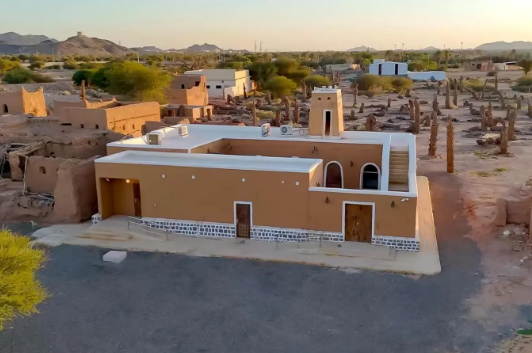

The mud houses are like an open book, through which the visitor reads the details of past life; from people's concerns and aspirations, to their simple dreams and daily rituals.
Although their design differs from one house to another, common features unite them, most notably the majlis or mashab in some houses, which was the heart of the house and the center of the meeting, and the place to receive guests and exchange conversations, reflecting the values of generosity and social cohesion that the people of the region were famous for.King Abdulaziz Palace in the historic village of Lina, south of Rafha'a Governorate, stands out as one of the most important witnesses to the development of mud construction in the region. It was built entirely of mud and has been standing for more than ninety years, a clear indication of the durability and high quality of mud buildings at that time, and this architecture provided natural protection from the vagaries of the weather, and was an effective insulator from cold and heat, and resistance to rain and various environmental factors.
Mud houses in the Northern Borders region remain a precious architectural and cultural heritage that reflects the identity of the community, embodies the story of man and place, and deserves care and documentation as an authentic part of the country's memory and history.