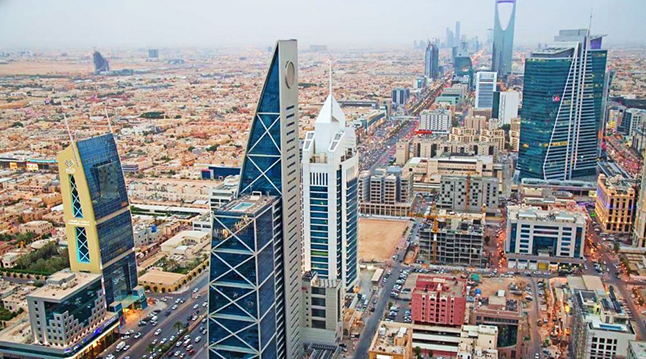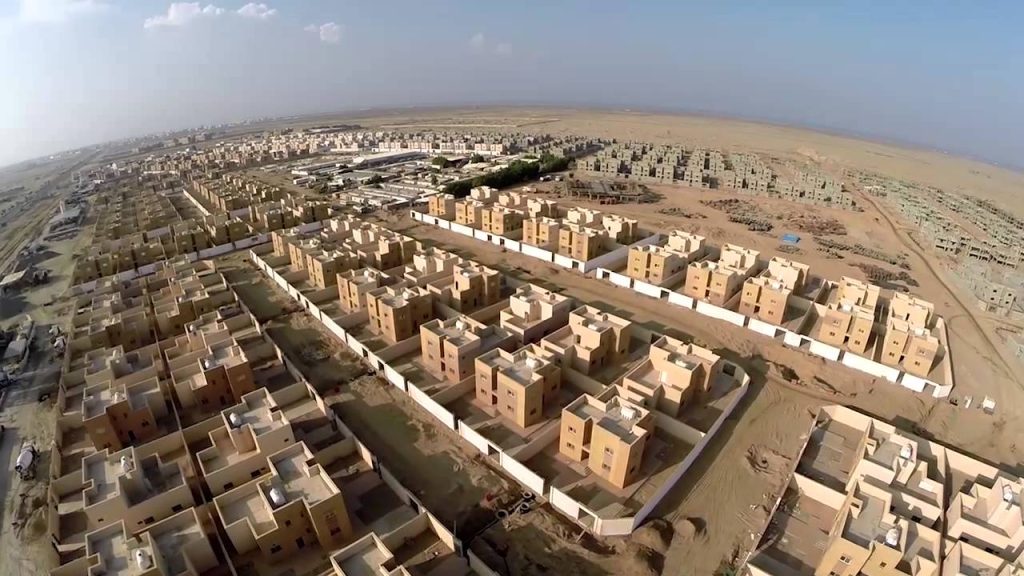

Multiple factors control the pricing of residential projects. Strategic location remains the first driver of market value, while the psychology of supply and demand, the availability of services, and the financial solvency of beneficiaries play crucial roles, in addition to the impact of quality projects and bank financing ratios in shaping <a href="https://taqeem."Fair Price Policies and sustainable."
The psychology of supply and demand, the availability of services, and the financial solvency of beneficiaries play crucial roles.
Mohammed Aljaid: Location and purchasing power govern the pricing equation
Location and purchasing power govern the pricing equation

Location philosophy and the psychology of demand
<The global price disparity proves that location is the main driver; coastal real estate in certain countries can be found at low prices, while small plots in densely populated industrial or vital areas can fetch millions of dollars. He pointed out that the golden rule that governs the market is "the balance between supply and demand«; the more momentum on a particular area, the higher its market value automatically rises, supported by the surrounding advantages and logistics.Pricing conflicts between companies
<In terms of price-setting mechanisms, Aljaeed revealed a gap in methodology between companies, with smaller organizations often relying on "local market simulation« and the immediate surroundings of vendors and developers. In contrast, large companies adopt a »scientific foresight" policy, where the pricing process starts from in-depth feasibility studies, analyzing expectations for the local and global markets, and relying on accurate indicators to measure value before offering units, which gives their pricing more credibility and stability.When it comes to pricing mechanisms, Al-Jaeed revealed a gap in methodology between companies.
Major Projects and Foreign Ownership. Drivers of growth
<Al-Juaid praised the wise decisions that ensure the stability of the Saudi market, stressing that a country that accepts qualitative and huge projects (such as the vision projects), it is natural for its real estate sector to witness a boom reflected in the desire of buyers and the appetite of investors. He also pointed out that the decisions to allow foreign ownership represent additional fuel that boosts demand, which contributes to a »slight and gradual« rise in prices that serves the vitality and sustainability of the market.Yahya Al-Qahtani: The real estate market suffers from price gaps

Income gap and the challenge of ownership
<Al-Qahtani emphasized that a large percentage of middle-income earners still face severe difficulties in owning suitable housing, arguing that current prices are completely disproportionate to the financial solvency of this group, citing a real-life example that an employee who earns a salary in the range of 13,000 riyals Al-Qahtani cited a real-life example that an employee with a salary of 13,000 riyals finds himself unable to buy a villa worth between 900,000 and 1 million riyals, stressing that the talk here is focused on "villas" as a basic option for large families that are not suitable for small apartments or duplexes, to ensure a decent and stable life.
"Real estate balance« and funding pressures
<Al-Qahtani added that the real estate sector is looking for reasonable prices that meet the targets of the Real Estate Balance Platform and are in line with the directives of the wise leadership to make housing affordable for everyone. He also stressed that the current rise in bank interest rates has been an additional obstacle, which has led to a noticeable decline in the purchasing power of many who wish to own property, as a result of financial pressures and high installments that burden the family budget.Al-Qahtani added.
The need to correct the price trajectory
<In the same context, Al-Qahtani said that the market is moving towards the correction that we wish to serve the middle-income group in particular, pointing out that families with large numbers need independent spaces (villas) at affordable and distinctive prices. He concluded that the current trends from the competent authorities are optimistic, and the solutions touch the core of the issue, which is the balance between the quality of the housing product and the ability of the citizen to pay for it without compromising his quality of life.
Ahmed Al-Saegh: Value-added determines price trends
Ahmed Al-Sayegh
Buyer looking for an integrated lifestyle
<On the other hand, the features and services surrounding the project have become a decisive factor in determining the price, especially in projects located within cities or near schools, hospitals and business centers. Al Saegh emphasizes that today's buyer is no longer looking for a residential unit only, but an integrated lifestyle, which gives the developer more flexibility in pricing when there is real added value. Purchasing power is more important in sub-regions, where developers are keen to harmonize the design of the residential product with the purchasing power of the population before setting the final price, to ensure market acceptance and sustainable demand.Developers are keen to harmonize the design of the residential product with the purchasing power of the population before setting the final price, to ensure market acceptance and sustainability of demand.
Wafi program reduced capital
<On the difference in pricing policies between large and small projects, Al-Saegh explains that large developers work according to a long-term development model based on creating integrated communities, and rely heavily on off-plan sales through regulatory frameworks such as the Wafi program, which reduces the need for large capital in the early stages and reduces financing risks. Conversely, smaller developers bear the cost of purchasing the land and financing the entire construction, which increases risk and is often reflected in higher unit prices compared to some larger projects.<Ahmed Al-Saegh expects the real estate market over the next two years to witness a relative stability in prices in light of the results of the real estate balance, with a relative advantage for large projects that are able to offer more competitive prices, while smaller projects face greater challenges. He stresses that the market is moving towards a more mature stage, with increasing reliance on regulatory programs such as Wafi in sales and leasing, which enhances market stability and the confidence of investors and buyers alike.