
استعرض مركز مشاريع البنية التحتية بمنطقة الرياض أبرز مؤشرات الأداء ومنجزاته خلال الربع الثاني من عام 2026، مواصلًا دوره في تعزيز كفاءة قطاع البنية التحتية، ورفع مستوى التنسيق بين الجهات الخدمية، بما يسهم في تحسين جودة تنفيذ المشاريع وتعزيز جودة الحياة في مدينة الرياض.
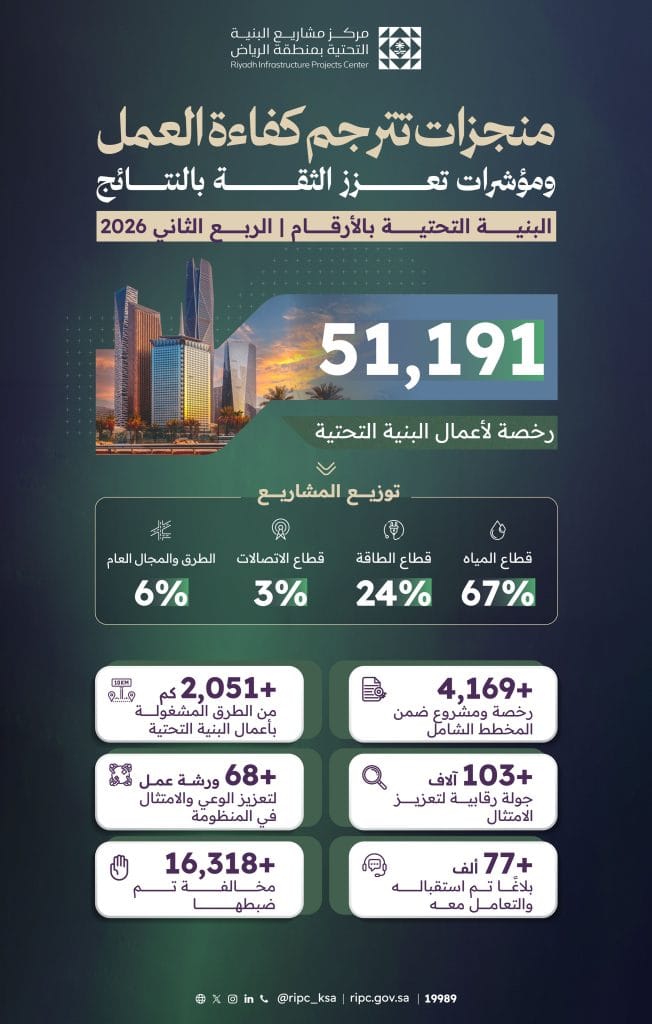
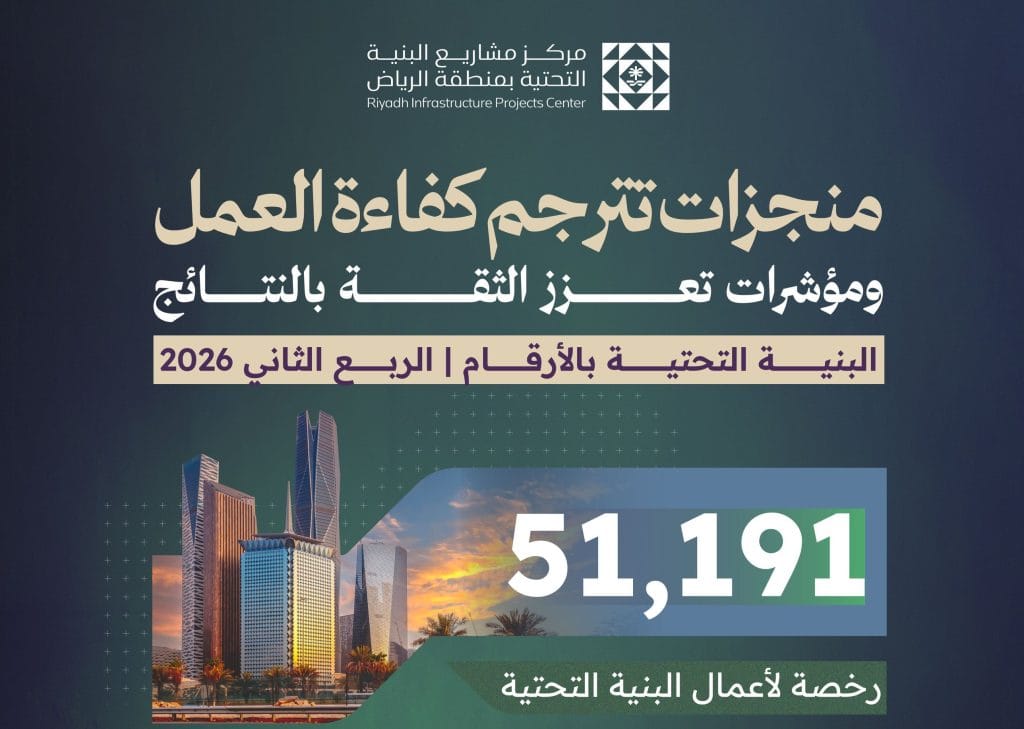
وكشفت المؤشرات عن إصدار 51,191 رخصة لأعمال البنية التحتية، توزعت مشاريعها بنسبة 67% لقطاع المياه، و24% لقطاع الطاقة، و3% لقطاع الاتصالات، فيما شكّل قطاع الطرق والمجال العام 6% من إجمالي المشاريع، بما يعكس حجم النشاط والتكامل بين مختلف القطاعات الخدمية.
عدد الرخص والمشاريع المنفذة
كما بلغ عدد الرخص والمشاريع المنفذة ضمن المخطط الشامل 4,169 رخصة، تأكيدًا على أهمية التخطيط المسبق والتنسيق المشترك لضمان تنفيذ المشاريع بكفاءة، والحد من تكرار أعمال الحفر وتعزيز الاستفادة من البنية التحتية القائمة.
وفي جانب الرقابة والمتابعة، نفذ المركز أكثر من 103 آلاف زيارة ميدانية لمتابعة أعمال المشاريع والتحقق من التزامها بالاشتراطات والمعايير المعتمدة، فيما بلغ إجمالي المخالفات 16,318 مخالفة، ضمن منظومة رقابية تسهم في رفع مستوى الامتثال وتحسين جودة التنفيذ.
وعلى صعيد خدمة المستفيدين، استقبل المركز وتعامل مع أكثر من 77,000 بلاغ عبر قنواته المختلفة، بما يعزز سرعة الاستجابة ورفع كفاءة معالجة الملاحظات.
كما نظم المركز أكثر من 68 ورشة عمل استهدفت الجهات الخدمية والمقاولين والاستشاريين؛ بهدف نشر الوعي بالأنظمة والإجراءات وتعزيز أفضل الممارسات في تنفيذ مشاريع البنية التحتية.
وتعكس هذه المؤشرات استمرار جهود مركز مشاريع البنية التحتية في تطوير منظومة العمل، وتعزيز التكامل بين الجهات ذات العلاقة، ورفع كفاءة تنفيذ المشاريع، بما يدعم مستهدفات التنمية الحضرية ويحقق بنية تحتية أكثر استدامة وكفاءة.