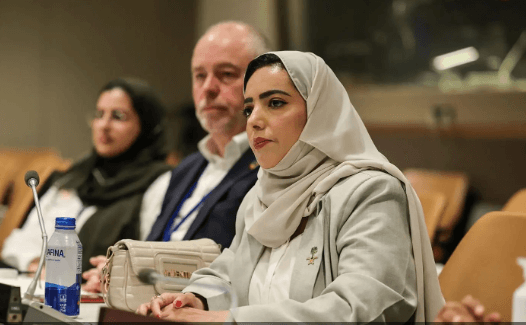
Organized by the Saudi Green Building Forum, in collaboration with a number of international partners, organized an official side event as part of the High-Level Political Forum on Sustainable Development (HLPF 2026) at United Nations Headquarters in New York City, titled “Celebrating the Impact of Volunteerism: Youth Leadership and Advancing the Sustainable Development Goals Through Climate Action,” with the participation of representatives from member states, United Nations organizations, academic institutions, the business and industry sectors, civil society organizations, and volunteer networks, and a number of youth leaders from around the world.
Engineer Faisal Al-Fadl, Secretary-General of the Saudi Green Building Forum, explained that the high-level participation and the presence of the Permanent Mission of the Kingdom of Saudi Arabia to the United Nations in New York at the event reflect the Kingdom’s commitment to supporting multilateralism, empowering youth, and promoting volunteerism as a key pillar for achieving the Sustainable Development Goals. It also underscores the wise leadership’s commitment to strengthening the Kingdom’s presence and contributions in international forums, in line with the objectives of Vision 2030.
Al-Fadl added that the remarks by the Kingdom’s Permanent Representative to the United Nations, Ambassador Dr. Abdulaziz Al-Wasel, indicated that achieving the Sustainable Development Goals is a shared responsibility that requires effective international partnerships, investment in people, and the empowerment of youth and volunteers. He praised the Kingdom’s progress in promoting a culture of volunteerism, enhancing quality of life, and supporting climate and development initiatives.
He noted that the world does not lack knowledge or innovation, but rather needs to accelerate implementation and measure impact, emphasizing that volunteer work represents one of the most important operational resources for achieving the Sustainable Development Goals, and that the success of the 2030 Agenda will be measured by tangible results, not by the number of commitments, calling for the development of impact indicators, the strengthening of partnerships, and the empowerment of youth to lead sustainable solutions.
The session featured speakers from the United Nations Economic and Social Commission for Western Asia (ESCWA), the United Nations Volunteers (UNV) program, the Volunteer Groups Alliance, and the Center for Sustainable Development at Columbia University, as well as a number of youth leaders and representatives of civil society organizations. The presentations addressed the importance of investing in youth, promoting education and skills development, expanding mentoring and training opportunities, supporting innovation, and creating an enabling environment for volunteer work.
The session also discussed the importance of developing national and international indicators to measure the impact of volunteer work and shifting from measuring activities to measuring actual outcomes, thereby contributing to a more efficient and transparent implementation of the Sustainable Development Goals.
Participants reviewed international models and practical initiatives in the fields of volunteerism and climate action, including the Kingdom of Saudi Arabia’s experience in managing volunteer work during the Hajj season, which demonstrated volunteers" ability to support health services, manage crowds, and respond to emergencies—thereby enhancing resilience and establishing best practices in managing large gatherings.
At the conclusion of the session, Engineer Faisal Al-Fadl expressed his thanks and appreciation to the Permanent Mission of the Kingdom of Saudi Arabia to the United Nations, headed by Ambassador Dr. Abdulaziz Al-Wasel, for its support and cooperation, He also commended the participation of the Kingdom’s delegation and national and international entities, emphasizing that this presence reflects the Kingdom’s leading role in supporting joint international efforts and embodies its commitment to strengthening partnerships and accelerating the implementation of the Sustainable Development Goals through youth empowerment and volunteerism.
At the conclusion of the session, participants affirmed that youth and volunteers are key partners in implementing the Sustainable Development Goals, stressing the importance of investing in their capacities, strengthening multilateral partnerships, and providing sustainable financing, and documenting and measuring the impact of volunteer initiatives, thereby contributing to accelerating the implementation of the UN 2030 Agenda and achieving sustainable development impact.
The event concluded with the Saudi Green Building Forum, which holds consultative status with the United Nations, concluded the event by reaffirming its commitment to continuing its efforts as a national and international platform that brings together governments, United Nations organizations, the nonprofit sector, the academic community, the business and industrial sectors, to support practical solutions, empower youth and volunteers, and strengthen partnerships that contribute to transforming international commitments into measurable development impact, thereby serving the Sustainable Development Goals and the Kingdom’s Vision 2030.

The Saudi Green Building Forum Organizes an International Event in New York
The UN event highlighted the role of youth leadership and volunteerism in accelerating climate action and achieving the Sustainable Development Goals as part of the Kingdom’s Vision 2030.