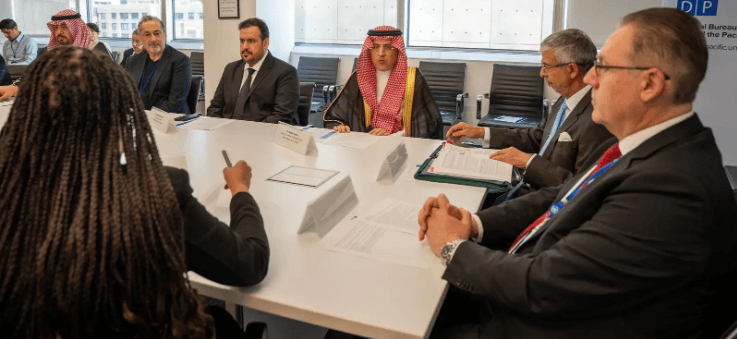
The Saudi Green Building Forum participated in a roundtable discussion titled “Strengthening the Role of Waqfs in Sustainable Development and South-South Cooperation,” attended by the Permanent Representative of the Kingdom of Saudi Arabia to the United Nations, Ambassador Dr. Abdulaziz Al-Wasel, at the invitation and under the organization of the General Authority for Waqfs in partnership with the United Nations Development Program (UNDP), on the sidelines of the High-Level Political Forum on Sustainable Development (HLPF 2026), held at the UNDP headquarters in New York City.
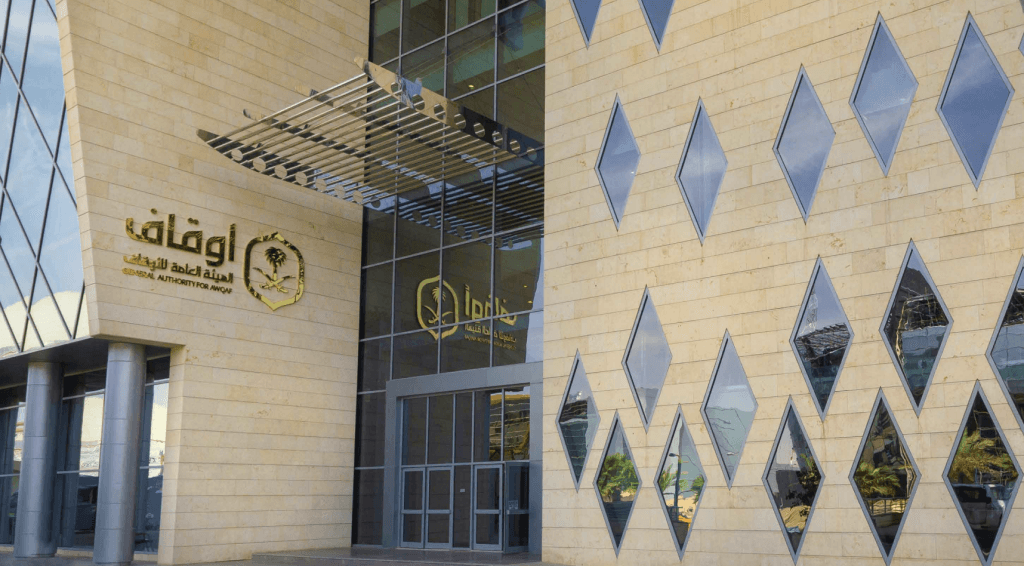
The General Authority for Awqaf the Saudi Green Building Forum to showcase its experience as the first professional waqf specializing in the built environment and sustainable development, and as one of the leading national models in utilizing waqf to strengthen institutional governance, building partnerships, and achieving a sustainable development impact, in line with the objectives of the Kingdom’s Vision 2030 and the United Nations Sustainable Development Goals.
Review of the Saudi Experience in Green Buildings
During the roundtable, the Secretary-General of the Saudi Green Building Forum, Engineer Faisal Al-Fadl, reviewed the Forum’s journey since its establishment in 2010, and its transformation into a public endowment in 2014, emphasizing that the Saudi experience has proven that endowments are no longer limited to preserving assets, but has become an integrated institutional model that invests in people, funds initiatives, transfers knowledge, builds partnerships, promotes innovation, and contributes to achieving sustainable development for future generations.
He explained that the forum has redefined the concept of waqf to serve as a pillar of sustainable development through an institutional framework that brings together government agencies, the business sector, industry, civil society, and international organizations, with its governance based on four main pillars: education and capacity building; decent work and economic growth; climate action; and partnership building. Its programs and initiatives are geared toward supporting the goals of clean water, clean energy, industry and innovation, sustainable cities and communities, and responsible consumption and production.
More than 10,000 members of the Forum
Al-Fadl noted that the Forum currently has more than 10,000 members and has documented more than 5,000 projects, organized dozens of conferences, forums, and training programs, and launched unique initiatives, a sustainable business marketplace, and specialized awards, thereby contributing to the dissemination of knowledge, capacity building, stimulating the green economy, improving quality of life, and embedding sustainability concepts in the built environment.
He emphasized that the success of an endowment is not measured by the size of its assets, but rather by its ability to sustain its mission, diversify its resources, strengthen its governance, build partnerships, and measure its impact, noting that the Forum’s experience aligns with the transformation the Kingdom is undergoing in the endowment sector, which has made endowments a tool for development, innovation, climate action, and the achievement of sustainable development goals.
Al-Fadl concluded his remarks by emphasizing that the Saudi Green Building Forum’s experience embodies the transformation led by the Kingdom of Saudi Arabia in developing the nonprofit sector and transitioning the waqf from a historical legacy to a development institution that invests in people, funds development, builds partnerships, and creates a sustainable impact that spans generations, thereby reinforcing the Kingdom’s position as a global model in leveraging waqfs to achieve sustainable development.
The Saudi Green Building Forum is a Saudi civil society organization and a professional, nonprofit waqf specializing in the built environment and sustainable development. It was founded in 2010 and became a public waqf in 2014, It holds special consultative status with the United Nations Economic and Social Council (ECOSOC), and observer status with a number of United Nations organizations. It continues to build partnerships, develop initiatives, strengthen institutional capacity, and contribute to achieving the goals of Saudi Vision 2030 and the Sustainable Development Goals.

The Saudi Green Building Forum Shares Its Experience in Utilizing Waqf to Achieve Sustainable Development
At the forum in New York, the organization showcased its model as the first professional endowment for the built environment, as well as its role in governance, partnerships, and supporting the Sustainable Development Goals.