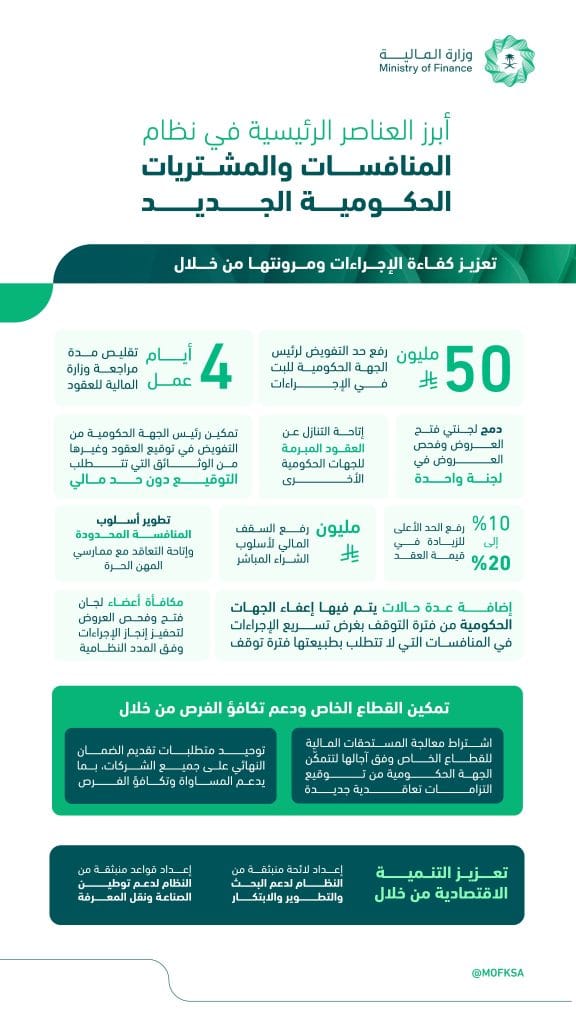

في إطار تعزيز كفاءة الإجراءات ورفع مستوى المرونة في التعامل مع المنافسات والمشتريات الحكومية، يتضمن نظام المنافسات والمشتريات الحكومية الجديد مجموعة من التعديلات التي تستهدف تسريع دورة الإجراءات، وتوسيع نطاق التفويض، وتطوير أساليب التعاقد والشراء، إلى جانب تمكين القطاع الخاص ودعم تكافؤ الفرص وتعزيز التنمية الاقتصادية.
وبحسب وزارة المالية، تشمل أبرز العناصر الواردة في النظام رفع الحدود المالية لبعض الإجراءات، وتقليص مدد المراجعة، ودمج بعض اللجان، وإتاحة حالات جديدة للتنازل عن العقود والإعفاء من فترة التوقف، فضلًا عن تطوير أساليب المنافسات والشراء المباشر.
رفع حد التفويض إلى 50 مليون ريال
يرفع النظام الجديد حد التفويض لرئيس الجهة الحكومية للبت في الإجراءات إلى 50 مليون ريال، بما يعزز مرونة اتخاذ القرارات المرتبطة بالمنافسات والمشتريات الحكومية. كما يتيح النظام لرئيس الجهة الحكومية التفويض في توقيع العقود وغيرها من الوثائق التي تتطلب التوقيع دون حد مالي.
تقليص مراجعة العقود إلى 4 أيام
ويتضمن النظام تقليص مدة عمل وزارة المالية في مراجعة العقود إلى 4 أيام عمل، بما يسهم في تعزيز كفاءة الإجراءات المرتبطة بمراجعة العقود. كما يتيح النظام التنازل عن العقد المبرم للجهات الحكومية الأخرى.
لجنة واحدة لفتح وفحص العروض
ومن بين العناصر الرئيسية للنظام الجديد دمج لجنتي فتح العروض وفحص العروض في لجنة واحدة، بما يعزز مرونة الإجراءات المتعلقة بالتعامل مع العروض المقدمة في المنافسات الحكومية. كما يتضمن النظام رفع الحد الأعلى للزيادة في قيمة العقد من 10% إلى 20%.
رفع سقف الشراء المباشر
يرفع النظام السقف المالي لأسلوب الشراء المباشر إلى مليون ريال، إلى جانب تطوير أسلوب المنافسات المحدودة وإتاحة التعاقد مع ممارسي المهن الحرة. وتشمل التعديلات كذلك مكافأة أعضاء لجان فتح وفحص العروض، بهدف تحفيز إنجاز الإجراءات وفق النظام.
إعفاءات من فترة التوقف
ويتضمن النظام إضافة عدة حالات يتم فيها إعفاء الجهات الحكومية من فترة التوقف، وذلك بغرض تسريع الإجراءات في المنافسات التي لا تتطلب بطبيعتها فترة توقف.
وتأتي هذه التعديلات ضمن العناصر التي تستهدف تعزيز كفاءة الإجراءات ومرونتها في نظام المنافسات والمشتريات الحكومية الجديد.
تمكين القطاع الخاص ودعم تكافؤ الفرص
ويولي النظام اهتمامًا بتمكين القطاع الخاص ودعم تكافؤ الفرص، من خلال اشتراط معالجة المستحقات المالية للقطاع الخاص وفق آجالها، بما يمكن الجهة الحكومية من توقيع تعاقدات جديدة.
كما يتضمن توحيد متطلبات تقديم الضمان النهائي على جميع الشركات، بما يدعم المساواة وتكافؤ الفرص.
دعم البحث والتطوير والابتكار
وفي جانب تعزيز التنمية الاقتصادية، ينص النظام على إعداد لائحة منبثقة من النظام لدعم البحث والتطوير والابتكار.
كما يشمل إعداد قواعد منبثقة من النظام لدعم توطين الصناعة ونقل المعرفة.
وبذلك تركز أبرز عناصر نظام المنافسات والمشتريات الحكومية الجديد على مجموعة من المسارات، تشمل تسريع الإجراءات، وتوسيع صلاحيات التفويض، وتطوير أساليب الشراء والمنافسات، وتمكين القطاع الخاص، ودعم تكافؤ الفرص، إلى جانب تعزيز البحث والتطوير والابتكار وتوطين الصناعة ونقل المعرفة.