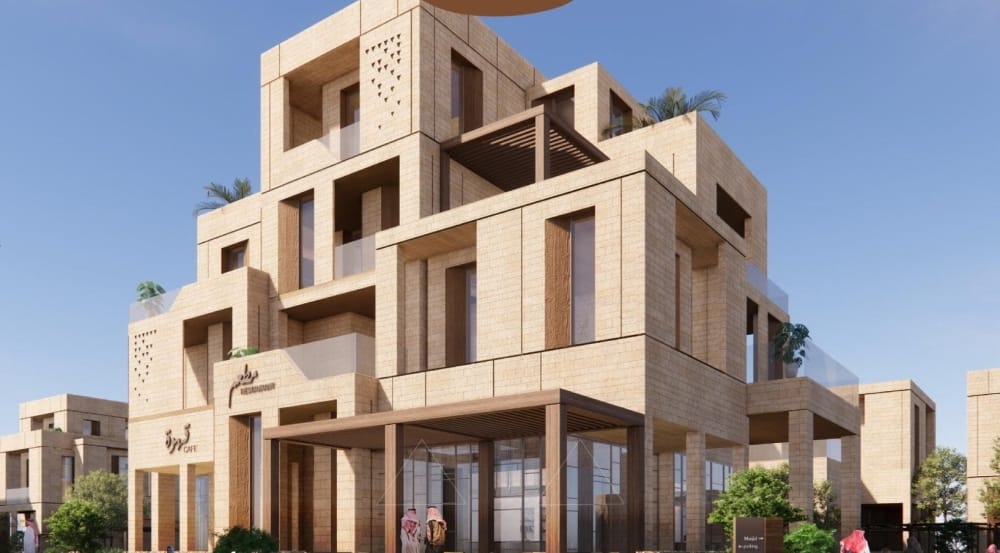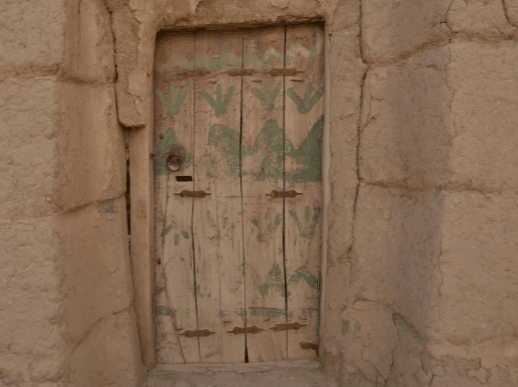

The wooden doors in the old mud houses and palaces of the Najran region bear the features of a traditional craft that combined function and beauty. They were not just entrances to buildings, but architectural elements that reflect the skill of the craftsmen and the privacy of social life, through their designs, decorations and methods of closing that are still present in a number of heritage buildings.
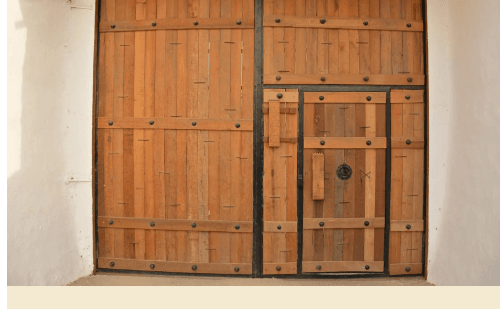
Wooden doors stand out as an essential part of the mud-brick architecture of Najran, varying in form from single to double, large to small, depending on the location of the entrance, its intended use, and the available space within the building. Their construction methods also differed; some relied on adjacent vertical panels held together by horizontal beams, while others consisted of horizontal wooden slats within a frame, with a clear variation in the density of the decorative elements and the metalwork used.
Mohammed Al-Hutaila, Chairman of the Board of Directors of the Antiquities and History Association “JATEN” in the Najran region, explained that wooden doors represent an important part of the region’s architectural heritage, and provide a window to learn about an aspect of the history of mud architecture and the crafts associated with it, according to the Saudi Press Agency.
He pointed out that some large and heavy doors were related to protection requirements, as well as the need to bring livestock, loads and crops into homes and internal facilities, while smaller doors were more suitable for internal entrances and rooms.
Components of a wooden door
The traditional door system includes several components related to its use and manufacturing method, such as the knocker, the latch, the key, and the bolt. Al-Hutaila explained that some of the names and functions vary depending on the door's construction and location, reflecting the craftsmanship possessed by door makers in the past.
According to Al-Hatila, the survival of some of these doors to this day represents an important documentary value, as they retain traces of use and aging, along with the original installation methods, which helps in identifying the carpentry and decoration methods and the means of closure that were used in the old mud buildings.
The value of these doors extends beyond their function; many feature geometric and floral motifs, including triangles, squares, rhombuses, circles, arches, and lines, along with elements inspired by the local environment. Some models bear inscriptions, dates, or markings related to the building's owners, adding another documentary dimension to the door.
Manual skills and inherited expertise
For his part, Dr. Khalid bin Ali Al-Mazm, Assistant Professor in the Department of Architectural Engineering at the College of Engineering at Najran University, confirmed that the manufacture of doors relied mainly on manual skill and the inherited experience of local craftsmen, known as carpenters or makers, in addition to the woods available in the local environment, most notably the Sidr and Athel trees, due to their hardness and ability to withstand climatic conditions.
He explained that the door-making process begins with selecting and preparing the wood, then sawing and cutting it into longitudinal planks and smoothing their edges, before assembling and securing them with wooden beams. After that, the carving and decoration work is carried out, and the closing mechanisms, handles, and metal components are installed, culminating in the door being fixed within the opening in the mud wall.
Ancient woodworking techniques
Traditional doors include components that reflect ancient carpentry techniques, including the longitudinal boards known as “al-dalaf” or “al-zalf”, the “al-dawarib” that join the boards and fix them from the back, in addition to the “al-muqqam” and “al-mardam” which are related to fixing the door and its rotation, and traditional closing components such as the “al-rab’a”, and what is related to it in terms of handles, rings and metal screws.
Dr. Al-Mazm pointed out that the diversity of doors included the methods of covering the openings, the direction of the panels, and the decorative and metal elements, which gave each entrance its own characteristics, indicating that the door represented a visual facade for the house, and at the same time carried aesthetic, social and security connotations, in addition to its role in determining the transition from public to private space.
The social dimension of doors extends to the details of daily use inside the home, as some models have used small doors or openings within the main door, allowing passage without the need to fully open the entrance, which is compatible with the nature of daily life inside the home and preserves its privacy.
The two specialists stressed the importance of preserving the original doors in heritage mud buildings, by documenting, maintaining and restoring them in ways that take into account the characteristics of their materials and components, in addition to supporting craftsmen specializing in traditional carpentry and transferring the knowledge of this craft to new generations.
These doors face a number of factors that affect their survival, including humidity, rain, temperature variations, insect pests, as well as neglect, inappropriate treatments, and the replacement of some heritage doors with modern components, which makes preserving the original models part of safeguarding the details of mud architecture and the traditional crafts associated with it.