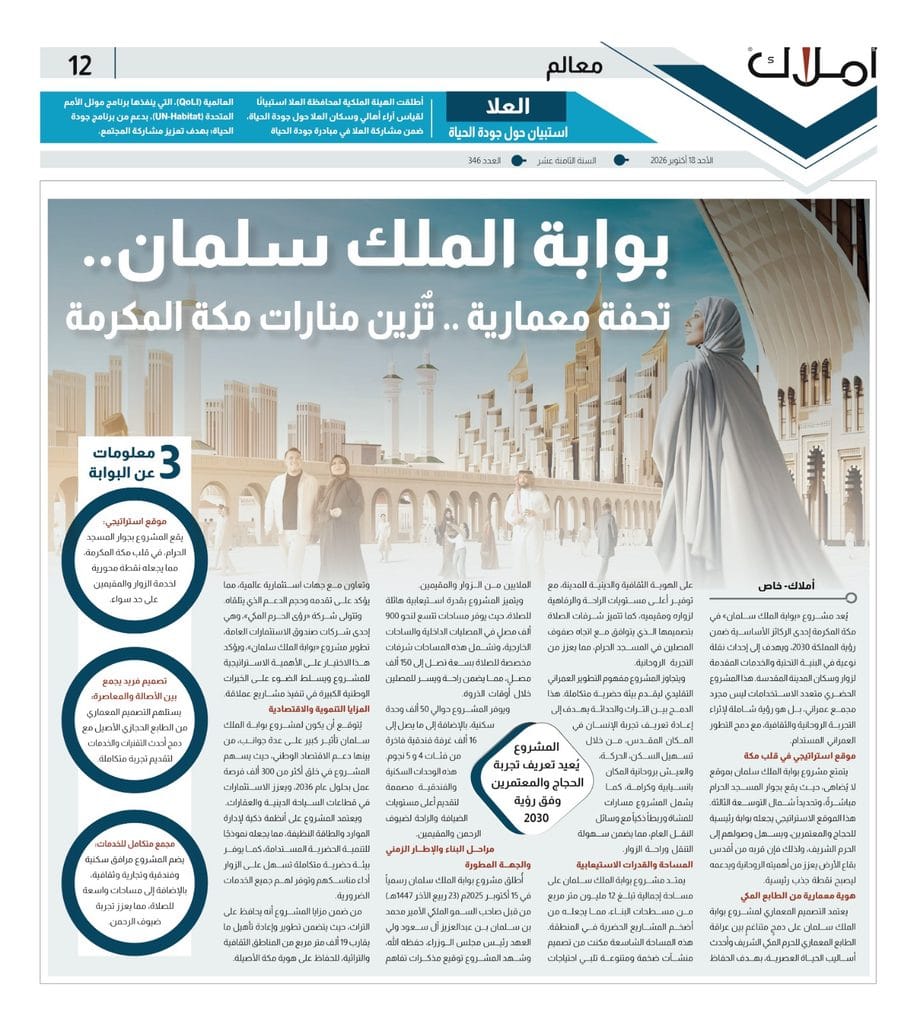

The King Salman Gate project in Mecca is a cornerstone of the Kingdom's Vision 2030, aiming to transform the infrastructure and services offered to visitors and residents of the holy city. This mixed-use urban development embodies a comprehensive vision to enrich the spiritual and cultural experience while integrating sustainable urban development.
Strategic location in the heart of Mecca
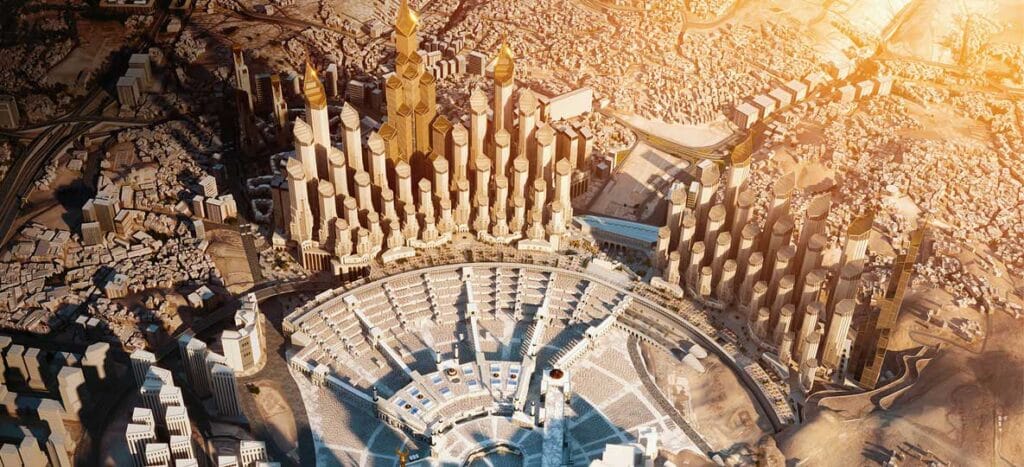
The King Salman Gate project enjoys an unparalleled location, situated directly adjacent to the Grand Mosque, specifically north of the third expansion. This strategic location makes it a primary gateway for pilgrims and Umrah performers, facilitating their access to the Holy Mosque. Its proximity to the holiest sites on Earth enhances its spiritual significance and positions it as a major attraction.
Architectural identity inspired by the Makkah style
The architectural design of the King Salman Gate project is based on a harmonious integration of the rich architectural character of the Holy Mosque in Mecca and the latest modern lifestyles, with the aim of preserving the city’s cultural and religious identity, while providing the highest levels of comfort and luxury for its visitors and residents. The prayer balconies are also distinguished by their design, which is in line with the direction of the rows of worshippers in the Grand Mosque, thus enhancing the spiritual experience.
The project transcends the traditional concept of urban development to offer an integrated urban environment. This fusion of heritage and modernity aims to redefine the human experience in the sacred space by facilitating seamless and dignified living, movement, and spirituality. The project also includes pedestrian walkways and smart connections to public transportation, ensuring easy mobility and visitor comfort.
Space and capacity
The King Salman Gate project spans a total built-up area of 12 million square meters, making it one of the largest urban developments in the region. This vast area has enabled the design of massive and diverse facilities to meet the needs of millions of visitors and residents.
The project is characterized by its enormous capacity for prayer, as it provides spaces that can accommodate about 900,000 worshippers in the indoor prayer halls and outdoor courtyards. These spaces include balconies designated for prayer with a capacity of up to 150,000 worshippers, which ensures comfort and ease for worshippers during peak times.
The project offers approximately 50,000 residential units, in addition to up to 16,000 luxury hotel rooms in 4- and 5-star categories. These residential and hotel units are designed to provide the highest levels of hospitality and comfort for pilgrims and residents.
Construction phases and timeframe
The King Salman Gate project was officially launched on October 15, 2025 (23 Rabi’ al-Thani 1447 AH) by the Saudi Crown Prince, Prince Mohammed bin Salman, may God protect him. The project witnessed the signing of memoranda of understanding and cooperation with global investment entities, which confirms its progress and the extent of the support it receives.
The development of the King Salman Gate project is being undertaken by Ru’a Al Haram Al Makki, a Public Investment Fund company. This selection underscores the strategic importance of the project and highlights the significant national expertise in implementing mega-projects.
Developmental and economic advantages
The King Salman Gate project is expected to have a significant impact on several aspects, including supporting the national economy, as the project is expected to create more than 300,000 job opportunities by 2036, and boost investments in the religious tourism and real estate sectors.
The project relies on smart systems for managing resources and clean energy, making it a model for sustainable urban development. It also provides an integrated urban environment that makes it easier for visitors to perform their rituals and provides them with all the necessary services.
One of the advantages of the project is that it preserves heritage, as it includes the development and rehabilitation of approximately 19,000 square meters of cultural and heritage areas, in order to preserve the authentic identity of Mecca.
The King Salman Gate project also offers a wide range of activities and facilities to meet diverse needs. In addition to residential units, world-class hotels and hospitality facilities, spaces will be allocated for shops and commercial services, with more than 200,000 square meters dedicated to retail, as well as spaces for cultural centers and exhibitions that reflect Makkah and Islamic heritage, indoor prayer rooms and spacious outdoor plazas, recreational areas and green spaces to provide an integrated experience.
Major goals and future vision
The King Salman Gate project aims to be a global model in urban development and integrated services, while preserving the sanctity and spirituality of Mecca. The project directly contributes to achieving the goals of Saudi Vision 2030 to increase the number of pilgrims and Umrah performers to 30 million visitors annually by 2030, by providing the necessary infrastructure and services to accommodate these increasing numbers.
The project is an integral part of the Kingdom’s strategy to diversify income sources and enhance its position as a global center for the Islamic economy, by providing an attractive investment environment and raising the quality of tourism services, as it aims to achieve significant economic returns, including increasing non-oil revenues and providing sustainable job opportunities for citizens.